

Editor Tested Squat Proof Legging Test With Elite Bloodlines
Squat-proof means opaque under stretch, full stop: no skin tone, no underwear lines, no shadow showing through the fabric when you’re bent over or deep in a squat. The fastest way to check is the flashlight test: pull the leggings on, squat under bright light with a phone flashlight aimed at your seat from behind, and look for any glow or outline. If nothing shows, they pass. Some brands build leggings around this exact standard.
TL;DR:
- Fabric density and knit construction, such as GSM above 220 and 8-20% elastane, critically affect a leggings’ ability to resist sheerness during squats.
- Bright light, mirror checks, and the flashlight test are essential at home to verify squat-proof quality before purchasing or committing to leggings.
- Darker, saturated colors like black or navy hide thin spots better, but they do not guarantee opacity under stretch, especially in lighter shades.
- Heavier, denser fabrics tend to be less breathable, making them better for heavy lifting but less comfortable for cardio or hot environments.
- Buying based on fabric specs and verifying through personal tests outweighs relying on brand reputation or marketing claims for squat-proof performance.
Table of Contents
- What “Squat-Proof” Actually Means
- How to Run Your Own Squat-Proof Legging Test at Home
- Why Leggings Go See-Through in the First Place
- What to Check Before You Buy: A Quick Checklist
- How to Wash Leggings Without Ruining the Opacity
- Elite Bloodlines’ Perspective on Squat-Proof Design
- Comparing Popular Squat-Proof Legging Brands and Models
- Myths About Squat-Proof Leggings, Debunked
- Thickness vs. Breathability: The Real Comfort Trade-Off
- Author Perspective: When to Buy for Performance vs. Style
- Try Elite Bloodlines Leggings and Test Them Yourself
- Sources
What “Squat-Proof” Actually Means
There’s no government agency or textile board that certifies leggings as squat-proof. No ISO number, no seal, nothing you can look for on a hangtag. Brands run their own internal checks, and quality varies wildly even within the same price bracket, according to ScienceInsights. That absence of a universal standard is exactly why the leggings opacity test matters so much to anyone shopping online.
The technical property behind this is light transmittance. Flat fabric can look completely opaque on a hanger, then stretch to 20 or 30 percent of its resting size across your glutes and thighs during a squat, and that stretch thins the fibers just enough to let light through. A pass looks like this:
- No visible skin tone across the seat, hips, or upper thighs during a deep squat or lunge
- No underwear pattern or waistband line showing through, even in a hip hinge
- No lightening or “washing out” of color when the fabric stretches over a bent knee
Color matters here too. Dark, saturated shades like black, navy, and deep burgundy hide thin spots far better than light gray or pastel solids, which is one reason light-colored leggings need denser fabric to pass the same test.
How to Run Your Own Squat-Proof Legging Test at Home
You don’t need a lab. You need bright light, a mirror, and about five minutes. This is the same logic editors use when they run a squat-proof leggings test before recommending a pair, according to Prevention, just scaled down for your living room.
- Hand-stretch check. Grab the fabric across the thigh with both hands and pull it taut. If you see any lightening or transparency at rest, don’t bother going further; they’ve already failed.
- Bright-light deep squat. Stand under the strongest light in your house, ideally overhead, and drop into a full squat while a second person (or a mirror angled behind you) checks the seat and thigh area.
- Bend-over test. Bend forward at the hips like you’re picking something off the floor. This stretches a different section of fabric than the squat does, so it catches problems the squat alone might miss.
- Flash-photo test. Take a photo of yourself squatting with the camera flash on. Flash is more aggressive than ambient light and often reveals sheerness the mirror missed entirely, per LLRULE.
- Damp test. Lightly mist the seat area with water to mimic sweat, then repeat the squat. Moisture changes fabric density temporarily, and a pair that’s borderline dry can fail wet, according to Avurer.
Control your variables or the test means nothing. Wear the size you’d actually train in, not a size down. Use nude, seamless underwear as your worst-case scenario since patterned or colored underwear can hide a legitimate problem. Keep the lighting and camera angle consistent if you’re comparing two pairs side by side.
Pro Tip: If a pair is borderline, take photos of the flash test and the tag showing size and fabric content immediately. Most retailers give you a narrow return window, and documentation like this speeds up any claim if you need to send them back.
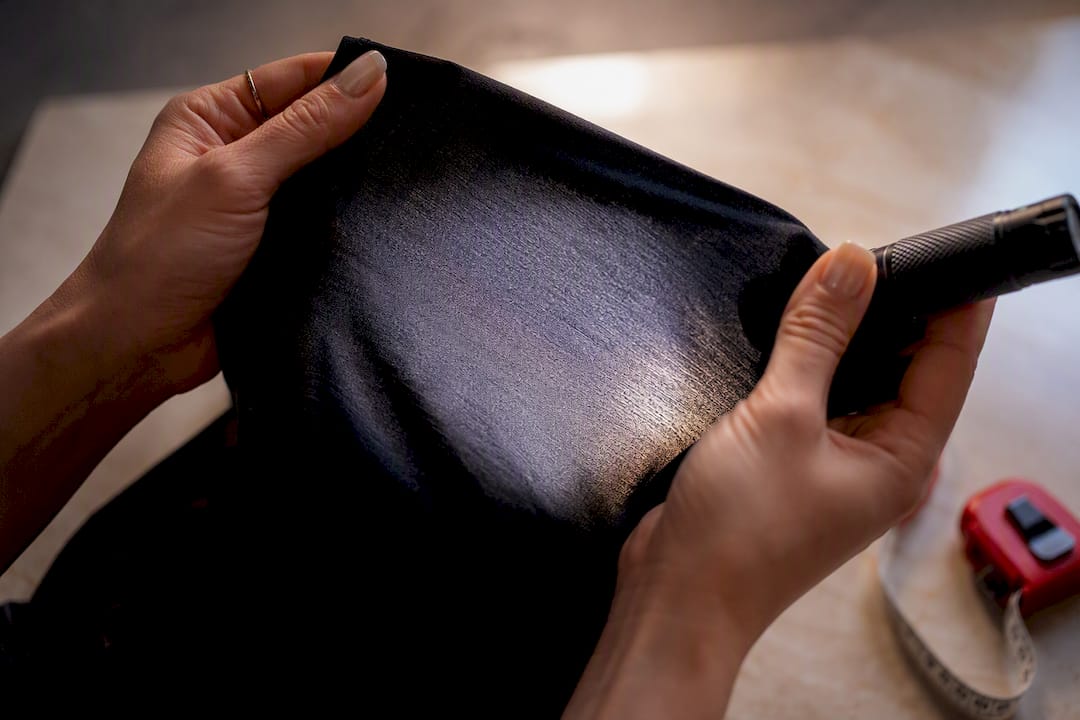
If the result is genuinely borderline, try the next size up before writing the pair off. Sizing down is one of the most common causes of a failed test, and it’s an easy fix if the return window is still open.
Why Leggings Go See-Through in the First Place
Fabric density and knit construction decide most of this before you even try the pair on. A tight, dense knit resists stretching thin, while a loose or single-layer knit gives out fast under load. Blends built on nylon/spandex or polyester/spandex tend to hold their shape and opacity better than cotton blends, which stretch out and stay stretched.
A few specific factors drive whether a pair passes or fails:
- GSM (grams per square meter): heavier fabric, generally above 220 GSM, resists thinning under stretch far better than lightweight summer leggings
- Elastane percentage and recovery: somewhere between 8% and 20% elastane gives fabric the snap-back needed to stay dense after repeated stretching; too little and the fabric goes limp
- Sizing down: squeezing into a smaller size stretches the fabric closer to its breaking point at rest, which means it has almost no stretch capacity left once you squat
- Heat and wear: repeated high-heat drying breaks down elastane fibers over time, which is why a pair that passed on day one can fail six months later
What to Check Before You Buy: A Quick Checklist
Reading a product page well is half the battle. Watch for specific language: “compressive,” “double-knit,” a stated elastane percentage, or a GSM figure if the brand lists one. Vague marketing like “buttery soft” or “second-skin feel” tells you nothing about opacity.
Run through this list before you commit:
- Fabric blend and percentage (look for nylon or polyester paired with 8% to 20% spandex)
- A gusset panel at the crotch, which signals attention to construction, not just fit
- A wide, high-rise waistband that won’t roll or dig in during a squat
- Flat, reinforced seams rather than a single stitched line prone to splitting
- Darker, saturated colorways if you’re buying without trying them on first
Once the pair arrives, test it before you cut the tags off. Most retailers only accept returns on unworn items with tags attached, so run your flashlight and squat test the moment the package lands, in your regular clothes over the leggings if you’re worried about the tags.
| Checklist item | Why it matters | Red flag to avoid |
|---|---|---|
| Elastane percentage | Controls stretch recovery | No fiber content listed at all |
| GSM or fabric weight | Heavier fabric resists thinning | Marketed only as “buttery” or “silky” |
| Gusset panel | Reduces stress on the seat seam | Flat-front construction with no gusset |
| Waistband width | Prevents rolling during squats | Thin elastic waistband under 3 inches |
How to Wash Leggings Without Ruining the Opacity
Elastane degrades every time it’s exposed to heat, harsh detergent, or friction, and that degradation is permanent. A pair that passed your test on day one won’t necessarily pass it after twenty trips through the dryer.
Stick to a few habits:
- Wash cold, inside out, on a gentle cycle to protect the outer knit from abrasion
- Skip fabric softener entirely; it coats spandex fibers and speeds up recovery loss
- Hang dry instead of tumble drying on high heat
- Rotate between two or three pairs instead of running one pair into the ground
- Avoid sitting on Velcro, rough concrete, or gym equipment with abrasive surfaces that snag the knit
According to Olaben, these laundry habits are the single biggest lever consumers have over how long a pair stays opaque. Pro Tip: Retire a pair the moment you notice permanent thinning at the knees or seat, even if it still passes your flashlight test standing still. Fabric that’s lost its recovery will fail the moment you sweat through a real workout.
Elite Bloodlines’ Perspective on Squat-Proof Design
Elite Bloodlines builds gym apparel around fabric that resists thinning under load, not fabric that just feels soft in the store. That means prioritizing heavyweight knit construction, a gusset built into the seat, and a compression fit that keeps fabric close to the body instead of stretching loose during heavy movement. A wide, stable waistband that doesn’t dig or roll during a deep squat rounds out the priority list. Pieces like the EB Core Line Women’s High-Waisted Ankle Length Yoga Leggings and the EB ‘Star’ Women’s High-Waist Tapered Leggings reflect these same construction priorities.
Squat-proof isn’t a marketing word, it’s a fabric outcome. If a brand won’t tell you the fiber blend or the weight of the material, that silence is the answer.
The honest move is to run the same flashlight and bright-light squat test on any Elite Bloodlines pair the moment it arrives. Trust the fabric spec, then verify it on your own body under your own lighting.
Comparing Popular Squat-Proof Legging Brands and Models
The squat-proof legging market splits into a few clear categories once you strip away the marketing copy. Budget fast-fashion pairs, usually under $20, almost always use thinner cotton-blend knits with elastane percentages on the low end, and they fail flashlight tests more often than not, especially in lighter colors. Mid-range athletic brands generally land in a middle zone: reasonable GSM, decent nylon/spandex blends, but inconsistent quality control from one drop to the next.
Premium and gym-focused labels tend to prioritize compressive, double-knit fabric specifically because their customers train hard and squat heavy. That’s a different design brief than a brand building leggings primarily for lounging or casual wear, where opacity under a 90-degree squat was never the priority in the first place.
The pattern that holds across nearly every category: color and cut matter as much as brand name. A premium brand’s light gray pair can still fail a squat test if the fabric is thinner than their black version, since dark colors mask thin spots that lighter shades reveal instantly. Ankle-length and high-waisted tapered cuts tend to test better than cropped or low-rise styles simply because the fabric sits closer to the body across the stretch zones that matter most. Rather than chasing a brand name, chase the specific fabric spec and colorway of the exact pair you’re buying, since the same brand can produce both a pass and a fail depending on the style.
Myths About Squat-Proof Leggings, Debunked
The biggest myth: price guarantees opacity. It doesn’t. Expensive leggings can fail a flashlight test just as easily as a $15 pair if the fabric blend is wrong for the cut, and plenty of budget brands with dense nylon/spandex knits pass tests that pricier lounge-focused pairs fail.
Another common misconception: if leggings look opaque on the hanger, they’ll stay opaque on your body. Flat fabric and stretched fabric are two different materials in practical terms. A pair can look completely solid folded on a shelf and still go translucent the moment you drop into a squat, which is exactly why on-body testing under a defined stretch is the only test that means anything, according to ScienceInsights.
People also assume “squat-proof” printed on a tag means the brand actually ran a stretch test. Plenty of brands use the phrase as a marketing label with no internal testing behind it at all, which is precisely why no universal certification exists for the claim.
Last myth worth killing: black leggings are automatically squat-proof. Dark color hides thin spots better than light color, but it doesn’t eliminate them. A thin enough black fabric will still show a shadow or outline under a bright flash, even if it looks fine under normal room lighting. Color reduces risk. It doesn’t remove it.
Thickness vs. Breathability: The Real Comfort Trade-Off
Heavier, denser fabric is generally your best defense against sheerness, but it comes with a real cost: less airflow. A 250 GSM compressive knit that passes every squat test you throw at it will also run warmer than a lightweight 180 GSM pair, and that difference shows up fast during a 45-minute strength session or a hot studio class.
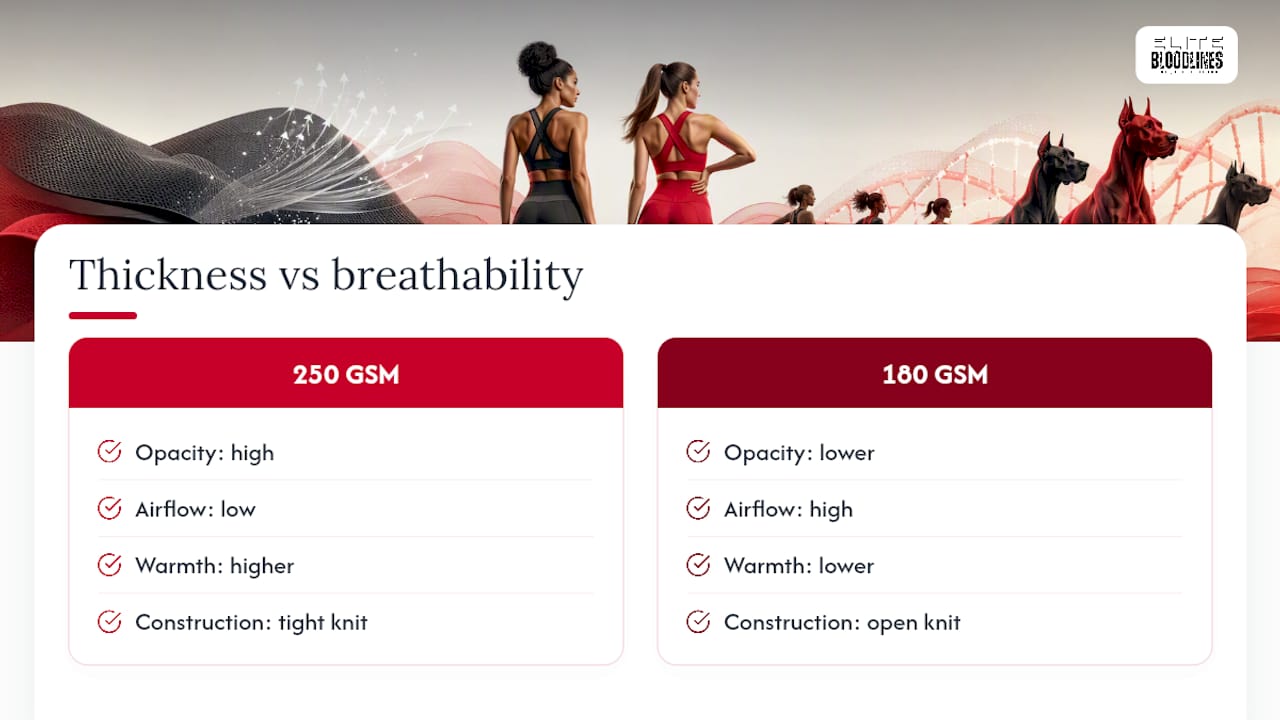
This trade-off isn’t a flaw to engineer around; it’s a genuine design tension. Thicker fabric with tighter knit construction blocks light better because there’s less space between fibers, but that same tight weave restricts how much heat and moisture can escape your skin. Lighter, more breathable knits let more air through precisely because they have more open space in the weave, which is the same structural gap that lets light through during a squat.
The practical answer depends on what you’re doing. Heavy lifting sessions, squat-focused leg days, and anything involving deep hip hinges call for the denser, more compressive fabric even if it runs a little warmer. Cardio-heavy sessions, hot yoga, or long runs favor a lighter, more breathable knit, and the sheerness risk during those activities is often lower anyway since you’re not spending extended time in a full squat position. Buying two different weights for two different training styles isn’t overkill. It’s matching the fabric to the actual stress you’re putting on it.
Author Perspective: When to Buy for Performance vs. Style
Buy performance-first for squat-heavy training days: heavier GSM, a real gusset, a wide waistband you’ve flashlight-tested yourself. Save the lighter, trendier pairs for walking, errands, or low-intensity days where a wardrobe malfunction costs you nothing. When a pair is borderline, trust the return policy over the brand name. Run the tests before your first real gym session, not after.
— Michael
Try Elite Bloodlines Leggings and Test Them Yourself
Instead of guessing based on a product description, Elite Bloodlines gives you the fabric specs upfront on pieces like the EB Star Color Block Yoga Leggings, built with the heavyweight knit, gusset, and stable waistband this guide covers.
Run the same flashlight squat test the moment your pair arrives, before you cut the tags, and treat that five-minute check as part of the purchase. Pair the leggings with solid gym footwear, like the kind of training-ready sneakers you’d find through partners such as Urbalenti NYC, and you’ve got a full setup built for actual training, not just a photo. Browse the current drops to see what’s in stock right now, and check the fabric details on each listing before you buy so you know exactly what you’re testing when it lands.
Sources
- What Does Squat-Proof Mean and How to Test It - ScienceInsights
- How to Find Non-See-Through Leggings (The Ultimate Opacity Guide) – Avurer
- Best squat-proof leggings (editor-tested) — Prevention
- How to choose squat-proof leggings that never go see-through – Olaben