

Stringer vs Tank Top: Which One Fits Your Training Day
Choose a stringer when you want maximum ventilation, shoulder mobility, and a clear view of your physique working. Choose a tank top when you want more coverage, fewer wardrobe malfunctions, and a piece that works from the gym to the street. Both belong in a serious training rotation. The right call depends on the lift, the gym, and how much skin you want on display that day.
- Stringer strengths: built for ventilation, back and shoulder freedom, physique visibility during push and pull work.
- Tank strengths: broader coverage, safer for mixed company and conservative gyms, doubles as a casual piece.
- Trade-off: stringers trade coverage for mobility; tanks trade a bit of ventilation for versatility.
The next sections break down the cut differences, fabric choices, and fit tests that decide which one earns a spot in your gym bag.
Key Takeaways
The right training top depends on the lift: stringers maximize mobility and ventilation for push and pull days, while tanks deliver coverage and versatility for everything else.
| Point | Details |
|---|---|
| Match top to movement | Pick stringers for pull and overhead work, tanks for mixed training and classes. |
| Test fit under load | Run overhead press, bench, and pull-up checks before trusting a size chart. |
| Fabric blend matters | Choose poly-spandex blends with elastane for stretch recovery and moisture control. |
| Default to coverage when unsure | Tanks are the safer choice for unfamiliar gyms or conservative dress codes. |
| Elitebloodlines fits both needs | EB Graphic Tees cover tank versatility, while EB Heritage offers a structured, moderate-coverage cut. |
Table of Contents
- Stringer vs Tank Top: A Quick Side-by-Side
- How Cut and Construction Change the Way Each Top Performs
- Which Fabric Actually Performs Under Load
- Matching the Top to the Workout
- Sizing and Fit: The Checklist Before You Buy
- Gym Dress Codes and Basic Etiquette
- Washing and Storing Stringers and Tanks Without Ruining Them
- What Elite Bloodlines Sees in the Fit Data
- Where Stringers and Tank Tops Actually Came From
- Sun Protection and Coverage Trade-Offs
- Do Stringers and Tanks Fit Men and Women Differently
- Who Actually Wears Which, and Why It’s Shifting
- Why the Coverage Debate Misses the Real Point
- Elite Bloodlines Picks for Stringer Style and Tank Versatility
- Frequently Asked Questions
- Sources
Stringer vs Tank Top: A Quick Side-by-Side
A stringer’s straps typically run under an inch wide, with armholes cut deep enough to expose most of the lats and rear delts. A tank top keeps straps closer to two to three inches, with a higher armhole that covers more of the torso and shoulder blade. That single difference in strap and armhole geometry explains almost every other gap between the two styles.
- Coverage: tanks win for public-wear confidence; stringers show more skin by design.
- Ventilation: stringers move more air across the back; tanks still breathe well in performance fabrics.
- Fabric tendency: stringers lean toward lightweight poly-spandex; tanks range from cotton to technical blends.
- Best use: stringers for physique-focused lifting days, tanks for general training and anything social.
Neither one is objectively better. A stringer is a specialist’s tool built for a specific job. A tank top is the generalist that never lets you down, which is why gym tank tops rank among the most versatile training pieces you can own.
How Cut and Construction Change the Way Each Top Performs
The differences that matter most happen at three points: the strap, the armhole, and the hem.
- Strap width. Thinner stringer straps sit closer to the neck and shoulder, which reduces bulk under a barbell during overhead presses but increases the odds of strap roll during pull-ups.
- Armhole depth. A deep armhole, common on stringers and cut-off muscle tanks, frees the shoulder joint through a bench press or a row. It also means more fabric shift if the size runs even slightly loose.
- Back shape. Y-back and racerback stringers keep the shoulder blades unrestricted, which matters for barbell rows and deadlifts where the scapula needs to move freely.
- Hem length and chest panel width. A shorter hem on a stringer can ride up during squats; a wider chest panel on a tank stays put but adds a touch more heat retention.
Muscle tanks split the difference: deeper armholes than a standard tank, but more structure than a stringer, which is why muscle tank construction is often described as the middle ground between the two.
Pro Tip: Do a fast overhead press and a pull-up in the fitting room or at home before committing. If the hem lifts past your belly button or the strap twists at the top of the pull-up, size up or pick a different cut.
Which Fabric Actually Performs Under Load
Lightweight polyester-spandex blends dominate stringer construction because they wick moisture fast and recover their shape after stretching through a heavy set. Cotton tanks feel soft and look good for a casual lift, but cotton holds sweat, adds weight as a workout progresses, and loses its shape faster under repeated heavy use. Mid-weight cotton-poly blends land in between, offering more structure than pure performance fabric with better breathability than cotton alone.
Elastane content is the detail most lifters skip past. A blend with enough stretch keeps armholes from bagging out and straps from sliding, especially on stringers where there’s less fabric anchoring the shape in the first place. Performance blends with adequate elastane resist armhole bagging and keep straps stable through repeated pressing and pulling movements.
- Knit quality and seam construction affect durability more than raw fabric weight.
- Ribbed collars and armholes hold their shape longer than unfinished edges.
- Poly blends dry fast between sets and resist odor buildup better than cotton.
Durability under repeated heavy use tracks more closely with knit quality and reinforced ribbing than with fabric weight alone, which is worth remembering the next time a “heavier equals more durable” claim shows up on a product page.
Matching the Top to the Workout
Not every training day calls for the same top, and matching the cut to the movement pattern makes a real difference in how the session feels.
- Push day: a stringer’s open back and thin straps let the shoulder rotate freely through overhead presses and dips. If you’re benching heavy and don’t want fabric bunching under the bar, a well-fitted tank works just as well.
- Pull day: stringers earn their reputation here. The open back lets you watch lat engagement in the mirror and reduces friction during rows and pull-ups, which is part of why stringers are built to maximize mobility and back visibility for exactly this kind of session.
- Leg day and conditioning: coverage matters less for range of motion here, so it comes down to personal comfort. A tank keeps things simple if you’re moving between machines and don’t want to think about your top.
- Group classes and high-sweat intervals: prioritize moisture control and modesty. A tank in a performance blend handles both without drawing attention in a room full of mixed-experience lifters.
Sizing and Fit: The Checklist Before You Buy
Measure chest width at the widest point and body length from shoulder seam to hem before you buy either style, using the Christian Unisex Apparel Sizing Guide for the Best Fit to ensure accuracy. A stringer that’s even half an inch too wide in the armhole will show gaps during a bench press; a tank that runs long in the body bunches at the waist during squats.
- Measure chest width flat, then add an inch of ease for a comfortable range of motion.
- Test an overhead press: if the hem lifts above your navel, the length is too short for that cut.
- Test a bench press: watch for chest panel shift, which signals the size runs too loose.
- Test a pull-up: if the strap twists at the top, either the strap is too thin or the shoulder fit is off.
Physique-forward lifters usually size down slightly on stringers to keep the chest panel tight; anyone wanting a more relaxed look should size up on a tank rather than a stringer, since extra fabric on a stringer just means more gaps.
Pro Tip: Run all three movement tests in one trip. A top can pass the bench test and fail the pull-up test, and you won’t know until you’re mid-set at the gym.
Gym Dress Codes and Basic Etiquette
Tanks are the safe default almost everywhere. Stringers can draw looks in more conservative gyms, and gym culture and personal comfort with exposure vary a lot from one facility to the next, so check before assuming.
- Check the gym’s website or ask the front desk about dress code before your first stringer session.
- If unsure, default to a tank and switch once you know the culture.
- Keep a light hoodie or oversized tee in your bag to layer over a stringer between sets if needed.
Washing and Storing Stringers and Tanks Without Ruining Them
Cold wash and air dry or low-heat tumble dry any top with elastane. High dryer heat breaks down the stretch fibers fast, which shrinks straps and warps the collar shape on both stringers and tanks. Turn stringers inside out before washing to protect the printed or ribbed panels.
- Cold water, mild detergent, no fabric softener (it coats moisture-wicking fibers).
- Air dry when possible, especially for stringers with thin straps prone to shrinkage.
- Replace once armholes gap permanently or ribbing loses its snap. Minor bagging can often be reversed with a hot iron on the ribbed edges, but permanent stretch means it’s done.
What Elite Bloodlines Sees in the Fit Data
Michael, who covers training apparel for the Elitebloodlines blog, has written extensively on how different gym shirt cuts perform under load. That work informs how Elitebloodlines builds its own tops: strap width, armhole depth, and hem length get tested against real lifts before a design goes into a limited run.
A stringer that looks sharp on a hanger but bags out on the third pull-up isn’t a stringer worth wearing. Fit under load is the only test that counts.
The brand’s design process treats fabric blend and rib construction as functional decisions, not just aesthetic ones, which shows up in how its tanks and heavyweight pieces hold shape after repeated heavy sessions.
Where Stringers and Tank Tops Actually Came From
The stringer traces back to 1970s and '80s bodybuilding gyms, where lifters cut sleeves and necklines off standard shirts to show muscle development for competition prep and progress photos. Golden-era gyms like Muscle Beach helped cement the look as shorthand for serious physique training. It stayed a niche, physique-focused garment for decades, largely absent from mainstream fitness culture until social media and influencer lifting culture pulled it back into view over the last ten years.
The tank top has a longer, more mainstream history. It moved from military and athletic undergarments in the early twentieth century into everyday summer wear and gym staples by the 1980s aerobics boom. Because it never carried the same niche physique-culture association, the tank top became the default gym top for a much broader range of body types, training goals, and comfort levels.
That history still shapes how each is perceived today. A stringer signals “I lift seriously” in gym culture shorthand, sometimes to a fault, since personal confidence and gym community norms strongly shape whether people wear stringers at all. A tank top signals nothing beyond “I’m working out,” which is exactly why it works everywhere from a CrossFit box to a hotel gym.
Sun Protection and Coverage Trade-Offs
Neither top offers real sun protection, but the gap between them matters if you train outdoors. A stringer’s deep armholes and open back expose significantly more skin to UV rays during an outdoor run, sled push, or sandbag session. A tank top covers more of the shoulders, upper back, and sides, cutting down exposed surface area without adding meaningful heat retention if it’s in a breathable blend.
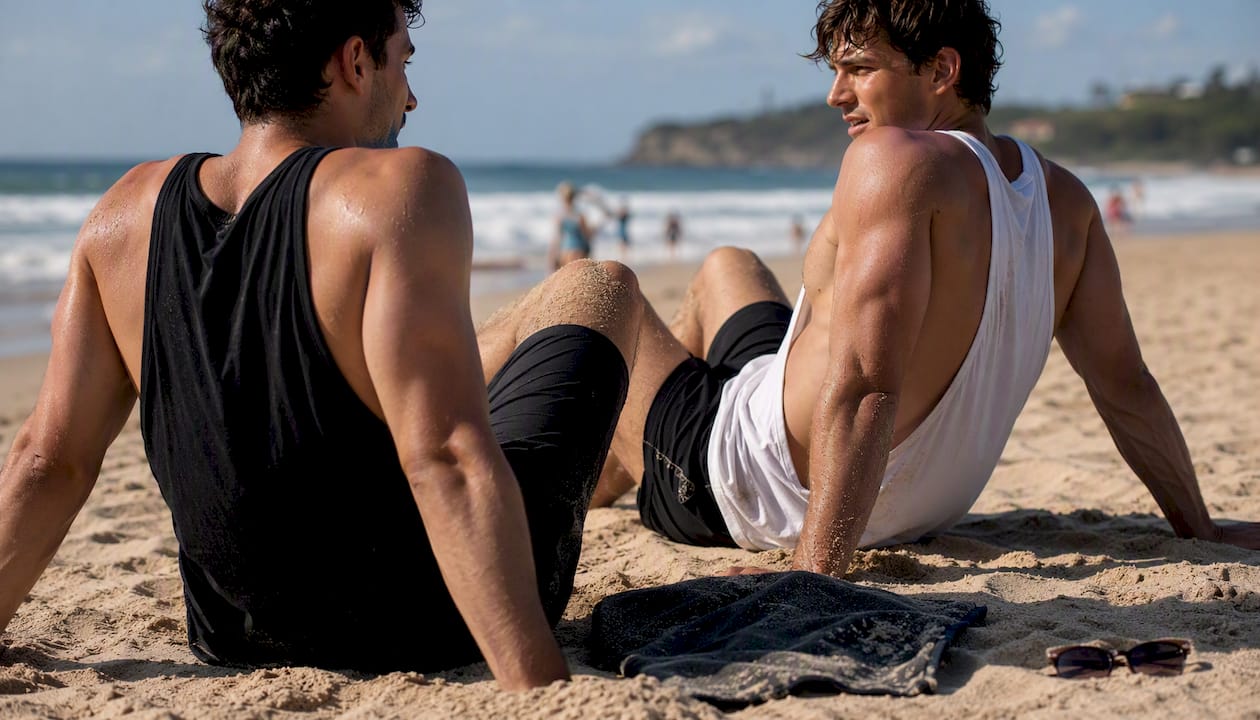
For strictly indoor lifting, sun exposure is a non-issue and the choice comes down to mobility versus coverage preference. For anyone training outside regularly, especially in summer, a tank is the more practical pick, and pairing it with a light long-sleeve for warmups or a hat covers the gap a stringer or tank leaves on the shoulders and neck. Coverage here isn’t just about modesty. It’s a real factor in how much skin sees direct sun during an hour-long outdoor session.
Do Stringers and Tanks Fit Men and Women Differently
Stringers are traditionally cut for a straighter, boxier male torso shape, with a Y-back or racerback that sits close to the spine. Women’s stringers and cropped muscle tanks usually add a narrower shoulder measurement and a shorter body length, though the deep armhole and thin strap details carry over from the men’s cut.
Tank tops split more clearly by design intent. Men’s training tanks tend toward wider armholes and boxier body shapes for layering over muscle mass. Women’s tanks more often add a fitted or semi-fitted waist, a scoop or racerback style, and sometimes a built-in shelf bra for support during higher-intensity training. Unisex tanks, which many streetwear-influenced gym brands favor, split the difference with a straight body and moderate armhole depth that works across builds.
The practical takeaway: don’t assume a size chart translates evenly between men’s and women’s cuts of the same style name. A women’s medium stringer and a men’s medium stringer can differ by several inches in shoulder width and body length. Always check the specific size chart on the product page rather than guessing based on a general “small, medium, large” label, since that single check prevents most of the fit complaints that show up in returns.
Who Actually Wears Which, and Why It’s Shifting
Bodybuilding and physique communities have worn stringers for decades, and that hasn’t changed. What has changed is the crossover into general fitness culture, driven largely by influencer lifting content and gym-selfie culture on social platforms. A stringer that once signaled “competitive bodybuilder” now shows up on casual gym-goers who simply like the aesthetic.
CrossFit and functional fitness communities lean tank-heavy, prioritizing range of motion and practicality over physique display, since a WOD doesn’t care how your shoulders look. Powerlifting circles split down the middle. Ventilation matters less under a singlet or heavy sweatshirt during a meet, but training days favor whatever feels least restrictive under a bar.
Women’s participation in stringer-style tops has grown noticeably over the past several years, tracking the broader rise of women in strength sports and visible muscle-building content. Tank tops remain the more universal choice across group fitness, cardio-focused training, and anyone who wants one top that works in nearly every gym setting without a second thought. Neither trend is replacing the other. They’re settling into their own lanes, sorted more by training goal and personal comfort than by any single demographic.
Why the Coverage Debate Misses the Real Point
Most advice on this topic gets stuck arguing about modesty and confidence, as if the choice between a stringer and a tank is purely social. That misses the actual decision variable: what you’re training that day. A stringer’s value isn’t that it looks bold. It’s that the open back and thin straps genuinely reduce fabric interference during rows, pull-ups, and overhead work, which the strap and armhole differences in cut make measurable, not just visual.
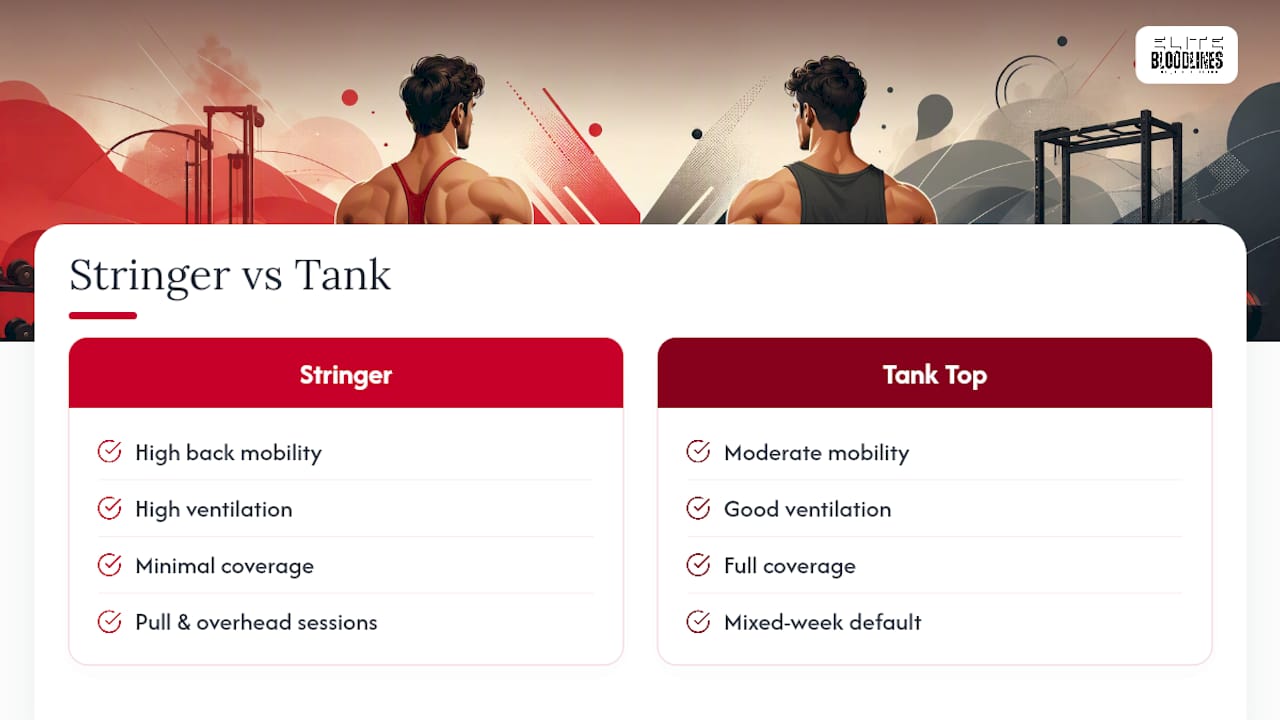
The bigger mistake I see is lifters picking one style and wearing it for every session regardless of the movement pattern. That’s backwards. A pull day benefits from a stringer’s back mobility in a way a leg day never will. A tank’s versatility is exactly why it should be the default for anyone who trains a mix of modalities in a week, and a stringer should be the deliberate choice for specific push and pull sessions where the mobility gain actually matters.
Prioritize fit testing over aesthetics first. A stringer that bags at the armhole or a tank that rides up at the hem defeats the purpose of either style, no matter how good it looks on a hanger.
Elite Bloodlines Picks for Stringer Style and Tank Versatility
Elitebloodlines built its training tops around the same fit rules covered above: strap stability, hem length that survives a squat, and fabric blends that hold shape through heavy training. The EB Graphic Tees collection covers the tank-style side of this comparison with heavyweight fabric and bold designs built for both the gym floor and the street after.
Readers who want a more structured, moderate-coverage cut should check the EB Heritage Collection V1 classic fit, which favors a straighter body and reinforced hem over the deep-cut physique look. Before buying either style, check three things on the product page: the fabric percentage breakdown (elastane content matters for stretch recovery), the size chart against your own chest and body-length measurements, and the listed hem length relative to your torso. New limited-run tops land regularly in Current Drops, so check back if a specific stringer-style cut isn’t in stock today. Browse the current lineup and match a cut to your next training day.
Frequently Asked Questions
Is a stringer or tank top better for building muscle definition visibility? A stringer shows more of the back, shoulders, and traps because of its deep armholes and thin straps, making it the better pick when physique visibility is the goal.
Can I wear a stringer at most commercial gyms? Most gyms allow stringers, but conservative or family-oriented facilities sometimes prefer more coverage. Check the dress code or default to a tank if you’re unsure.
Do stringers run smaller than tank tops? Stringers often fit closer to the body through the chest panel, so many lifters size up slightly compared to their usual tank top size to avoid gaps at the armhole.
What fabric blend lasts longest for heavy training? Mid-weight poly-cotton or poly-spandex blends with reinforced ribbing hold shape better over time than pure cotton or ultra-lightweight performance fabric alone.
Is a tank top or a stringer better for outdoor training? A tank top covers more skin and offers more practical protection from sun exposure during outdoor sessions, while a stringer prioritizes ventilation over coverage.
Sources
- Stringer vs Tank: Best Fit & Sizing Guide for Lifters |
- Muscle Tank Tops vs Stringer Tanks: OEM Fit & Coverage Guide – Diguan Apparel
- Tuffwraps