

T-Shirt GSM Explained: How to Pick the Right Weight
GSM measures grams of fabric per square meter, and it’s the single fastest way to predict how a tee will feel, drape, and hold up. Start at 160–180 GSM for everyday tees. Go lighter, 140–160 GSM, for summer wear. Go heavier, 180–220 GSM and up, for structured streetwear that holds a shape. One caveat: GSM alone doesn’t guarantee softness or quality. Fiber, knit, and finish decide that.
- 140–160 GSM: lightweight, breathable, drapes soft
- 160–180 GSM: the everyday sweet spot for retail tees
- 180–220+ GSM: heavyweight, structured, built for bold graphics
Key Takeaways
The right GSM depends on matching fabric weight to your use case first, then confirming fiber, yarn, and finish before you buy.
| Point | Details |
|---|---|
| Start at 160–180 GSM | This band works as the everyday baseline for retail tees before adjusting for climate or fit. |
| Heavyweight means 180–220+ GSM | Structured streetwear and premium basics typically sit in this range for drape and print stability. |
| GSM doesn’t equal quality | Fiber, yarn type, knit structure, and finishing determine feel and durability at any given weight. |
| Specify tolerance and test method | A tech pack needs target GSM, ±5 to 7% tolerance, fabric stage, and the test standard used. |
| Elite Bloodlines targets 200 to 240 GSM | The brand’s core line uses compact-knit heavyweight cotton to keep oversized fits and large prints stable. |
Table of Contents
- What Does GSM Mean on a T-Shirt Tag?
- What Are the Practical GSM Bands for T-Shirts?
- Why Isn’t Heavier Fabric Always Better Quality?
- How Do You Choose and Test the Right GSM?
- How Elite Bloodlines Chooses Fabric Weight
- The Number That Actually Matters, and the Ones That Don’t
- Heavyweight Tees Built for Structure, Not Just Weight
- Frequently Asked Questions
- Sources
What Does GSM Mean on a T-Shirt Tag?
GSM stands for grams per square meter, and the math behind it is simple. A lab technician cuts a fabric swatch of a known area, weighs it on a precision scale, then scales that number up to represent one full square meter. That final figure is the GSM you see on a spec sheet or hangtag.
Two international standards govern this test: ISO 3801 and ASTM D3776. Both exist because the same fabric can weigh differently depending on when you measure it. Greige fabric straight off the loom weighs less than the same fabric after dyeing and finishing, and a finished garment often weighs slightly different from the raw yardage it was cut from because of shrinkage, seams, and trims.
That’s why serious buyers never accept a bare number. They ask three questions:
- What stage was this measured at, greige, finished fabric, or the cut-and-sewn garment?
- What tolerance applies around the target number?
- What test method produced it, ISO 3801 or ASTM D3776?
A “180 GSM” claim with no tolerance attached is close to meaningless. Specify the target, the tolerance, the fabric stage, and the test method every time you write a spec, and you’ll stop getting surprised by shipments that feel thinner than the sample.
Pro Tip: Ask your supplier whether their stated GSM comes from finished fabric or the sewn garment. The gap between the two can run several grams, and it’s the most common source of “this doesn’t match the swatch” disputes.
What Are the Practical GSM Bands for T-Shirts?
Fabric weight breaks into bands you can shop by, and each one signals a different use case. Here’s how the ranges shake out in practice.
- Under 140 GSM: ultra-light, often semi-sheer, built for hot-climate basics and technical layering
- 140–160 GSM: lightweight, soft drape, common on fast-fashion and summer promo tees
- 160–180 GSM: the everyday retail standard, balancing cost, comfort, and opacity
- 180–220 GSM: heavyweight, boxier drape, favored for premium basics and graphic streetwear
- 220 GSM and up: ultra-heavy, near-structured, built for oversized silhouettes and bold front-and-back prints
Industry guides commonly break the market into lightweight (roughly 120–160 GSM), mid-weight (160–200 GSM), and heavyweight (180–240+ GSM) tiers, and those bands map directly to purchase decisions. A promo giveaway tee rarely needs more than 140–160 GSM since it’s worn once or twice. A streetwear drop meant to anchor a whole outfit usually wants 200 GSM or higher, because that weight is what makes an oversized fit hang with structure instead of collapsing into a bedsheet.
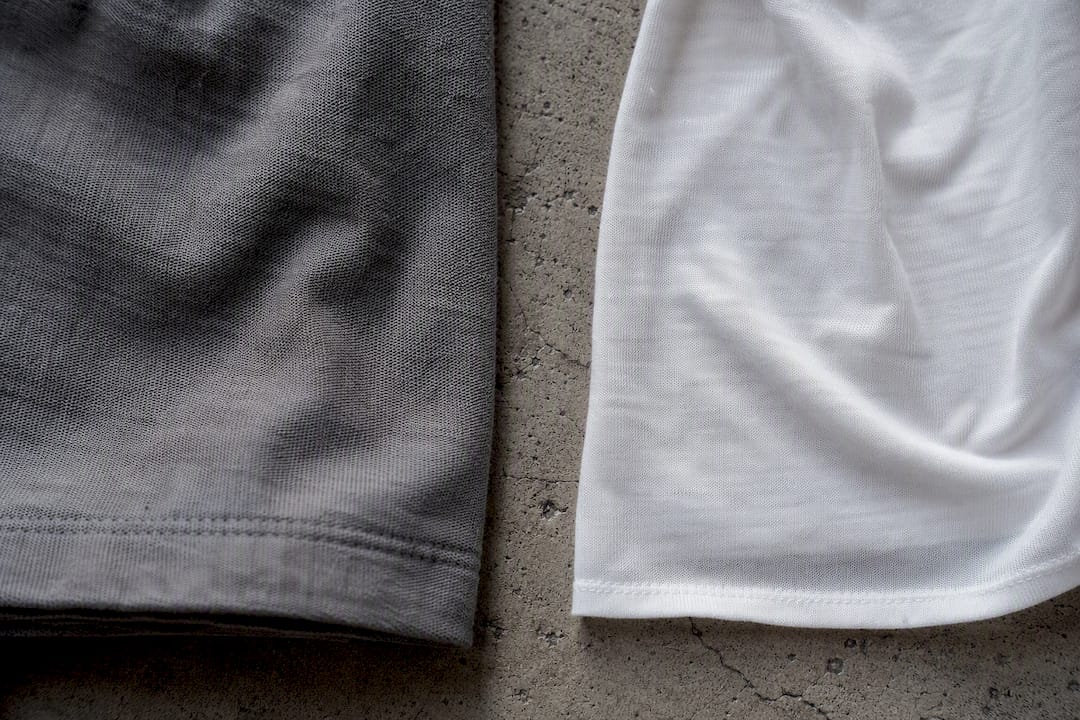
Climate matters too. Heavier fabric traps more heat and dries slower, so a 220 GSM tee that feels great in a fall drop can feel oppressive in a humid August market. Lighter fabric solves heat but sacrifices opacity, which is why white or pastel tees under 160 GSM often need a lining or a double layer to avoid showing through.
Why Isn’t Heavier Fabric Always Better Quality?
Here’s the part that trips up a lot of shoppers. GSM tells you weight and opacity, not softness or durability, because two fabrics can hit the exact same number on the scale and feel like completely different garments in your hands.
- Fiber: combed, long-staple cotton produces a smoother, stronger yarn than short-staple cotton, and polyester blends behave differently under heat and stretch than pure cotton
- Yarn type: ring-spun yarn is tighter and more durable than open-end yarn, which tends to pill faster at the same weight
- Knit structure: single jersey drapes looser, while interlock knits feel denser and more stable at an identical GSM
- Finishing: compacting and mercerizing tighten the weave and reduce pilling, which is why two 200 GSM shirts from different mills rarely feel alike
A 200 GSM open-end cotton tee and a 200 GSM ring-spun, compact-knit tee can sit on the same rack with the same tag weight and feel like they belong to different price tiers entirely.
If you’re sourcing shirts, don’t stop at the GSM figure. Ask for the fiber type, the yarn spec (ring-spun versus open-end), the knit structure, and the finishing process. That combination, not the number alone, tells you what you’re actually buying.
How Do You Choose and Test the Right GSM?
Picking a GSM isn’t guesswork if you follow a real sequence. Here’s the process that actual apparel buyers use before committing to a production run.
- Define the use case first. Everyday retail, summer promo, or structured streetwear each point toward a different starting band.
- Pick a starting GSM using the bands above, then adjust for climate. Drop 10 to 15 GSM for humid markets and add roughly 10 GSM for oversized, boxy silhouettes that need to hold shape without extra fabric weight sagging the drape.
- Request swatches in the exact color and finish you plan to order, never a generic sample.
- Run the swatch through a wash-and-dry cycle, then reweigh and remeasure. Fabric that shrinks or thins after one wash will do the same across a full production run.
- Test decoration on the same swatch before locking the order.
Your tech pack should list target GSM, an acceptable tolerance (many buyers use ±5 to 7%), the fabric stage measured, the fiber content, the knit type, a shrinkage target, and the test method used.
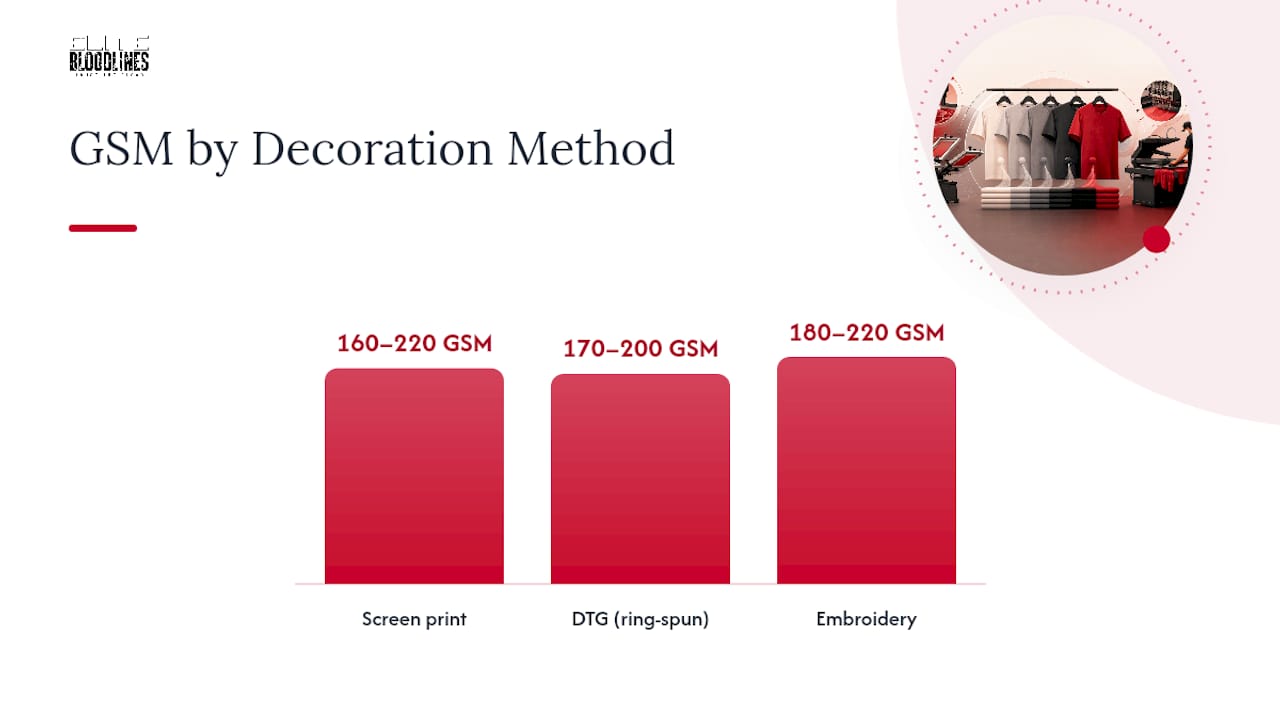
| Decoration Method | Recommended GSM Range |
|---|---|
| Screen print | 160–220 GSM |
| DTG (direct-to-garment) | 170–200 GSM, ring-spun preferred |
| Embroidery | 180–220 GSM |
Pro Tip: If you’re deciding between two suppliers quoting the same GSM, order swatches from both and weigh them yourself after a wash cycle. The number on the invoice and the number on your scale don’t always agree.
How Elite Bloodlines Chooses Fabric Weight
We build around heavyweight, structured cotton because streetwear needs to hold its shape, not fold like a throwaway shirt. Most of our core pieces sit in the 200 to 240 GSM range, which is what lets an oversized fit hang square and carry a bold front-and-back graphic without warping under the print.
- Heavyweight cotton chosen for drape and print stability
- Swatch and wash testing run before any drop goes into production
- Compact-knit finishing prioritized to reduce pilling on high-graphic pieces
Greatness Runs Deep starts with fabric that can carry the weight of the design. If the shirt collapses, the graphic doesn’t matter.
Match your own needs the same way we match ours: pick the band that fits your use case first, then confirm the fiber and finish before you commit.
The Number That Actually Matters, and the Ones That Don’t
GSM earns its reputation because it’s measurable, standardized, and consistent across suppliers, but too many buyers treat it as a proxy for quality instead of what it actually is: a weight spec. The research backs a simple judgment: pick your band by use case first, then interrogate fiber, yarn, and finish before you sign off on a production run.
Where conventional advice falls short is the assumption that “higher GSM equals better shirt.” That’s wrong often enough to matter. A 220 GSM tee knit from open-end yarn with no compacting can pill faster and feel rougher than a well-finished 180 GSM ring-spun shirt. Weight without construction quality is just heavy fabric.
If you take one thing from this guide, prioritize the fiber and knit conversation over chasing a bigger number. A tech pack that specifies target GSM, tolerance, fiber, and knit structure will protect you far better than a spec sheet with a single weight figure and nothing else. That’s the difference between buying a shirt and buying a guess.
Heavyweight Tees Built for Structure, Not Just Weight
Elite Bloodlines built its entire core line around one problem most streetwear brands ignore: cheap heavyweight cotton that’s heavy but hollow. Our tees run 200 to 240 GSM with compact-knit finishing, which means the weight you feel is structural, not just bulk sitting on a scale.

That structure matters most when a design covers the whole front or back panel. A large graphic on thin fabric warps and cracks after a few washes. A large graphic on a properly finished 220 GSM tee holds its line. If you’ve read this far wanting a shirt that won’t fold under a bold print, browse the EB Graphic Tees collection and check the fabric spec listed on each product page against the bands covered above. Pick your GSM, then pick your drop.
Frequently Asked Questions
What is a good GSM for a t-shirt? For everyday retail tees, 160 to 180 GSM works as a balanced starting point. Go heavier, 200 GSM or above, for structured streetwear pieces meant to hold an oversized fit.
Is higher GSM always better quality? No. Higher GSM means more fabric weight, not automatically better construction. A well-finished, ring-spun 180 GSM tee can outperform a poorly finished 220 GSM tee in softness and pilling resistance.
What GSM is considered heavyweight? Most guides place heavyweight cotton starting around 180 to 200 GSM, with ultra-heavy pieces running 220 GSM and up, common in premium streetwear drops.
How do I test GSM before placing a bulk order? Cut a known-area swatch, weigh it, and scale to one square meter, or simply request pre-tested swatches from your supplier and run your own wash-and-reweigh cycle before confirming the order.
Does GSM affect how a shirt prints? Yes. Screen printing works best on 160 to 220 GSM, DTG prefers 170 to 200 GSM, and embroidery favors 180 to 220 GSM fabric for stable, crack-resistant results.
Sources
- T-Shirt GSM Guide: How to Choose the Right Fabric Weight | GOODTEX
- Cotton t-shirt fabric configurations guide | Alibaba seller blog