

True to Size Meaning: How to Shop With Confidence
“True to size” (TTS) means an item fits the way its label says it should. Order your usual size — but only after you’ve checked the brand’s size chart and scanned customer reviews for consistent fit signals. If a product page lists model measurements and a clear fit note like “model wears size M,” that TTS claim carries real weight. Without those signals, it’s a guess.
Key Takeaways
TTS is a brand-relative signal, not a universal standard — always pair it with a size chart, real measurements, and consistent customer reviews before you buy.
| Point | Details |
|---|---|
| TTS is brand-relative | “True to size” means the brand’s labeled size, not a universal standard — always check that brand’s chart. |
| Measure yourself first | Capture chest, waist, hips, inseam, and foot length before consulting any size chart. |
| Reviews with measurements win | Prioritize reviews that list the buyer’s body measurements and the size they ordered. |
| Category rules differ | Shoes, tops, bottoms, and structured garments each have distinct fit behaviors — apply the right heuristic per category. |
| Elitebloodlines provides fit data | Every Elitebloodlines product page includes size charts, model measurements, and explicit fit notes for confident ordering. |
Table of Contents
- What does “true to size” actually mean, and where did it come from?
- How can you verify a TTS claim before you buy?
- How to measure yourself and read a size chart
- How does TTS vary by item type?
- When should you size up or size down?
- What are the red flags that a TTS claim can’t be trusted?
- How is fit tech reducing TTS ambiguity?
- The Elitebloodlines approach to fit
- Gear up with the right fit from Elitebloodlines
- Sources
What does “true to size” actually mean, and where did it come from?
TTS is shorthand for “true-to-size,” a term that spread through sneaker and streetwear forums where remote buying made shared fit intelligence a survival skill. Collectors needed a fast way to tell each other: “This item fits the way the tag says.” Marketplaces picked it up, e-commerce sellers adopted it, and now you’ll see it on product pages everywhere from independent drops to major retailers.
The phrase sounds precise. It isn’t.
The core problem: there is no universal sizing standard for clothing. A size M at one brand is a size L at another. Vanity sizing, different fit models, regional standards (US, EU, JP), and fabric behavior all shift what “fits as labeled” actually means in practice. Japanese streetwear brands, for example, typically run smaller than American ones — a detail experienced collectors track obsessively.
Footwear has a cleaner history. The Brannock device, invented by Charles Brannock in the 1920s, standardized foot measurement and gave shoe sizing a physical anchor. Clothing never got an equivalent. That’s why a shoe labeled size 10 carries more objective meaning than a shirt labeled size L.
How can you verify a TTS claim before you buy?
Don’t take a single “TTS” label at face value. Run through this checklist on every product page before you add to cart:
- Read the brand’s size chart. Match your measurements to the chart’s numbers, not to your size at another brand. Pants labeled 32 typically refer to a 32-inch waist, but even that can vary by a half-inch depending on how the brand measures.
- Find the model’s measurements and size. A page that says “model is 6’1”, 185 lbs, wearing size L" gives you a real reference point. No model info? Lower your trust in the TTS claim.
- Scan customer reviews for consistent fit signals. One review saying “runs small” is noise. Five reviews saying it? That’s a pattern. Prioritize reviews that name the reviewer’s measurements and the size they ordered.
- Check the material and intended fit. A non-stretch canvas jacket and a 4-way stretch gym tee behave completely differently. Knowing the fabric tells you whether the TTS claim will hold after a wash.
- Confirm the return and exchange policy. If returns are expensive or restricted, a TTS-only claim with no supporting data is a real financial risk.
Pro Tip: The highest-value review you’ll ever read includes the reviewer’s chest/waist measurement, their height, and the size they bought. Filter for those first — they’re worth ten generic “fits great!” reviews.
Brands that publish garment flat measurements and fit notes see fewer fit-related returns, according to WearView’s fit glossary. That’s a commercial incentive for accuracy, which means pages with detailed fit content are more likely to be honest about how an item actually fits.
How to measure yourself and read a size chart
Grab a soft measuring tape and measure over minimal layers. Here’s what to capture:
Chest/Bust: Wrap the tape around the fullest part of your chest, keeping it parallel to the floor. Don’t pull it tight.
Waist: Measure around your natural waist, roughly an inch above your navel. Breathe normally.
Hips: Stand with feet together and measure around the fullest part of your hips, usually 7–9 inches below your natural waist.
Inseam: Measure from your crotch to the bottom of your ankle along the inside of your leg.
Foot length: Stand on a piece of paper, trace your foot, and measure from heel to the tip of your longest toe.
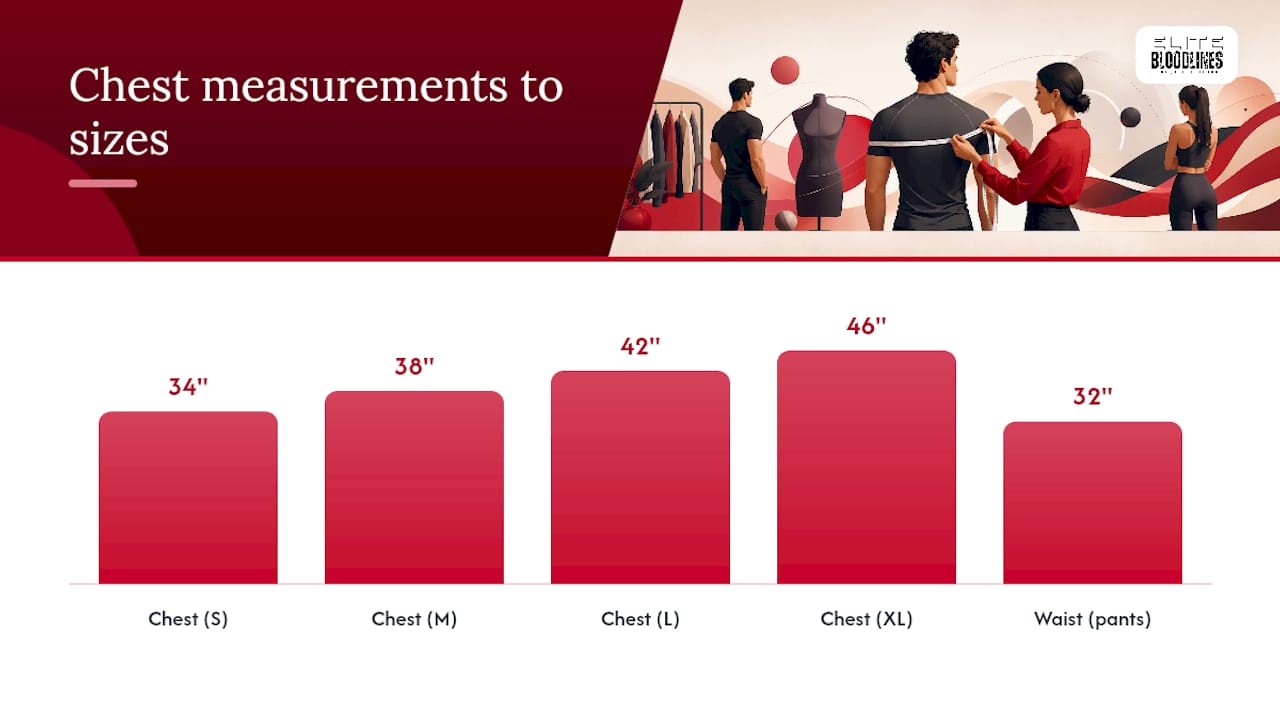
Once you have your numbers, map them to the brand’s size chart. The table below is a generic example only — always use the specific brand’s chart, not this one.
| Your Measurement | Example Size Chart Label |
|---|---|
| 34" chest | S |
| 38" chest | M |
| 42" chest | L |
| 46" chest | XL |
| 32" waist (pants) | 32 |
A 32-inch waist maps to a labeled “32” in most pants, as HowToGeek’s TTS explainer confirms. But always cross-reference with the brand’s own chart before ordering.
Pro Tip: Measure both feet and use the larger number for shoe sizing. Factor in sock thickness — a thick athletic sock can push you up a half size.
How does TTS vary by item type?
The phrase means something different depending on what you’re buying. Here’s what to watch for by category:
- Shoes: Foot length drives the size, but width matters too. Narrow toe boxes often require sizing up a half. Regional conversions add another layer — a US men’s 10 is a UK 9 and a EU 44, so always confirm which scale the seller uses. The Brannock device gave footwear a more standardized baseline than clothing, so TTS claims in shoes tend to be more reliable when the seller uses standard US sizing.
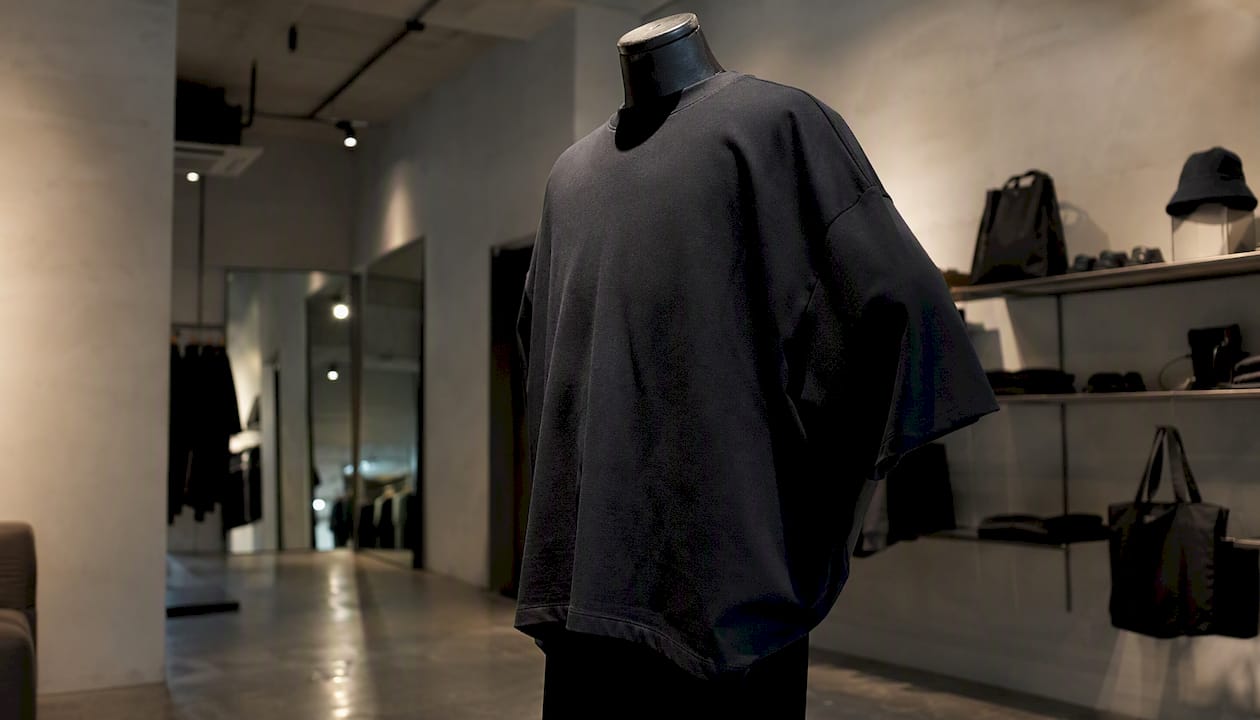
- Tops (tees, shirts, jackets): Chest and shoulder fit are the critical measurements. Oversized designs are intentionally cut larger than a standard TTS fit. A heavyweight streetwear tee built for a boxy silhouette is not the same as a fitted tee claiming TTS — know which you’re buying before you size down.
- Bottoms (jeans, shorts): Waist measurement is the starting point, but hip measurement matters for non-stretch cuts. Rigid denim with no stretch often requires sizing up one if you’re between sizes. Stretch denim is more forgiving, but it can also relax after a few wears, so size to your actual waist rather than your “comfortable” waist.
- Structured garments (blazers, dresses): Cut and tailoring create the most variance here. Rely on garment flat measurements rather than the size label. A blazer labeled M at a slim-cut brand fits very differently from an M at a relaxed-cut brand.
Streetwear collectors build personal sizing databases for exactly this reason — brand-specific mental maps that outperform any generic TTS claim. You can replicate this by saving a fit note for every brand you buy from regularly.
When should you size up or size down?
Mixed signals happen. Here’s how to cut through them:
If the size chart and three or more consistent reviews agree, order your usual size. That’s the strongest possible signal stack.
If reviews say “runs small” and the fabric has no stretch, size up one. Non-stretch fabrics don’t forgive a tight fit the way jersey or spandex blends do. This applies especially to heavyweight tees with structured cuts.
If returns are free, order your usual size and adjust after trying. The cost of a return is zero, so the risk is low.
For shoes with narrow toe boxes, size up a half. Your foot needs room to flex, especially during activity.
One rule that trips people up: labels like “oversized” are intentional design choices, not sizing errors. An oversized streetwear piece is supposed to fit large. Sizing down to get a “normal” fit defeats the design. Check the product’s intended fit before you decide whether TTS applies at all.
What are the red flags that a TTS claim can’t be trusted?
Some product pages wave warning signs. Spot them before you buy:
- Only one review mentions fit, with no measurements cited
- No size chart on the product page, or a chart with only S/M/L/XL and no measurements
- No model measurements or model size listed
- Vague fabric description with no stretch percentage or material breakdown
- Inconsistent sizing labels (mixing US and EU sizes without a conversion note)
- Restrictive return policy: final sale, short return window, or buyer-pays-return shipping
When you hit multiple red flags at once, take action before you order. Contact customer service with your exact measurements and ask how the item fits. Look for other styles from the same brand that have clearer fit notes — those give you a reference point. If you’re buying from a resale or marketplace listing with no returns, rely only on explicit garment measurements and photos that include a measuring tape. A TTS label from a reseller with no return option is worth almost nothing on its own.
How is fit tech reducing TTS ambiguity?
The e-commerce industry knows TTS is broken, and it’s building tools to fix it. You’ll encounter a few types:
Size calculators ask for your measurements and map them to the brand’s chart. Basic, but better than guessing.
Recommendation engines go further. They’re trained on purchase and return data — when thousands of shoppers with a 38" chest return a size M and keep a size L, the algorithm learns the brand runs small. These systems give personalized size recommendations based on real behavior, not just the label.
Virtual try-on and body-scanning tools let you visualize fit on a digital avatar built from your measurements. Adoption is growing, and the technology is increasingly accurate for structured garments.
Community-sourced fit profiles are the streetwear version of this. Platforms and forums aggregate fit notes from real buyers, building brand-specific sizing intelligence that mirrors what experienced collectors do manually. Fit-recommendation technology and virtual try-on tools are increasingly used to reduce ambiguity in TTS claims by matching a customer’s measurements to historical fit data.
Pro Tip: When a brand offers a fit tool, check whether it explains its data inputs — what measurements it uses and how many returns it’s trained on. A tool that’s transparent about its methodology is far more trustworthy than one that just outputs a size with no explanation.
The Elitebloodlines approach to fit
Elitebloodlines builds heavyweight streetwear and gym apparel for people who refuse to wear something that doesn’t represent them. That commitment extends to fit. Every product in the collection includes detailed size charts and model measurements so you’re never left guessing whether “TTS” means anything real. The brand’s core line essentials carry explicit fit notes, and the oversized pieces are labeled as such — no ambiguity about whether you’re buying a structured fit or an intentional drop-shoulder silhouette.
Fit consistency is part of what builds loyalty in this space. When you know a brand’s sizing holds across drops, you buy with confidence.
Gear up with the right fit from Elitebloodlines
Knowing the true to size meaning is only half the equation. The other half is buying from a brand that gives you the tools to act on it.
Elitebloodlines publishes full size charts, model measurements, and fit notes on every product page — so you’re not decoding vague TTS claims, you’re making a call with real data. The EB Core Line Oversized Tee is a strong starting point: the product page specifies the intended oversized fit, lists garment measurements, and tells you exactly what the model is wearing. Check the size chart, match your chest measurement, and order with confidence. If the fit isn’t right, the brand’s exchange policy has you covered. Browse the current drops and use the size chart before you check out.
Sources
- What Does “TTS” Mean, and How Do You Use It?
- True to Size: Definition & Why It Affects Returns
- TTS | Streetwear Glossary | Streetwear Directory
- Charles F. Brannock — Invention Stories
- What Does “True to Size” Actually Mean? | YourSizer
Recommended
- How to Choose Heavyweight T Shirts That Hit Hard – Elite Bloodlines Apparel
- Men’s Oversized Streetwear Tees That Earn Respect – Elite Bloodlines Apparel
- Why Identity Driven Clothing Brands Build Loyalty – Elite Bloodlines Apparel
- How to Style Gym Streetwear Without Looking Basic – Elite Bloodlines Apparel