

How to Unshrink a Hoodie and Get Your Fit Back
Yes, you can unshrink a hoodie — and the fix takes less than an hour of active effort. The most reliable home method is a conditioner or baby-shampoo soak that relaxes the fibers, followed by careful hand-stretching and flat air-drying. Natural-fiber hoodies respond well; heat-melted polyester blends and felted wool are a different story.
Here’s the core sequence:
- Soak the hoodie in lukewarm water with baby shampoo or gentle conditioner for 10–60 minutes
- Stretch the damp fabric section by section, working symmetrically from body to sleeves to hem
- Dry flat, pinned or weighted to hold the new shape for 24–48 hours
If the fabric feels stiff, matted, or the fibers look fused together, recovery is unlikely. That’s the hard truth up front.
Key Takeaways
The conditioner soak and flat-dry method works for most cotton and cotton-blend hoodies, recovering 1–3 inches of lost size when the fibers haven’t been permanently damaged.
| Point | Details |
|---|---|
| Core method | Soak in lukewarm water with baby shampoo or conditioner for 10–60 minutes, then stretch and dry flat. |
| Best fabric candidates | Cotton and cotton-heavy blends respond well; polyester-dominant and felted wool rarely recover. |
| Drying is critical | Pin or weight the stretched hoodie and air-dry flat for 24–48 hours — no dryer, no heat. |
| Know the limits | Felted wool, melted synthetics, and distorted seams are signs of likely permanent damage. |
| Elitebloodlines care | Wash cold inside out, lay flat to dry, and store folded to protect heavyweight hoodies long-term. |
Table of Contents
- What you’ll need before you start
- How to unshrink a hoodie at home, step by step
- Does the method work the same for every fabric?
- When does steam actually help?
- How to stop your hoodie from shrinking again
- Signs the hoodie can’t be fully restored
- Elitebloodlines care guidance for heavyweight hoodies
- The mistake most people make when trying to fix a shrunken hoodie
- When repair isn’t worth it, Elitebloodlines has you covered
- Sources
What you’ll need before you start
Gather these before you touch the hoodie. Stopping mid-soak to hunt for a towel is how garments get wrung out and distorted.
- A clean sink, basin, or bathtub large enough to fully submerge the hoodie
- Lukewarm water (not hot — heat is what caused the problem)
- 1–2 tablespoons of baby shampoo or a gentle hair conditioner (avoid heavy, oil-based formulas)
- Two clean dry towels
- A flat drying surface: a clean table, drying rack, or blocking board
- Optional: rust-proof pins, small weights, or a similarly sized hoodie to use as a shape reference
Safety note: If your hoodie is dyed or has a bold graphic, test colorfastness first. Dip a hidden corner in the soak solution for two minutes and press it against a white cloth. If color transfers, hand-wash it separately in cold water only and skip the conditioner.
Pro Tip: Lay a hoodie you know fits correctly on the drying surface before you start. Use it as a template to stretch your shrunken piece back to the right dimensions.
How to unshrink a hoodie at home, step by step
This is the method that works for most cotton and cotton-blend hoodies. Follow the order exactly.
- Fill your basin with lukewarm water. The water should feel neutral on your wrist, not warm. Hot water tightens fibers further.
- Add 1–2 tablespoons of baby shampoo or conditioner and swirl until dissolved. This ratio is a proven household starting point — enough to coat the fibers without leaving a heavy residue.
- Submerge the hoodie completely. Press it down gently so every section is saturated. No dry spots.
- Soak for 10–30 minutes for most cotton blends; up to 60 minutes for stubborn shrinkage. The conditioner temporarily relaxes protein bonds in natural fibers, making the fabric pliable enough to stretch without tearing.
- Lift the hoodie out without rinsing. The conditioner needs to stay in the fabric while you work. Support the full weight of the garment — do not let it hang from one corner.
- Roll it in a dry towel. Lay the hoodie flat on the towel, roll them together like a sleeping bag, and press firmly. This pulls out excess water without any wringing. Repeat with the second towel if needed.
- Lay the hoodie flat on your drying surface. Now stretch it. Work section by section: body width first, then length, then each sleeve, then the hem and cuffs. Use both hands, apply steady pressure, and hold each stretch for a few seconds before moving on.
- Pin or weight the edges to hold the stretched shape. If you have a reference hoodie, match the dimensions as closely as possible.
- Air-dry completely — 24–48 hours. No dryer. No direct sunlight. No heat source. Pinning and flat-drying helps the fibers set in their new position; exposing the garment to heat again before it’s fully dry can undo the work.
Stretching technique notes:
- Always stretch symmetrically. Pull both sides of the body equally, both sleeves to the same length.
- Never snap or yank the fabric. Slow, sustained pressure beats aggressive tugging every time.
- Avoid pulling directly across printed graphics. Stretch around them, applying pressure on either side.
Does the method work the same for every fabric?
Short answer: no. The soak-and-stretch method works best on natural fibers. Synthetics are a different game entirely.
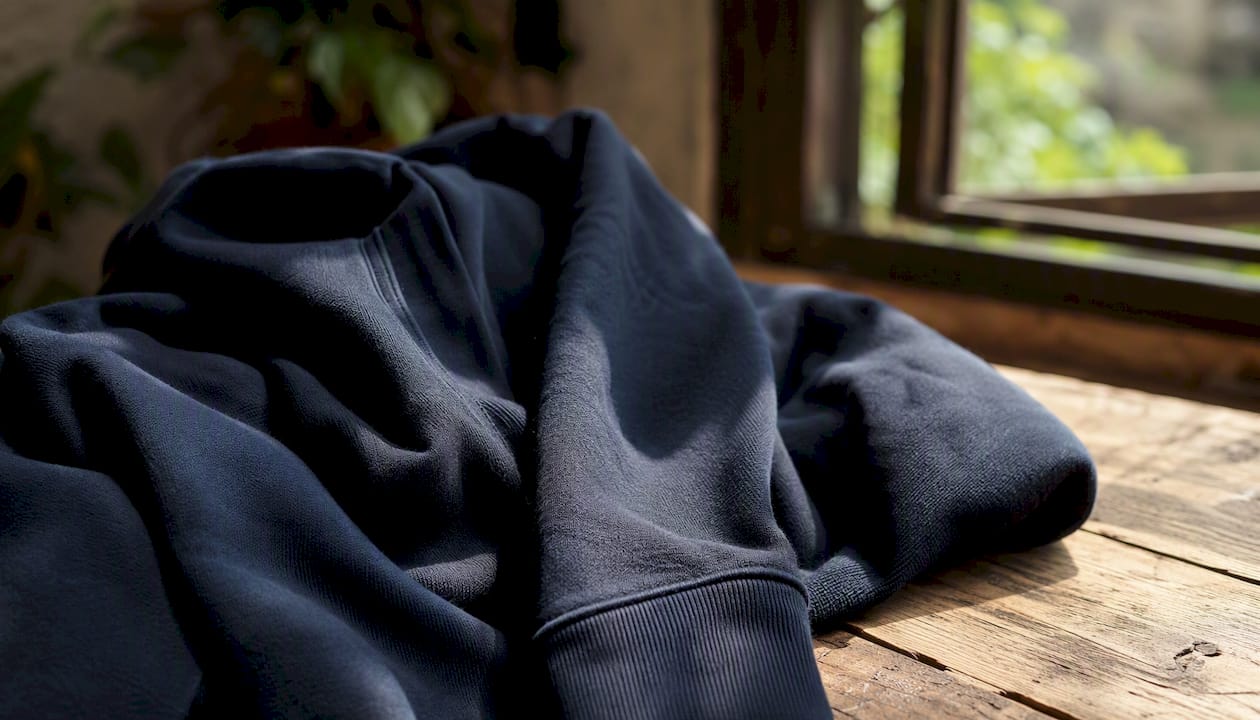
Cotton and cotton-blend hoodies are the best candidates. The conditioner soak and careful stretching can typically recover much of the lost size for cotton-heavy pieces. Understanding how cotton and polyester behave differently under heat helps set realistic expectations before you start.
Wool and cashmere need cool water, not lukewarm. Heat plus moisture plus agitation causes felting, where the fiber scales lock together permanently. If your wool hoodie feels dense, stiff, and matted after shrinking, felting has likely already occurred.
Polyester-heavy blends are the hardest case. High heat in the dryer can physically melt or deform synthetic fibers. When that happens, no amount of soaking reverses the structural change. A vinegar soak (one part white vinegar to two parts water) is an alternate approach some people use for natural fabrics, though most find conditioner leaves the fabric softer and easier to work with during stretching.
When does steam actually help?
Steam is a targeted tool, not a full replacement for the soak method. Use it for localized tight spots — a sleeve that’s still snug after drying, or a hem that pulled in unevenly.
- Garment steamer or bathroom steam: Hold the steamer a few inches from the fabric and pull gently as the steam penetrates. Keep one hand on the fabric so you can feel when it relaxes.
- Bathroom steam method: Hang the hoodie in a steam-filled bathroom (hot shower running, door closed) for 10–15 minutes, then stretch the tight areas by hand while the fabric is warm and damp.
- Test first: Always steam a hidden seam or inside hem before working on a visible area. Steaming can relax fibers enough for targeted stretching, but on polyester or heat-damaged fleece, steam can make the problem worse.
What to avoid:
- No dryer, even on low. Any tumble heat risks re-shrinking or further melting synthetic fibers.
- No hot iron directly on fabric. An iron concentrates heat in a way that can scorch or permanently flatten the weave.
- No steam on already-felted wool. More heat and moisture accelerates the damage.
How to stop your hoodie from shrinking again
The best fix is the one you never need. A few habit changes protect your hoodie long-term.
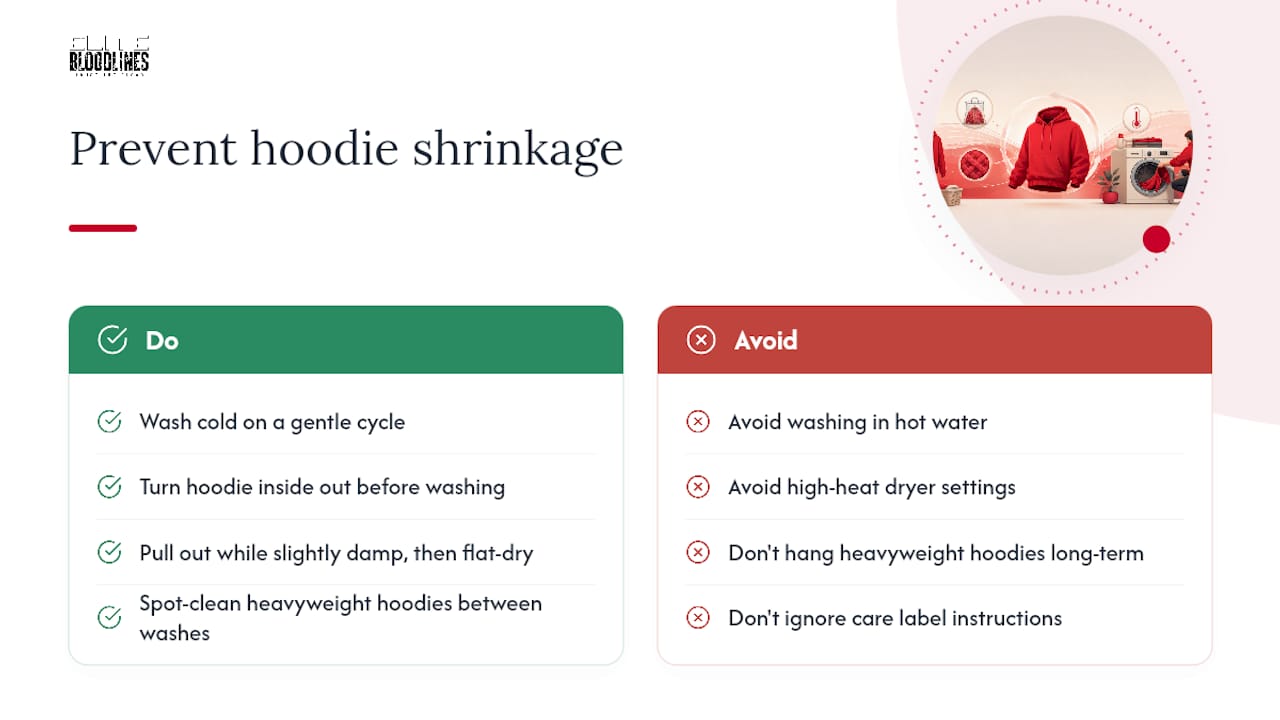
Wash cold, always. Hot water is the primary trigger for shrinkage in cotton and wool. A cold-water gentle cycle does the job without tightening the fibers. Turn the hoodie inside out before washing to protect the outer surface and any graphics.
Skip the dryer when you can. If you must use one, choose the lowest heat or air-only setting and pull the hoodie out while it’s still slightly damp. Lay it flat to finish drying. Pinning or weighting the edges during flat-drying helps fibers hold their shape after every wash, not just after a rescue soak.
For heavyweight streetwear hoodies specifically: spot-clean between full washes, air out after use, and wash no more than necessary. Heavy cotton holds odor less than lighter fabrics, so you can stretch the interval between washes without issue. Store folded rather than hung — a heavy hoodie hung for weeks will stretch at the shoulders, which creates a different fit problem entirely.
Read the care label. If it says “pre-shrunk,” the fabric has already been treated and is less likely to shrink significantly. If it says “dry clean only” or “lay flat to dry,” follow it. Durable clothing lasts longer when care instructions are treated as non-negotiable, not suggestions.
Signs the hoodie can’t be fully restored
Not every shrunken hoodie is salvageable. Know when to stop trying.
- Felted texture: The fabric feels dense, stiff, and fuzzy in a matted way. Individual fibers are no longer distinct. This is structural damage.
- Stiff or crunchy synthetic fibers: Polyester or nylon that feels hard or crinkly after heat exposure has likely melted at the fiber level.
- Permanent seam distortion: Seams that have twisted, puckered, or pulled out of alignment after multiple heat cycles rarely return to flat.
- Heavy pilling or surface breakdown: Aggressive dryer cycles can cause surface fibers to pill and break down, which no amount of stretching corrects.
If the hoodie shows one or more of these signs, your realistic options are:
- Consult a tailor. A skilled tailor can sometimes resize a shrunken garment by letting out seams or restructuring the cut. Worth it for a piece you genuinely love.
- Repurpose it. A shrunken hoodie can be cropped intentionally, turned into a sweatshirt, or donated if the fabric is still intact.
- Replace it. When the fiber structure is gone, it’s gone. Heavyweight hoodies built for longevity are worth the investment precisely because they hold up — but even the best fabric has limits.
Realistic expectations matter here. Home methods typically recover some portion of lost size for natural fibers. Rarely do you fully reverse multiple high-heat dryer cycles, and managing those expectations upfront saves frustration.
Elitebloodlines care guidance for heavyweight hoodies
Elitebloodlines heavyweight hoodies are built from premium cotton and cotton-blend fabrics designed to hold their structure. Here’s how to keep them that way:
- Wash cold, gentle cycle, inside out. This protects the graphic print and prevents unnecessary fiber stress.
- Lay flat to dry. Never put an Elitebloodlines hoodie in the dryer on high heat. Air-only or lowest heat, removed while slightly damp, is the maximum.
- Store folded. Heavy cotton garments hung long-term will stretch at the shoulders and distort the fit.
- Spot-clean graphics when possible. Full washes are harder on printed areas. A damp cloth handles most surface marks without a full cycle.
Pro Tip: When stretching an Elitebloodlines hoodie after a soak, never pull directly across the graphic. Apply pressure on both sides of the print and let the surrounding fabric do the work. This protects the print integrity while still recovering the fit.
For more on how heavyweight construction affects care and longevity, the heavyweight hoodie review breaks down what makes the difference at the fabric level.
The mistake most people make when trying to fix a shrunken hoodie
Most people who ruin a hoodie during the rescue attempt do one of two things: they use water that’s too warm, or they rush the drying step. Both mistakes come from the same instinct — wanting the fix to be faster than it is.
The conditioner soak works because it gives the fibers time and space to relax. Cutting the soak short, using warm water to speed it up, or tossing the hoodie in the dryer “just for ten minutes” undoes the whole process. The method asks for patience, and patience is exactly what delivers results.
One more thing worth saying: if the hoodie is a cotton-heavy piece and it’s only been through one bad dryer cycle, your odds of a solid recovery are genuinely good. If it’s been through several, or if it’s a polyester-dominant blend, temper your expectations before you start. Knowing the limits of the method is what separates a confident fix from a second disappointment.
When the damage is clearly beyond home repair — felted, melted, or structurally distorted — call a professional cleaner or tailor before you give up entirely. Some damage that looks permanent isn’t.
When repair isn’t worth it, Elitebloodlines has you covered
Sometimes a hoodie is past saving. The fibers are gone, the fit is lost, and no amount of soaking brings it back. That’s not a failure — that’s just physics.

When you’re ready to replace, Elitebloodlines builds heavyweight hoodies and streetwear designed to outlast the dryer mistakes. The current drops include limited-run pieces in premium cotton and cotton-blend fabrics, cut in oversized and classic fits that give you room to move without sacrificing structure. If you want something that holds its shape wash after wash, the construction starts at the fabric level. Browse the current collection and find the piece that fits the way your last one used to.
Sources
These are the primary references behind the methods and fabric guidance in this article:
- How to unshrink clothes (Oxfam blog)
- How to Unshrink Clothes (and What Actually Works)
- How to Unshrink Clothes
- How to Unshrink a Hoodie: Nan Expert Tips for 2025