

Jogger Fit Guide: How to Pick Joggers That Flatter
The right jogger fit comes down to three checkpoints: a waistband that sits comfortably without a gap, a seat and thigh that let you move without pulling, and a tapered ankle that lands around the ankle bone. Get those three right, and everything else about the pair works itself out.
Before you try on another pair or scroll through another size chart, run this checklist:
- Waist: No gapping when you sit, no digging in when you stand.
- Inseam/ankle: The cuff hits at or just above your ankle bone, not pooling on your shoe.
- Thigh/seat: Enough room to squat and stride without the fabric pulling tight across the seam.
Pro Tip: Slim doesn’t mean tight. A proper slim-fit jogger follows your body’s natural lines without restricting movement, if you can’t squat comfortably, you sized down too far, not just picked a “fitted” style.
Key Takeaways
Good jogger fit comes down to matching waist, seat, and ankle checkpoints to your body shape, then choosing size based on your largest measurement and the fabric’s stretch behavior.
| Point | Details |
|---|---|
| Check three zones | Confirm waist comfort, seat/thigh room to move, and an ankle cuff at or above the anklebone. |
| Measure before you shop | Record waist, hips, and inseam, then compare against the specific brand’s chart, not memory. |
| Match fit to fabric | High-elastane blends allow sizing down; cotton-heavy or fleece fabrics usually need true-to-size or a size up. |
| Fix length, not size | Hem for petite frames or seek tall inseams instead of changing your overall size. |
| Shop Elitebloodlines fits | Elitebloodlines offers tapered and relaxed jogger cuts in heavyweight fabrics built for gym-to-street wear. |
Table of Contents
- What Are the Key Fit Checkpoints on Your Body?
- Tapered, Relaxed, or Slim: Which Fit Type Is Right for You?
- What Size Joggers Should I Wear?
- Which Fabrics and Construction Details Change the Fit?
- How Should You Style Joggers for Different Occasions?
- What Are the Most Common Jogger Fit Mistakes?
- What Do Fit Experts Actually Recommend?
- How Do You Match Your Body Shape to a Jogger Fit?
- How Do You Adjust Jogger Fit for Petite or Tall Frames?
- Why Does Jogger Sizing Vary So Much Between Brands?
- What Matters Most When Picking Jogger Fit
- Ready to Build Your Fit-Perfect Jogger Rotation?
- Frequently Asked Questions
- Sources
What Are the Key Fit Checkpoints on Your Body?
You can’t judge a jogger fit from a photo or a size label. You judge it by putting the fabric through its paces at six specific points on your body. Here’s the measurement process, followed by what “good” actually feels like at each checkpoint.
- Waist. Wrap a tape measure around your natural waistline, where you’d tie a drawstring. Keep the tape snug, not tight.
- Hips. Measure around the fullest part of your hips and seat, feet together.
- Inseam. Measure from your crotch seam down to where you want the cuff to land, typically at or just above the ankle.
- Rise. If the product page lists it, that’s the distance from crotch seam to waistband. A higher number means a higher-sitting waist.
Accurate numbers here matter more than guessing your usual size, because comparing your actual waist, hip, and inseam measurements against a brand’s size chart beats trusting a label carried over from your jeans.
Once you’ve got a pair on, check each zone:
- Waist: Sits at your natural waist without rolling down or leaving a gap when you sit.
- Seat: Smooth across your backside with no horizontal pull lines when you stand still.
- Thigh: Room to lift your knee toward your chest without the fabric straining.
- Knee: No bunching when bent, no tightness when straight.
- Ankle: Cuff rests at or slightly above the ankle. Because the cuff shortens visible leg length compared to a standard trouser hem, this checkpoint behaves differently than it would on dress pants, so don’t rely on your usual inseam number.
Pro Tip: Don’t just stand in front of a mirror. Sit down, squat once, and take a few steps. A jogger that looks perfect standing still can pull across the seat the moment you bend your knees.
Tapered, Relaxed, or Slim: Which Fit Type Is Right for You?
Every jogger on the market falls into one of three silhouettes, and picking the wrong one is the single most common reason people think joggers “don’t work” for their body.
Tapered joggers stay roomier through the thigh and narrow gradually down to a fitted ankle. This is the most versatile silhouette on the market, built to work whether you’re heading from the gym to errands or dressing up a casual outfit. Relaxed joggers keep a straighter, looser line from hip to ankle with minimal taper, prioritizing airflow and ease of movement over a defined shape. Slim joggers hug closer throughout the leg while still allowing full range of motion, following your body’s lines rather than compressing them.
Body type shapes which of these works hardest for you:
- Athletic builds (broader through the shoulders and thigh, narrower waist): tapered fits balance out proportions without adding bulk.
- Curvy figures: relaxed-tapered cuts give room through the seat and thigh while still narrowing at the ankle, so the outfit reads intentional rather than baggy.
- Petite frames: slim or tapered fits in a shorter inseam avoid overwhelming a smaller frame with excess fabric.
- Taller frames: relaxed or tapered fits with a longer inseam option prevent the “flood” look at the ankle.
Match the fit to what you’re doing in it. Tapered works for gym-to-street transitions and smart-casual outfits. Relaxed suits travel days, lounging, and heavy training sessions where you need maximum range of motion. Slim leans into a streetwear-forward, put-together look when you want the joggers to read more like tailored pants.
What Size Joggers Should I Wear?
Start with the same three measurements from the checkpoint section: waist, hips, and inseam. Write them down before you shop, because you’ll need to compare them against a specific chart, not your memory of “medium.”
- Measure your waist at your natural waistline and your hips at their fullest point.
- Measure inseam based on where you want the cuff to land, not your dress pant length.
- Pull up the brand’s specific size chart. Never assume sizing carries over from another brand, even one you already own.
- Compare your numbers against the chart and prioritize your largest measurement. If your hips fall into a large but your waist falls into a medium, size up rather than splitting the difference.
Sizing rules shift depending on the fabric and construction, not just the number on the tag:
- Size up when: the fabric is cotton-heavy or fleece-lined, you’re between two sizes, or you want a relaxed, all-day comfort feel.
- Size down when: the blend carries high elastane content that recovers well, or you specifically want a tailored, slimmer line and the waistband has enough drawstring adjustability to compensate.
- Stay true to size when: the chart matches your measurements closely and the fabric has moderate, balanced stretch.
Pro Tip: Check whether the brand measures the garment flat (laid on a table, doubled) or as a body circumference. The same “32-inch waist” label can mean two different actual fits depending on which method a brand uses, which is one of the most overlooked reasons two joggers in your usual size fit completely differently.
Which Fabrics and Construction Details Change the Fit?
The fabric on the tag matters as much as the size on it. Here’s what shows up most often and how each one behaves on your body:
- Poly/spandex blends: high stretch and strong recovery, ideal for a closer, athletic fit that moves with you.
- Cotton-rich fleece: soft and warm but lower stretch, meaning it holds less shape recovery after washing.
- French terry: a lighter cotton-blend knit with moderate stretch, striking a middle ground between structure and comfort.
- Ponte and scuba knits: dense, structured fabrics with a cleaner drape, often used in slimmer or more tailored cuts.
Waistband construction changes comfort as much as fabric does. A wide elastic band paired with a drawstring offers the most adjustability and forgiveness across a range of body shapes and bloat days. A thin elastic band sits flatter under fitted tops but offers less flexibility if your weight fluctuates. A flat-front hybrid waistband gives a cleaner, more tailored look at the cost of some stretch.
Cuff style changes how long your leg reads. A ribbed elastic cuff hugs the ankle tightly and reads athletic. A banded cuff sits looser and adds a streetwear edge. An open hem or raw taper skips the cuff entirely for a straighter, more relaxed drop.
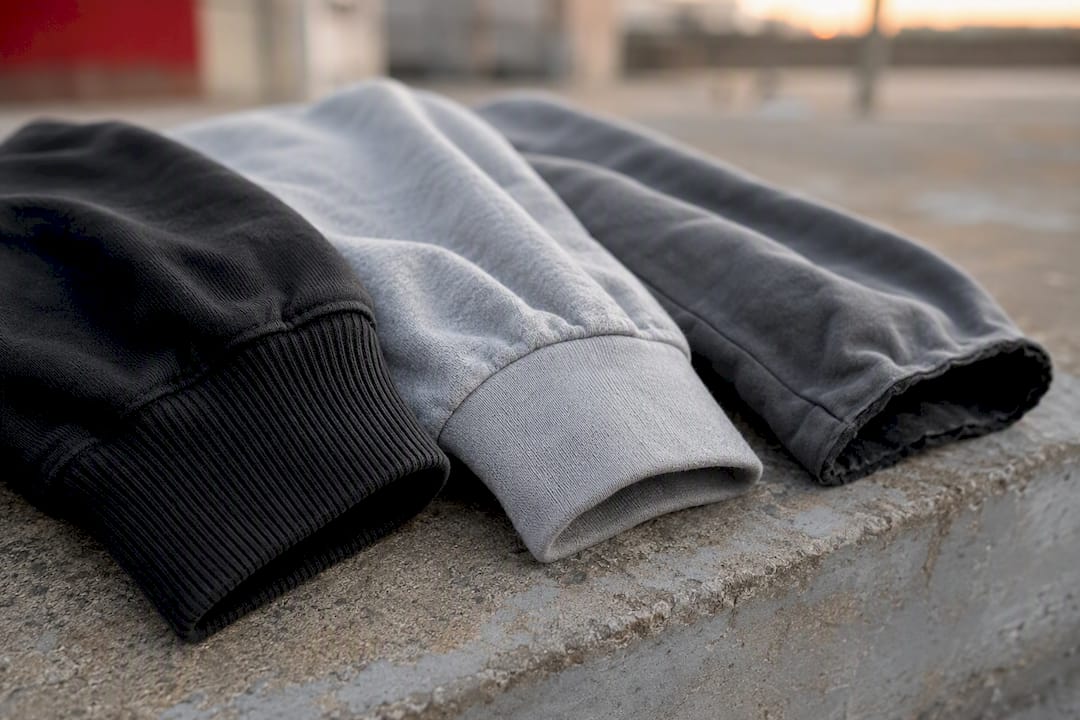
Elastane content is the detail most shoppers skip. Higher elastane lets you size down for a sharper, more tailored look because the fabric recovers its shape. Low-stretch, cotton-heavy fabrics need the opposite treatment: stay true to size or size up, especially if you expect the fabric to loosen slightly after repeated washing.
How Should You Style Joggers for Different Occasions?
The same silhouette rules apply differently depending on where you’re wearing them, and matching the fit to the occasion is what separates an outfit from a pair of pants.
Gym and performance: a tapered or slim fit in a poly/spandex blend keeps fabric out of your way during squats and sprints. Pair with a fitted tank or performance tee and low-profile training shoes so nothing flaps or bunches mid-set.

Everyday and casual: relaxed or tapered fits in French terry or cotton-rich fleece hit the sweet spot between comfort and put-together. A graphic tee and clean sneakers round this out without trying too hard.
Smart-casual and elevated: slim or tapered joggers in a ponte or scuba knit, worn with a structured jacket or overshirt and a minimal sneaker or boot, read intentional rather than lazy. This is where athleisure crosses into genuine outfit territory.
Rise and cuff placement do more for your proportions than most people realize. A higher rise elongates the leg line, which balances out a cropped or fitted top. A cuff that hits right at the ankle bone reads sharper than one that stops an inch above or pools below it.
Pro Tip: Layer intentionally. An open jacket or hoodie over a fitted base, paired with sneakers that match your jogger’s color story, is what keeps the look from reading as “just loungewear.”
What Are the Most Common Jogger Fit Mistakes?
Most fit complaints trace back to a handful of repeat offenders, and nearly all of them have a quick fix:
- Pooling at the shoe: the inseam runs too long. A tailor can hem it in minutes, or you can size down in length if the brand offers multiple inseam options.
- Cuff too tight: swap for a banded or open-hem style, or ask a tailor to let out the cuff seam slightly.
- Seat pulling across the back: the fit runs too slim for your build. Size up or switch to a relaxed-tapered cut instead of forcing a smaller size.
- Waistband gapping: the waist runs too big relative to your hips. Try a size down and rely on the drawstring for fine-tuning, or look for a brand with a narrower waist-to-hip ratio.
For online orders, always check the return window and whether exchanges are free before you buy, especially with limited-run pieces that may not restock in your size.
What Do Fit Experts Actually Recommend?
The fit rules that stylists and product teams repeat aren’t arbitrary. Each one solves a specific, predictable problem:
- Prioritize your largest measurement. If your hip and waist fall into different sizes, going with the larger avoids a fit that never lays right no matter how you adjust the drawstring.
- Slim should follow your lines, not restrict them. A true slim fit moves with a squat or a stride; if it can’t, you’re wearing “tight,” not “slim.”
- Relaxed-tapered works for curvy and athletic figures alike. Extra room through the seat and thigh paired with a tapered ankle keeps the outfit balanced instead of boxy.
- Mid- or high-rise waistbands flatter more body types. Stylists point to higher-rise waistbands as more secure and streamlined around the hips and waist than a low-rise cut, which tends to shift and gap during movement.
A true slim-fit jogger follows the body’s natural lines but should never restrict movement. Confusing “slim” with “tight” remains one of the most common fitting mistakes shoppers make.
These aren’t style opinions. They’re mechanical fixes for how fabric moves with a moving body.
How Do You Match Your Body Shape to a Jogger Fit?
Figuring out your body shape takes about thirty seconds and no measuring tape: stand in front of a mirror and note where your body carries the most width relative to your waist.
If your shoulders and hips are roughly balanced with a defined waist, you’re working with a rectangle or athletic build, and tapered fits will add shape without adding bulk. If your hips and thighs carry more width than your shoulders, you fall into a pear or curvy shape, and relaxed-tapered cuts give you room where you need it while still narrowing at the ankle for balance. If you carry more width through the shoulders and chest than the hips, you’re closer to an inverted triangle, and a relaxed fit through the leg helps balance a broader upper body.
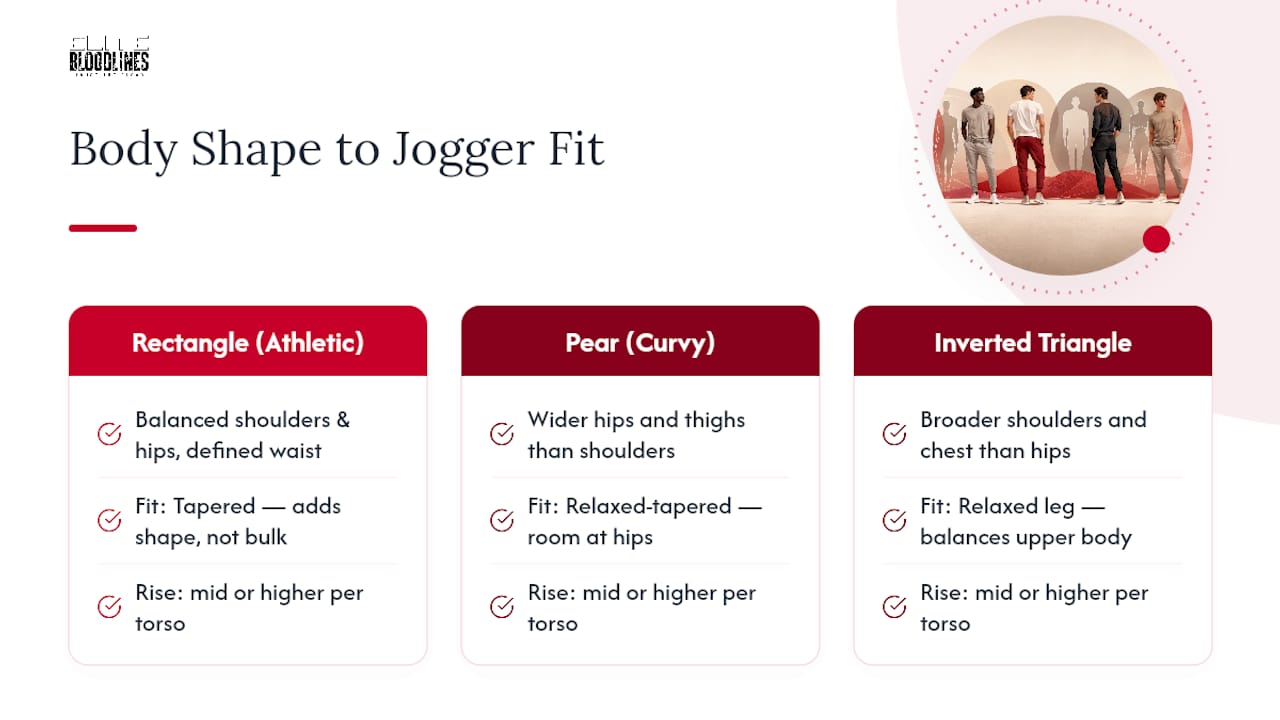
Torso length matters too. If you have a shorter torso and longer legs, a mid-rise waistband keeps proportions balanced. If your torso runs longer relative to your legs, a higher rise visually lifts the waistline and makes your legs read longer.
None of this requires guesswork once you know your shape. It’s the difference between buying joggers that technically fit your waist size and buying joggers that actually look intentional on your specific frame. The same tapered cut that flatters an athletic build can look boxy on a curvier frame in the wrong rise, which is exactly why fit type and body shape have to be chosen together, not separately.
How Do You Adjust Jogger Fit for Petite or Tall Frames?
Height changes almost every measurement in this guide, and inseam is where it shows up first.
If you’re petite, standard inseams almost always run long, and a jogger that fits perfectly through the waist and hip will still pool at the shoe unless you address the length. Look for brands that offer petite or cropped inseam options first. If that’s not available, hemming is a fast, inexpensive fix, and a 7/8-length style can work as a built-in solution since the shorter cut is designed into the silhouette rather than added after the fact.
If you’re tall, the opposite problem shows up: standard inseams stop short of the ankle, creating a cropped look you didn’t intend. Prioritize brands that list a “tall” or extended inseam option, and pay attention to rise as well. A low rise on a longer torso can leave a gap at the small of your back when you reach or bend, so a mid-to-high rise often works better for taller frames overall.
In both cases, don’t just size up or down to fix length. Sizing changes the waist and hip measurements too, which can throw off a fit that was otherwise correct. Adjust inseam specifically, whether through the size chart, a petite/tall product line, or a tailor.
Why Does Jogger Sizing Vary So Much Between Brands?
A medium in one brand can fit like a small in another, and it’s not because you changed shape. Brands use different body measurement standards, different amounts of ease built into the pattern, and different fabric blends that stretch by different amounts.
This is exactly why relying on your “usual size” across brands sets you up to guess wrong. The fix is the same every time: pull up that specific brand’s size chart, measure yourself fresh, and compare your numbers directly rather than assuming continuity from a different label. Pay attention to whether the chart lists garment measurements or body measurements, since a garment measured flat and doubled will read differently than one measured as a body circumference.
Fabric content plays a role too. A brand that leans heavily into cotton fleece will often run differently than one built around a high-elastane performance blend, even if both list the same size range. If you’ve had good luck with a brand’s cut and fabric before, that’s a stronger predictor of fit than the number on the tag. Keep a running note of which brands run large, small, or true to size for your measurements, and you’ll spend a lot less time returning packages.
What Matters Most When Picking Jogger Fit
Most fit advice treats joggers like an afterthought category, something you buy once you already know your size in everything else. That’s backward. Joggers behave more like a hybrid garment than a lounge staple, and treating them with the same rise, taper, and fabric logic you’d apply to tailored pants is what actually gets you a flattering result.
The overrated advice is sizing by brand loyalty alone. Sticking with your usual size because it worked at one retailer ignores that every brand builds its pattern differently. The underrated move is checking elastane content before you check the price tag, because that single fabric detail decides whether sizing down gives you a sharper look or a pair that won’t recover its shape after two washes.
If you take one thing from this guide, prioritize your largest measurement over your gut instinct about “what size I usually wear.” That single habit prevents more return shipments than any styling tip ever will.
Ready to Build Your Fit-Perfect Jogger Rotation?
Elitebloodlines builds joggers around the exact fit logic this guide covers: heavyweight fabrics with real recovery, tapered and relaxed cuts designed for gym-to-street movement, and construction details that hold their shape wash after wash instead of going shapeless after a month. Every piece comes from a limited-run collection, so once your size sells out in a drop, it’s gone.
If you’ve been guessing your size based on what fits in other brands, stop and measure your waist, hip, and inseam against Elitebloodlines’ own chart first. Then check the current drops for tapered and relaxed joggers built in the fabrics and cuts this guide just walked you through, and grab your size before the run closes out.
Frequently Asked Questions
How should joggers fit around the waist? The waistband should sit comfortably at your natural waist with no gapping when seated and no digging in when standing. If you need to cinch the drawstring tight to keep them up, size down.
What size joggers should I wear if I’m between sizes? Size up. Prioritizing your largest measurement against the brand’s chart prevents a fit that’s tight through the hip or seat even if the waist is technically correct.
Should joggers be tight or loose? Neither extreme. A well-fitted jogger follows your body’s lines without restricting movement, which is different from either a tight, compression-style fit or an overly baggy relaxed cut.
How do I know if my jogger inseam is too long? If fabric pools at your shoe or bunches around your ankle when standing still, the inseam runs long for your height. Hemming or choosing a petite/cropped option fixes this without changing your overall size.
Do joggers run true to size across brands? No. Sizing varies based on pattern ease, fabric stretch, and whether a brand measures garments flat or as body circumference, so always check the specific brand’s size chart rather than relying on your usual size.
Sources
- The Men’s Joggers Fit & Size Guide: Tapered, Relaxed, Cuffed – 4-rth
- How Should Joggers Fit: Our Tips for a Perfect Fit – Tailored Athlete
- How to Choose Joggers Fit - Slim vs Relaxed, Inseam & Waistband Guide | JoggersReview