

The Winter Gym Outfit Formula That Actually Works
Moisture-wicking base, light insulating mid, and a removable commute outer, that’s the whole formula. Add gloves and tall socks for your extremities and you’re covered. The one rule that ties it together: dress as if it’s 15 to 20 degrees warmer than the temperature outside, keep your outer layer zipped through warm-up, then strip it as your heart rate climbs.
That’s it. That’s the system. Everything else in this guide is just teaching you how to execute it without freezing on the walk over or sweating through your gear by minute ten.
Here’s the breakdown at a glance:
- Base layer: synthetic wicking fabric or merino wool, snug fit, zero cotton
- Mid layer: fleece, wool blend, or a heavyweight hoodie for warmth without bulk
- Outer layer: a puffer or zip-up you can shed fast once you’re moving
- Extremities: gloves, a headband or gaiter, and tall socks to seal the ankle gap
Pro Tip: If you’re not slightly cold standing outside the gym door, you’ve overdressed. Your body heats up fast once you start moving, so start a notch colder than feels comfortable.
Outlets like GQ and Runner’s World have been preaching versions of this layering logic for years. Elitebloodlines built its winter lineup around the same principle: give people commute-ready outer layers that double as mid-layers once they’re inside.
Key Takeaways
Winter gym outfits work when you layer for moisture management first, insulation second, and wind protection third, then remove layers as your body warms.
| Point | Details |
|---|---|
| Follow the +15 to 20 degree rule | Dress as if it’s warmer than the actual temperature and shed layers as intensity rises. |
| Protect extremities first | Gloves, tall socks, and gaiters do more for comfort than an extra torso layer. |
| Avoid fleece and wool against skin | Pair insulating mid-layers with a synthetic wicking base to keep sweat off your skin. |
| Pack a dry post-workout kit | Carry a dry top, spare socks, and a full-zip outer layer to prevent rapid cooling. |
| Choose commute-ready outers | Elitebloodlines’ heavyweight hoodies and joggers double as mid-layers or outer shells for winter training. |
Table of Contents
- What Are Winter Gym Outfits Actually Made Of? Layering Explained
- Winter Gym Outfit Ideas For Every Workout Type
- Which Fabrics Actually Keep You Warm Without Weighing You Down
- Protecting Your Extremities: Gloves, Socks, and Footwear
- The Post-Workout Checklist That Prevents You From Freezing
- A Shopping Checklist For Winter Gym Gear That Actually Performs
- What The Experts Get Right About Dressing For Cold Workouts
- Why Commute-Ready Layering Beats Chasing The Perfect Single Outfit
- How Elitebloodlines Pieces Fill Every Layer Role
- Sources
What Are Winter Gym Outfits Actually Made Of? Layering Explained
A winter gym outfit isn’t one outfit. It’s three systems stacked on top of each other, and each one has a job.
The base layer sits against your skin and handles moisture. Its only real function is to pull sweat off your body before it cools and chills you. Synthetic wicking blends (polyester-spandex) or merino wool both work. Cotton does not, because cotton absorbs sweat and holds it there, turning into a cold, clammy layer the second you stop moving.
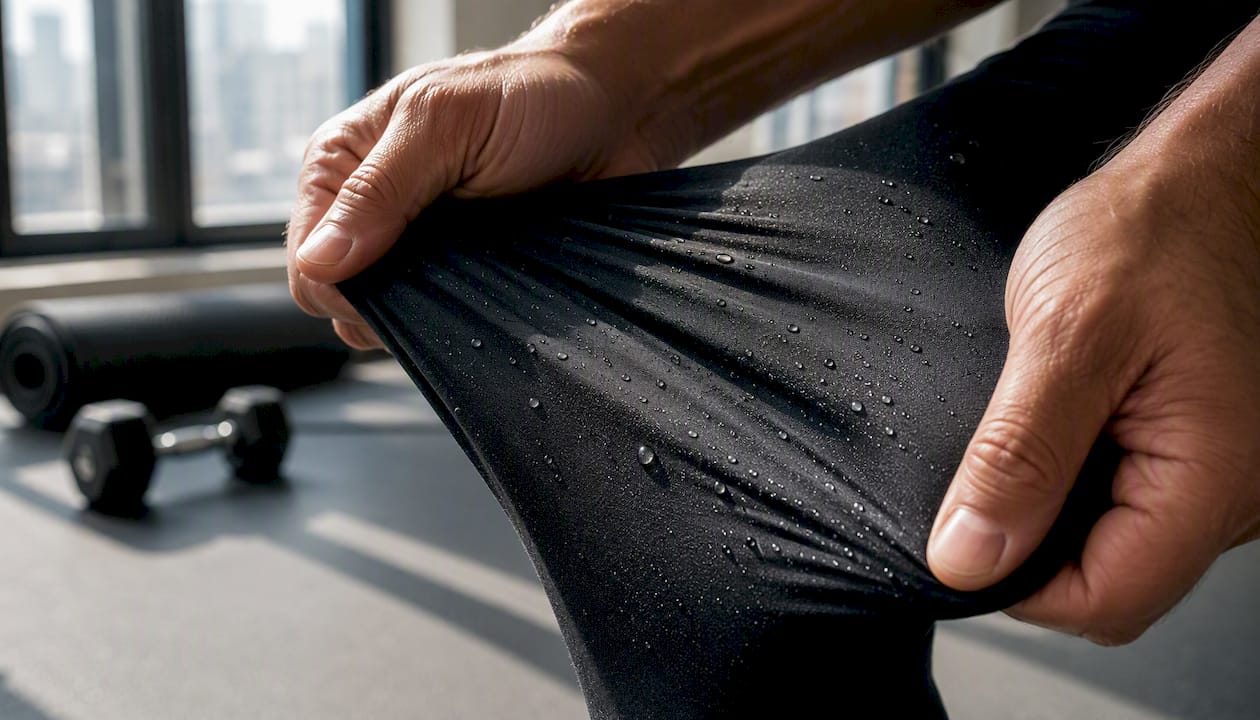
The mid layer is your insulation. Fleece, wool, or a heavyweight hoodie all fit here. This is where warmth lives, but more isn’t better. A single quality mid layer beats three thin ones because bulk restricts movement and traps sweat against your base layer instead of letting it escape.
The outer layer is your shield against wind, and for most people, it’s the layer that comes off first. A puffer, a windbreaker, or a zip-up jacket blocks the elements on your commute, then gets stuffed in a bag once you’re warmed up inside.
Here’s how intensity changes the math. GQ’s guidance on winter training is blunt about this: start your workout slightly cold, because your body generates heat fast once you’re moving, and overdressing just means excess sweat that chills you later during rest. HIIT and circuit training call for thinner mid layers and a zip-up outer you can vent as your heart rate spikes. Steady-state cardio, like a long treadmill run or an outdoor jog, allows a bit more insulation since your intensity stays consistent. Strength training runs coldest of all three, since lifting generates less sustained heat than cardio, so a slightly heavier mid layer makes sense there.
Commute length matters too. A five-minute walk from your car to the gym door means your outer layer barely needs to work. A 20-minute outdoor walk or transit ride means that outer layer is doing real work, and you’ll want it warmer, windproof, and easy to remove the second you’re inside.
Pro Tip: Keep your outer layer on through the entire warm-up, even if you feel ready to shed it after two minutes. Your core temperature lags behind how warm you feel, and stripping too early is the fastest way to catch a chill mid-set.
Common mistakes worth naming: wearing a cotton tee as a base layer, stacking two fleece layers when one would do, and walking out of the gym in a sweat-soaked shirt with nothing dry to change into. All three are avoidable with about thirty seconds of planning before you leave the house.
Winter Gym Outfit Ideas For Every Workout Type
Copy any of these outright. Each one assumes a moderate outdoor temperature and a short-to-moderate commute unless noted.
- High-intensity cardio (HIIT, spin): moisture-wicking tank or fitted tee, thin joggers or leggings, zip-up hoodie you can shed by round three. Skip the heavy mid layer entirely here since your effort level generates plenty of heat fast.
- Steady cardio (outdoor run, treadmill): long-sleeve wicking base, light fleece or heavyweight hoodie as your mid, windproof shell if you’re heading outside. Pocketed leggings keep your phone and keys secure without a belt.
- Strength and weights: heavyweight tee or long-sleeve base, joggers with room to move, hoodie kept on between sets since strength sessions run cooler between efforts.
- Group classes and low-impact sessions (yoga, mobility work): thermal leggings or joggers, a fitted long-sleeve base, and a cropped puffer you tie around your waist once the room warms up.
For short commutes, a tie-away hoodie or cropped puffer gets you from car to door without overcomplicating things. For longer outdoor arrivals, you want a full outer shell with a hood, since wind exposure over 15 to 20 minutes changes the equation entirely.
A note on styling: pocketed leggings have become the standard for a reason. They eliminate the need for a bag on quick sessions and keep your outfit clean, which matters when your gym clothes double as your errand-running clothes on a Saturday. Elitebloodlines’ heavyweight hoodies work well as either a mid layer for strength days or a commute outer for shorter walks, and the joggers hold up as a warm travel layer over leggings on colder mornings.
Pro Tip: Zip layers beat pullover layers for anything high-intensity. You need to vent fast when your heart rate spikes, and fighting a pullover collar mid-set wastes energy you don’t have to spare.
Which Fabrics Actually Keep You Warm Without Weighing You Down
Not all winter fabrics do the same job, and picking the wrong one for the wrong layer is where most cold-weather outfits fail.
Synthetic wicking blends, usually polyester-spandex, are the workhorse of any base layer. They pull moisture away from skin fast and dry quickly, which matters more than raw warmth for anything you wear against your body. Merino wool does something similar but adds natural odor resistance and a touch more warmth, at a higher price point.
Fleece and wool are excellent mid-layer insulators, but they come with a catch. Everyday Health’s cold-weather guidance is direct on this: fleece and wool hold moisture, so they shouldn’t sit directly against skin during intense workouts. Pair them with a synthetic wicking base underneath, and the insulation stays dry and effective instead of getting saturated with sweat halfway through your session.
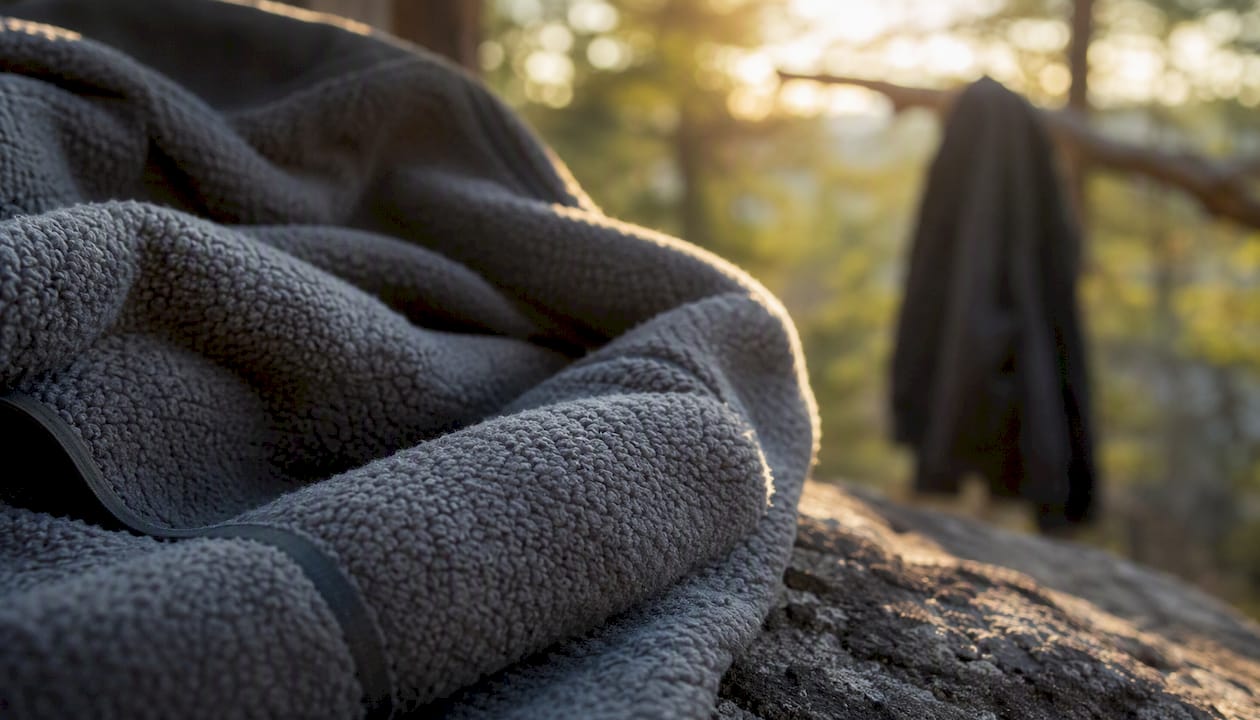
Down and hybrid insulation belong in your outer layer, not your mid layer, since down loses its insulating power when wet and needs a shell to stay dry.
| Feature | Why It Matters |
|---|---|
| Moisture-wicking | Pulls sweat off skin so you don’t chill during rest periods |
| Thermal rating | Determines light versus mid insulation for your specific layer |
| Wind resistance | Critical for outer shells on outdoor commutes over 10 minutes |
| Stretch/4-way | Lets you move through full ranges without restriction |
| Packability | Determines whether your outer layer fits in a gym bag once removed |
Beyond the fabric itself, look for zip vents under the arms for temperature control mid-workout, thumbholes on sleeves to keep cold air out at the wrist, and pocket placement that actually holds your phone securely while you move. These small construction details separate gear built for winter training from gear that just looks warm.
Protecting Your Extremities: Gloves, Socks, and Footwear
Your body prioritizes keeping your core warm, which means blood flow to your fingers and toes drops first in cold conditions. That’s why Everyday Health’s guidance points at accessories over extra torso layers: gloves, tall socks, and gaiters do more for comfort than another jacket ever will.
- Gloves: thin, moisture-wicking gloves for the commute; grippier, textured gloves if you’re touching cold outdoor equipment like pull-up bars or resistance bands.
- Headband or neck gaiter: blocks wind at your ears and neck, two spots that lose heat fast and rarely get covered by a hood alone.
- Tall socks or gaiters: seal the gap between your pant leg and shoe, since GQ notes that cold air sneaking in through that ankle opening is one of the most overlooked discomforts in winter training.
- Quick-dry socks: thinner and warmer than thick cotton once your feet start sweating, which happens faster than most people expect even in cold weather.
Footwear splits into two scenarios. If you’re training entirely indoors and just need to survive a short walk from your car, your regular cross-trainers are fine, paired with tall socks to close that ankle gap. If you’re arriving on foot or by bike over icy or slick sidewalks, switch to a trail shoe or a pair with real tread for the commute, then change into your gym shoes once you’re inside. Carrying a second pair sounds like overkill until you’ve slipped on black ice in your training shoes once.
Pack light and pack smart: a pair of thin gloves, a compact neck gaiter, and a spare pair of socks all fit in a side pocket without adding real weight to your bag.
The Post-Workout Checklist That Prevents You From Freezing
The five minutes after your workout are when most people get this wrong. You’re sweaty, your body temperature is dropping fast now that you’ve stopped moving, and stepping outside in that state is how a good session ends in a miserable walk home.
Here’s the sequence:
- Towel off any excess sweat before you even reach for dry clothes.
- Swap into a dry top immediately. Wet fabric against skin accelerates heat loss the second you stop generating warmth through movement.
- Zip up your outer layer before you open the door, not after you’re already outside and shivering.
- Add gloves and a headband back on if your commute is longer than a few minutes.
What to keep in your gym bag: a dry top, a spare pair of socks, a lightweight zip hoodie or packable shell, a small towel, and a sealed bag or pocket for your wet items so they don’t soak everything else.
GQ’s experts note that a professional-grade, easy-to-remove outer layer is essential here, and the “easy-to-remove” part matters more than people think. A full-zip hoodie or shell you slip on in three seconds beats a pullover you have to wrestle into while your hands are cold and your arms are tired.
Pro Tip: Choose full-zip over pullover for every layer you’ll put on post-workout. Cold, stiff fingers make a tight collar feel impossible, and you don’t want to fight your own hoodie in a locker room.
For long cold commutes, layer back up in full before you leave. For quick exits to a car parked nearby, a dry top and a zipped shell usually covers it.
A Shopping Checklist For Winter Gym Gear That Actually Performs
Before you buy anything, run it through this list:
- Fabric composition — check for synthetic wicking blends or merino for base layers; avoid cotton entirely.
- Fit matched to role — snug for base layers so they wick properly, roomier for mid and outer layers so they layer without binding.
- Ventilation features — zip vents, mesh panels, or half-zip necklines for temperature control mid-session.
- Pocket placement — secure, zippered pockets for phone and keys beat loose open pockets every time.
- Reflectivity — reflective trim or piping matters if any part of your commute happens in low light.
- Packability — your outer layer should compress down small enough to stuff in a gym bag once you’re inside.
On care: skip high-heat drying for technical fabrics, since heat degrades the wicking coating and elastic fibers over time. Wash sweaty base layers separately from your outer shells to protect insulation performance.
- Invest first in a solid base layer and one reliable outer shell.
- Treat mid-layers as more replaceable and swap them seasonally without guilt.
- Size to the layer’s role: snug for base, room to move for mid and outer.
Pieces like Elitebloodlines’ heavyweight tees and joggers are built with the kind of construction that holds up to repeat winter wear and washing, which matters more than most people budget for upfront.
What The Experts Get Right About Dressing For Cold Workouts
The +15 to 20 degree rule isn’t a guess. Runner’s World’s cold-weather guidance recommends dressing as though it’s 15 to 20 degrees warmer than the actual temperature, keeping outer layers on through warm-up, and removing them as intensity rises. The logic holds because your body’s heat production during exercise easily outpaces what a static thermometer reading suggests.
Invest in accessories for extremities rather than only adding torso layers.
That’s the core insight from Everyday Health’s reporting on cold-weather training, and it flips a lot of people’s instincts. Most people reach for another jacket when they’re cold. The better move is often a pair of gloves and tall socks, since your body sacrifices blood flow to fingers and toes first to protect your core.
Pro Tip: If your hands or feet feel cold but your torso feels fine, you have an extremities problem, not a layering problem. Adding another shirt won’t fix cold fingers.
The intensity-matching principle deserves one more mention because it’s so often ignored: overdressing for a HIIT session doesn’t make you warmer, it makes you soaked, and soaked fabric against skin during rest periods chills you faster than being underdressed ever would. Zip-up layers exist specifically to solve this, letting you vent heat during effort and re-cover during rest without changing clothes entirely.
Why Commute-Ready Layering Beats Chasing The Perfect Single Outfit
Most winter workout advice treats gym clothes and commute clothes as separate problems. They aren’t. The gap between the two is where people actually get cold, standing in a parking lot in a soaked shirt, or overheating indoors because they dressed for the walk over and never adjusted.
The layering system in this guide works because every piece has a defined exit point. Your base layer never leaves. Your mid layer might come off indoors on a strength day. Your outer layer comes off almost immediately and goes back on the second you’re done. Once you think about your outfit as a sequence of decisions rather than one fixed look, packing for winter training stops being a guessing game.
This is also where I think a lot of “technical” gear misses the mark. It’s engineered for performance but treated as disposable once the season ends, thin, forgettable pieces that don’t hold up to daily wear outside the gym. Elitebloodlines’ approach, heavyweight hoodies and durable joggers built with real construction, works because those same pieces double as your commute outer, your rest-day mid layer, and something you’d actually wear running errands afterward. A gym wardrobe should not require a separate winter wardrobe stacked on top of it.
How Elitebloodlines Pieces Fill Every Layer Role
You don’t need a closet full of single-purpose technical gear to nail winter training. A few solid pieces, worn in the right order, cover every scenario in this guide.

Elitebloodlines’ heavyweight hoodies work as a commute outer on short walks and as a mid layer under a shell on colder mornings. The joggers pull double duty as a warm mid layer over leggings or as a standalone piece for strength days when you don’t need heavy insulation. Heavyweight tees give you a durable base for anyone who runs warm during lifting sessions and just needs a layer that won’t wear thin after a dozen washes. For anyone building out a winter rotation, the current drops collection has in-stock pieces ready to ship now, and the EB Vintage Line leans into the retro-inspired hoodies and joggers that work best as commute-ready outers. Choose zip-up styles where you can. They transition fastest between warm-up, mid-workout venting, and the walk home. Browse the current drops and build your winter rotation before the next release sells out.
Sources
- The newbie guide to running when it’s cold | Runner’s World South Africa
- How to Dress for Winter Workouts, According to Experts | GQ
- What to Wear for Cold-Weather Workouts | Everyday Health