

Dark Streetwear: 3 Outfit Formulas & Starter Kit for Young Adults
Dark streetwear aesthetic pairs oversized streetwear silhouettes with a moody, low-saturation palette, restrained hardware, and heavyweight fabrics instead of loud graphics or pure goth theatrics. It borrows lineage from punk tailoring documented by the V&A and sculptural runway work from Comme des Garçons, filtered through modern streetwear proportions. Some streetwear brands build heavyweight tees and drops around that exact tension: bold design, dark mood, real construction. Below you’ll find the visual vocabulary, three outfit formulas, and a 12-point capsule checklist to get there.
TL;DR:
- Heavyweight fabrics like reinforced cotton, waxed canvas, and genuine leather are essential for durability and a considered dark streetwear look.
- A balanced silhouette involves pairing oversized tops with tapered or structured bottoms to maintain a sharp and intentional proportion.
- Limiting outfits to one focal statement piece and restraint in hardware ensures the dark mood remains intentional rather than costume-like.
- Popular subgenres include nu-goth, techwear, opiumcore, and street goth, each with distinct palette, silhouettes, and material preferences.
- Building a capsule wardrobe with core pieces like outerwear, graphic tees, structured pants, and quality footwear maximizes mix-and-match styling.
Table of Contents
- What Actually Defines the Dark Streetwear Aesthetic?
- How Did Dark Streetwear Aesthetic Come to Be?
- What Are the Core Elements of Dark Streetwear?
- What Are Three Dark Streetwear Outfit Formulas?
- Which Dark Streetwear Subgenre Fits Your Style?
- What Materials Hold Up in Dark Streetwear?
- How Do You Build a Dark Streetwear Capsule Wardrobe?
- Why Elite Bloodlines Takes This Aesthetic Seriously
- Ready to Build Your Dark Streetwear Capsule?
- Sources
- FAQ
What Actually Defines the Dark Streetwear Aesthetic?
Plain all-black dressing is a color choice. Dark streetwear is a design system. It requires proportion play, texture contrast, and graphic restraint working together, not just a closet drained of color.
Goth style leans on velvet, lace, and Victorian references. Techwear leans on performance fabric and utility straps. Nu-goth strips gothic imagery down to minimal silhouettes. Opiumcore, a term fashion press has used to describe the current wave of drug-lord-referencing streetwear, leans into slouchy tailoring and heavy jewelry. Dark streetwear pulls threads from all four but stays rooted in T-shirts, hoodies, cargo pants, and sneakers rather than runway-only pieces.
Three quick visual tells separate a considered dark streetwear look from a costume:
- Fabric weight matches intent. Heavyweight cotton or waxed canvas reads intentional; thin fast-fashion black polyester reads cheap no matter how good the graphic is.
- One focal point per outfit. A single statement tee, one oversized jacket, or one loud boot. Stack three loud elements and the look collapses into noise.
- Proportion does the talking. An oversized top needs a leg silhouette that balances it, whether that’s a tapered jogger or a wide cargo pant. Two oversized pieces stacked without a taper usually just look like you grabbed the wrong size.
The most common mistake is treating “dark” as a costume checklist, chains, skulls, head-to-toe black rather than a set of proportion and texture rules applied with restraint.
How Did Dark Streetwear Aesthetic Come to Be?
Dark streetwear didn’t appear overnight. It’s the product of decades of subcultures colliding with mainstream fashion and, more recently, social media compressing that collision into months instead of years.
- Punk (1970s-80s) established the DIY, anti-establishment blueprint, hardware, distressing, and confrontational graphics that the V&A traces through Vivienne Westwood’s work
- Gothic and industrial subcultures (1980s-90s) added the mood: black palettes, leather, and a rejection of bright, cheerful fashion.
- Early 2000s street goth merged those cues with hip-hop’s influence on streetwear silhouettes, a crossover Highsnobiety credits with mainstreaming alternative style.
- High-fashion crossover followed, with exhibitions like The Met’s Rei Kawakubo retrospective showing how avant-garde, sculptural silhouettes seeped into ready-to-wear and eventually streetwear.
- Social media acceleration turned niche tags into global trends within weeks. Social media microtrends around styles like “industrial core” and “street goth” have expanded the audience rapidly, more quickly than traditional fashion cycles.
- Contemporary reinterpretation continues that momentum. JUNTAE KIM’s FW26 “ANARCHO PUNK” collection reworks punk ethics into structural, gender-neutral garments. It’s proof the aesthetic keeps evolving rather than sitting still.
Runway and fandom cycles now feed each other constantly. What a designer shows on a Paris runway can land on a TikTok “get ready with me” video within days, then reappear as a streetwear brand’s next drop.
What Are the Core Elements of Dark Streetwear?
Five categories decide whether a piece belongs in this aesthetic: palette, silhouette, texture, hardware, and graphics. Get one wrong and the whole outfit reads off.
Palette. Black is the base, but pure black head-to-toe often flattens into a costume. Add charcoal, washed black, deep olive, or oxblood as secondary tones, then reserve one muted accent, dusty lavender, faded rust, dirty white, for contrast. Keep accent colors desaturated; a bright pop breaks the mood instantly.
Silhouette. The balance comes from pairing one oversized piece with one fitted or structured piece. An oversized hoodie needs a tapered pant. A boxy tee can carry wide cargo pants if the shoe silhouette is chunky enough to anchor the volume. Anchoring volume at the shoulder or hem, not scattering it everywhere, is what keeps a look sharp instead of sloppy.
Textures and materials. Heavyweight cotton (think 9 to 12 ounce) communicates durability and intent. Waxed canvas and coated fabrics add a utilitarian edge. Leather, real or a quality alternative, signals investment. Mesh and PVC work as accents in small doses but overwhelm an outfit fast if overused.
- Heavyweight cotton: the foundation fabric for tees and hoodies.
- Waxed canvas: outerwear and workwear-inspired jackets.
- Leather or quality faux-leather: jackets, boots, small accessories.
- Mesh or PVC: layering accents, never the whole garment.
Hardware. Restraint wins here. One or two D-rings, a single chunky zipper pull, or a belt buckle read intentional. Six zippers and a chain harness read like a costume shop.
Graphics and typography. Scale and placement matter more than the design itself. Large back prints or oversized chest graphics in muted tones (bone, faded red, gray) stay “dark.” The same graphic in neon or high-contrast white on black tips into loud streetwear instead.
Pro Tip: Hold a new piece next to something already in your closet before buying it. If the fabric weight or hardware finish clashes, it will fight your existing pieces instead of layering with them.
What Are Three Dark Streetwear Outfit Formulas?
These three formulas cover the range from minimal to maximal without repeating the same silhouette twice.
- Minimal dark core. Start with one heavyweight graphic tee as the anchor. Layer a washed-black overshirt on top, left open. Finish with straight-leg black denim and clean low-top sneakers. This formula reads calm and controlled, ideal for daily wear.
- Industrial cargo layering. Anchor with a boxy long-sleeve tee, add cargo pants with functional pockets, and finish with lug-sole boots. A single carabiner or D-ring on the pants is enough hardware. This is the formula for readers who want visible utility without going full techwear.
- Elevated goth-street hybrid. Pair a tailored dark overcoat with a statement graphic tee underneath and slim trousers. Swap sneakers for a refined leather boot. This formula bridges streetwear ease with a sharper, more fashion-forward finish.
Seasonal adaptation just means adding or removing a layer, not changing the formula. Swap the overshirt for a heavier coat in winter, and check a layering guide built around heavyweight tees for cold-weather versions of these same three looks. Shorter frames should keep the oversized piece on top only, tapering hard at the ankle; taller frames can carry oversized volume top and bottom without losing proportion.
Which Dark Streetwear Subgenre Fits Your Style?
Dark streetwear splits into a few recognizable lanes, and mixing them without a plan is how outfits start looking accidental instead of styled.
- Nu-goth strips gothic imagery down to minimal black basics with the occasional silver accent, think stripped-back, quiet, and clean.
- Techwear/industrial leans into functional pockets, straps, and technical fabrics; boots and cargo pants dominate.
- Opiumcore favors slouchy, oversized tailoring with heavier jewelry, a lane Grazia has tracked closely as it moved from niche to trend piece by 2024.
- Street goth blends hip-hop-influenced streetwear cuts with gothic color and mood, the closest lane to what most people picture as “dark streetwear.”
Keep palette and proportion consistent across an outfit even when you’re borrowing from two lanes. Swapping a single sneaker for a combat boot, or a cotton tee for mesh, is often enough to shift a whole look from street goth toward industrial without changing anything else.
What Materials Hold Up in Dark Streetwear?
Fabric choice is where cheap imitations fall apart, literally. Fashion coverage has consistently pointed to fit, construction, and material weight as the line between considered dark streetwear and costume-grade knockoffs.
- Prioritize heavyweight cotton (9oz+) for tees, structured twill for pants, and coated canvas for outerwear.
- Check for reinforced stitching at stress points, seams, cuffs, pocket corners, before buying anything.
- Real or quality faux-leather accessories should have consistent color and a proper lining, not a thin, unlined shell.
- Wash dark garments inside out in cold water to slow fading, and air-dry hardware pieces to prevent rust or warping in the dryer.
Skipping these checks is how a $20 tee fades to gray after three washes while a $45 heavyweight tee holds its color for years.
How Do You Build a Dark Streetwear Capsule Wardrobe?
Buying random pieces one at a time is the fastest way to end up with a closet full of things that don’t talk to each other. Build in this order instead.
- Anchor outerwear first, one overshirt or jacket in washed black or charcoal.
- Two heavyweight graphic tees in muted tones, one oversized fit and one classic fit.
- One pair of structured pants, either tapered denim or cargo, depending on which formula you’re leaning toward.
- One versatile boot or low-top sneaker in black or off-black.
- A second layering piece, a long-sleeve or hoodie, to expand outfit combinations.
- Small hardware accessories, one belt or bracelet stack, added last once the base pieces are set.
Buy outerwear and footwear new when possible; construction quality shows fastest in those categories. Denim and basic layering pieces are safer buys secondhand once you know your proportions.
Pro Tip: Buy one size up on tees if you’re aiming for the oversized-top, tapered-bottom formula. A shirt that’s merely “loose” won’t create the same silhouette as one that’s genuinely oversized.
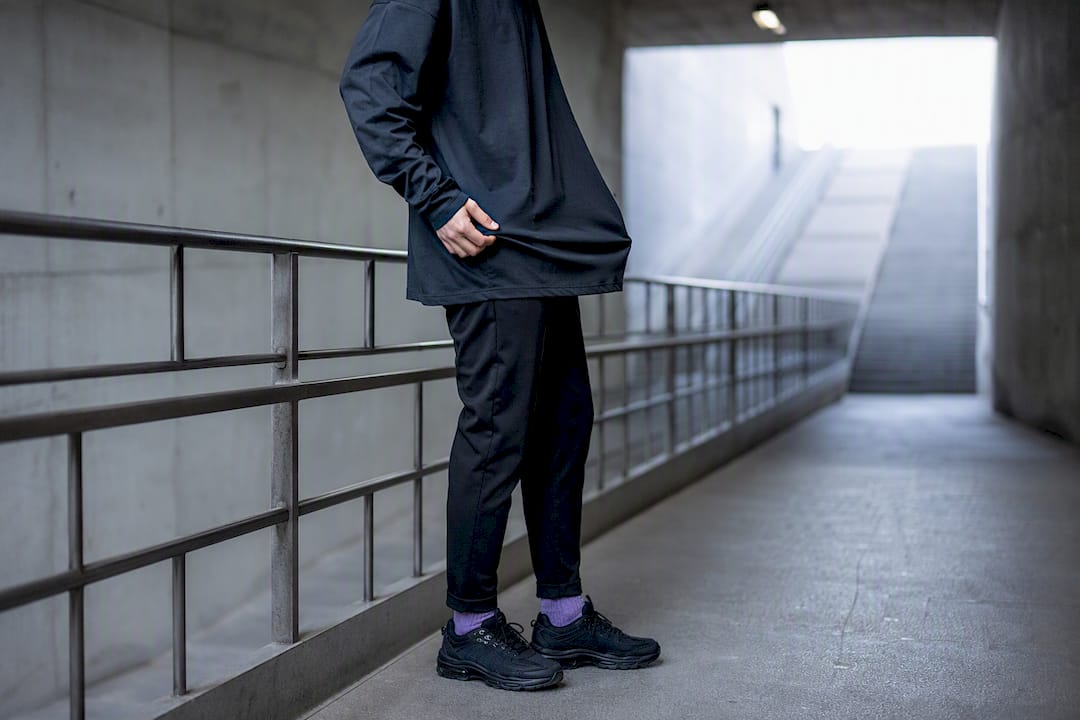
Sizing flexibility matters more than variety at the start. Four well-chosen pieces that mix and match beat twelve pieces that only work as their original outfit.
Why Elite Bloodlines Takes This Aesthetic Seriously
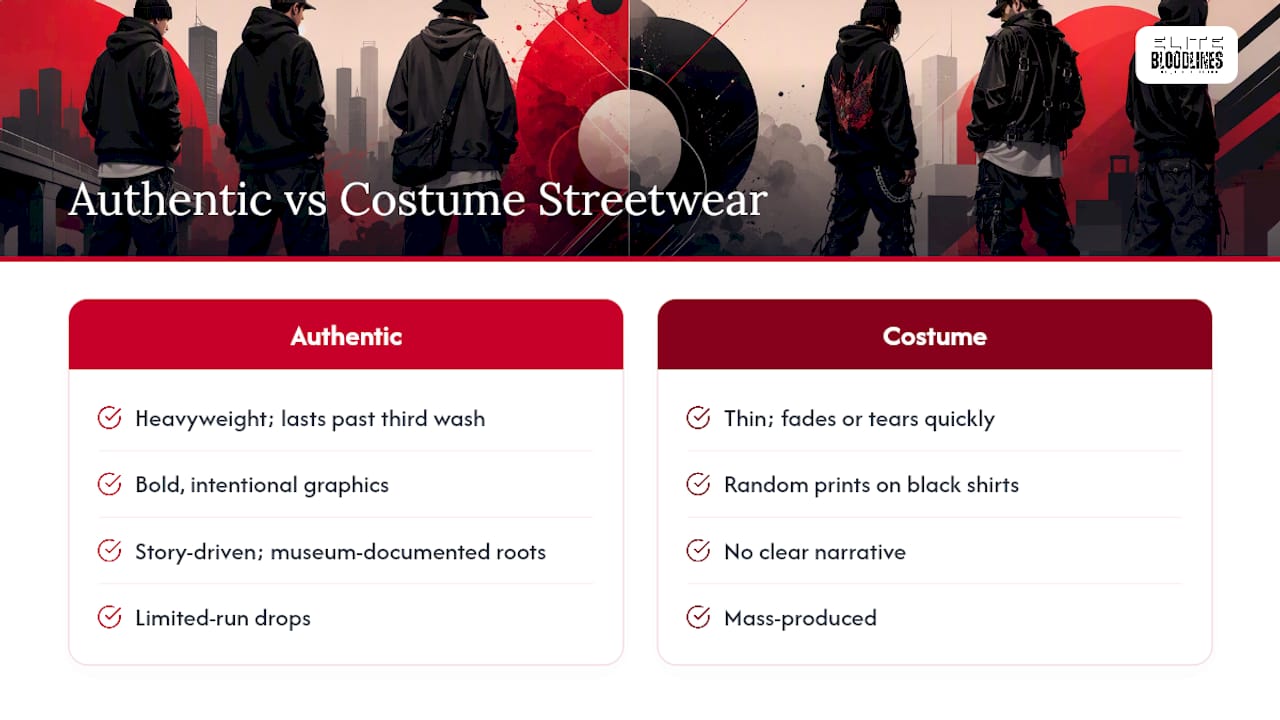
Some brands build heavyweight graphic tees and limited-run drops specifically for those who want dark streetwear that holds up past the third wash. Every collection leans on bold design and a real narrative behind it, not just a black shirt with a random print slapped on. This guide reflects that lens: an editorial breakdown of the aesthetic, not a neutral roundup of every brand doing something similar.
Written by Michael, this piece pulls from museum-documented fashion history and current design movements to explain what actually separates dark streetwear from a Halloween costume. Limited drops and heavyweight construction can be proof points for the standards laid out above, not the whole story.
— Michael
Ready to Build Your Dark Streetwear Capsule?
Some brands are built for exactly the checklist above: heavyweight tees that anchor a capsule, oversized fits for the proportion-play this aesthetic depends on, and limited drops that keep fits from looking like everyone else’s algorithm feed.
Start with the EB Graphic Tees collection if you’re still missing your anchor tee, that’s step two on the capsule checklist above. Want the oversized silhouette specifically? The EB Core Line Oversized Tee delivers the fit and fabric weight this whole aesthetic runs on. Once your base pieces are set, a limited piece like the Beauty In The Blood drop adds the one-focal-point statement graphic every outfit formula above calls for. Pair either with a stackable bracelet set for the hardware accent step in your capsule. Check current drops before they sell out, limited runs don’t restock on a schedule.
Sources
- V&A: Vivienne Westwood — Punk, new romantic and beyond
- The Met: Rei Kawakubo/Comme des Garçons exhibition listing
- Highsnobiety: How hip‑hop shaped streetwear
FAQ
What Type of Aesthetic Is Streetwear?
Streetwear is a casual, urban-rooted fashion style built on graphic tees, hoodies, sneakers, and relaxed silhouettes; dark streetwear is a subset that applies a moody palette and restrained hardware to those same shapes.
What Is the 3-3-3 Rule for Clothing?
Definitions vary across styling sources, but a common version limits an outfit to three colors, three textures, and three key pieces, a useful ceiling for keeping a dark streetwear look from tipping into visual clutter.
What Are Some Dark Aesthetics?
Goth, nu-goth, techwear, industrial, opiumcore, and street goth are the main dark aesthetic lanes, each defined by a different mix of palette, silhouette, and material choices.
What Are Some Dark Streetwear Brands?
Elite Bloodlines focuses on heavyweight graphic tees and limited-run drops built around bold, dark-leaning designs, and the broader category includes brands working across street goth, industrial, and opiumcore-influenced streetwear.