

Three Layer Streetwear System: Formulas Built Around Heavyweight Tees
The easiest way to make layered streetwear outfits look intentional is to build from a fitted base, add one visual mid-layer, then finish with an outer frame. Never stack more than three visible layers, and keep proportions balanced so the fit reads sharp instead of bulky. Grab a heavyweight tee, a mid-layer that adds texture, and an outer piece with real shoulder structure, and you’ve already got the formula down.
TL;DR:
- Layer no more than three visible pieces, using a lightweight base, textured mid-layer, and structured outer layer for a sharp silhouette.
- Use contrast in fabric textures and fit adjustments to prevent bulk and maintain clear, deliberate layering lines.
- Vary hem lengths and pay attention to proportions; keep each layer visible at collars, cuffs, or hems to enhance depth.
- For summer, focus on light fabrics and open layers; in winter, combine thermal bases with heavyweight outerwear to add warmth without bulk.
- Select core pieces designed for layering, like heavyweight tees and classic-fit mid-layers, to ensure the formula works across seasons.
Table of Contents
- What Is the Three-Layer System for Layered Streetwear Outfits?
- How to Mix Fabrics and Textures Without Adding Bulk
- Fixing Fit: How to Keep Your Layered Silhouette Readable
- Five Layered Streetwear Outfit Formulas You Can Copy Today
- Seasonal Layering: Adjusting for Summer, Spring, Fall, and Winter
- Accessories and Anchors That Finish a Layered Look
- Why This Advice Comes From Someone Who Actually Builds These Fits
- What Actually Matters in Layered Streetwear (And What’s Overrated)
- Shop the Formulas: Elite Bloodlines Pieces Built for Layering
- Sources
What Is the Three-Layer System for Layered Streetwear Outfits?
Every strong streetwear fit follows the same skeleton: a base layer, a mid layer, and an outer layer. That’s the core framework behind nearly every layered look you’ve seen on the street or in a lookbook, and it works because each layer has a job. The base sits close to the skin and controls fit. The mid adds texture and warmth. The outer frames the whole thing and gives it shape.
The details separate a sharp fit from a sloppy one:
- Build a weight hierarchy: thin base, textured mid, heavy outer. Reversing that order is the fastest way to look stuffed instead of styled.
- Vary hem lengths on purpose. A long tee peeking out under a cropped jacket creates a visual step that reads as deliberate.
- Balance oversized against fitted. If your hoodie is roomy, tighten up the bottoms. If your outer layer is boxy, keep the base snug.
- Cap it at two or three visible layers in most outfits. A fourth layer rarely adds anything except bulk.
- Keep every layer visible at the collar, cuff, or hem. Buried layers are wasted layers.
How to Mix Fabrics and Textures Without Adding Bulk
Weight hierarchy handles structure. Texture handles interest. Pair a cotton tee with a knit sweater and a wool coat, and you get three distinct textures without three heavy fabrics stacked on top of each other. That contrast, not raw thickness, is what makes an outfit look layered instead of just cold-weather practical.
The mistake most guys make is doubling up on heavy fabric. Fleece under wool, or a thick hoodie under a padded jacket, adds bulk fast and kills silhouette definition. Keep it simple:
- Pick one heavy piece per outfit, then support it with lighter textures.
- Use mesh, linen, or a lightweight overshirt when the temperature climbs.
- Save technical thermal bases for genuinely cold days, not for style points.
- Contrast texture (knit against woven, ribbed against smooth) instead of stacking two similar weights.
Pro Tip: If you can’t tell where one layer ends and the next begins by looking at the outfit in a mirror, you’re stacking weight instead of texture. Swap one piece for something with a different surface.
Fixing Fit: How to Keep Your Layered Silhouette Readable
Bulk usually comes from a fit mismatch, not from having too many layers. Contrast is the fix: if one piece runs loose, tighten the piece next to it. A baggy hoodie under a fitted bomber reads clean. A baggy hoodie under a baggy coat reads like you grabbed everything in your closet at once.
Run through this before you leave the house:
- Roll or push up one sleeve. Showing a wrist or forearm breaks up volume and gives the eye a place to land.
- Check your hem lengths. If every layer ends at the same point, shorten or crop one so the layers step down instead of stacking flat.
- Look at your bottoms. Straight or tapered pants balance a heavy top; wide-leg pants under a bulky top just doubles the volume.
- Turn sideways in the mirror. If your silhouette looks like a box, you need contrast somewhere, either in fit or in length.
- Count your layers. More than three visible pieces almost always means it’s time to cut one.
Five Layered Streetwear Outfit Formulas You Can Copy Today
These are reliable formulas readers can replicate with pieces they already own, no styling degree required.
- High-low corporate rebellion. Turtleneck base, hoodie mid-layer, oversized blazer on top. The tension between office-ready tailoring and streetwear texture is the whole point. Let the hoodie hood sit outside the blazer collar.
- Hoodie, bomber, tapered pants. The most reliable everyday formula in streetwear. Heavyweight hoodie underneath, cropped bomber over it, tapered pants to keep the bottom half from competing with the volume on top.
- Poplin shirt, sweater vest, cropped bomber. A collegiate-leaning combination. The collared shirt peeks out at the neck and cuffs, the vest adds texture in the middle, and the cropped bomber keeps the whole thing from reading too preppy.
- Denim maverick. Button-down denim shirt under a denim jacket, finished with a longer coat over both. Three denim washes in one outfit sounds risky, but varying the shade and hem length is what makes it work rather than clash.
- Textural contrast. Mesh long-sleeve base, knit vest mid-layer, leather jacket on top. Three completely different surfaces, one silhouette. This is the formula to reach for when you want maximum texture with minimal bulk.
Want more visual references before you build your own? Copy These Men’s Streetwear Outfits Instead of Overthinking It breaks down several more combinations piece by piece.
Seasonal Layering: Adjusting for Summer, Spring, Fall, and Winter
Layering isn’t just a winter skill. Summer layering leans on length and texture instead of insulation, which is why overshirts and utility vests do so much heavy lifting when it’s warm. Here’s how the formula shifts by season:
- Summer: One or two open layers. Think mesh, linen overshirts, or a vest left unbuttoned over a tee. Nothing zipped, nothing trapping heat.
- Spring and fall: Hoodie plus a coach jacket or overshirt. Let the hoodie hem and hood show at the neck and waist so the layering still reads even with lighter pieces.
- Winter: A thermal base, a heavyweight hoodie in the 400 to 500 gsm range, and a roomy coat or puffer on top. A puffer vest under an overcoat adds warmth without adding a fourth visible layer.
- Moving indoors and outdoors: Build your outfit so you can shed the outer layer and still look complete underneath. If the mid-layer can’t stand alone, the formula needs work.
For a deeper breakdown of cold-weather combinations, Winter Streetwear Layers: 7 Formulas That Keep the Fit covers seven more setups built for genuinely cold days.
Accessories and Anchors That Finish a Layered Look
Footwear does more work in a layered outfit than most people give it credit for. Chunky boots or retro runners anchor the bottom half and keep three layers on top from looking top-heavy. Beyond shoes, small details separate a finished outfit from one still in progress:
- Use a structured bag, a belt, or sunglasses as punctuation, not filler.
- Show cuffs, wrists, and ankles wherever you can. Exposing structural extremities breaks up volume and signals the layering was on purpose.
- Follow the one-statement-piece rule: let one layer carry the visual weight while the rest support it in texture or tone.
Pro Tip: If two pieces in your outfit are both fighting for attention, mute one of them. A bold graphic tee and a bold jacket rarely coexist well in the same fit.
Why This Advice Comes From Someone Who Actually Builds These Fits
This piece was written by Michael, drawing on practical layering breakdowns published on the Elitebloodlines blog, including The Streetwear Layering Guide That Actually Builds a Look.
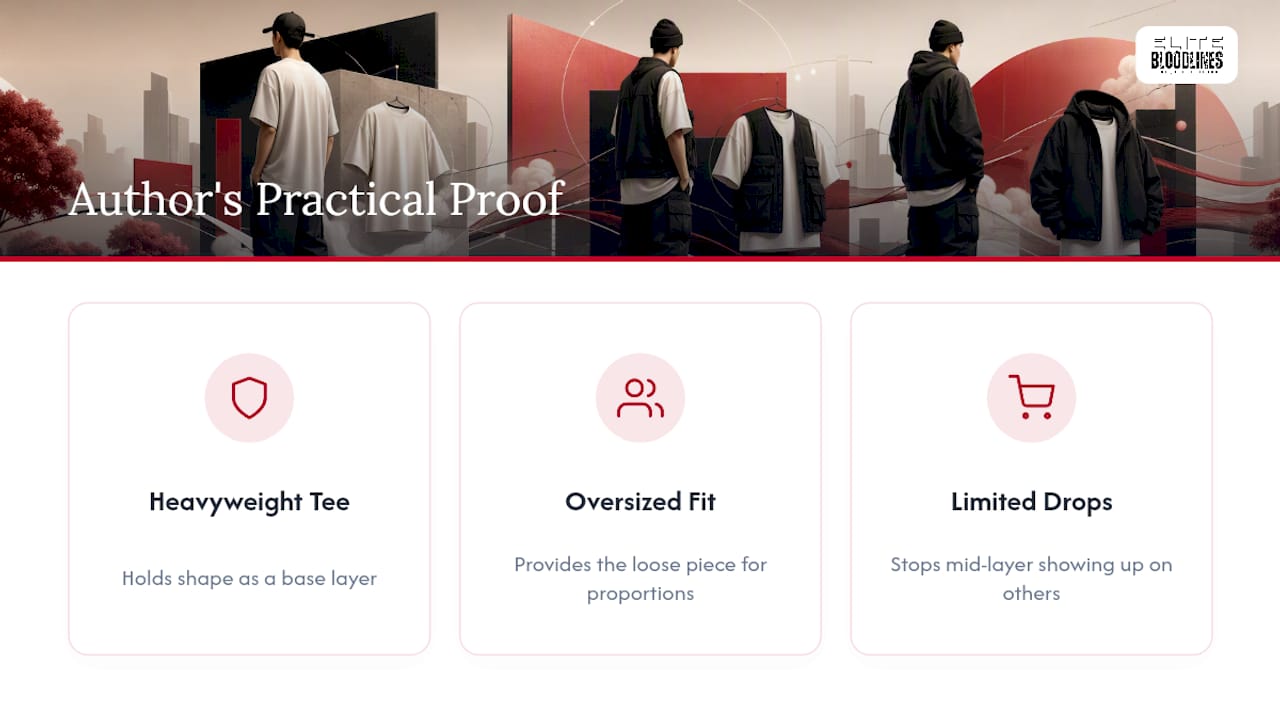
Elite Bloodlines builds its own proof into the product line. Heavyweight tees hold their shape as a base layer instead of collapsing under a jacket. Oversized fits give you the loose piece the proportion rules call for, and limited drops mean the mid-layer you build a formula around won’t show up on three other people at the same event.
What Actually Matters in Layered Streetwear (And What’s Overrated)
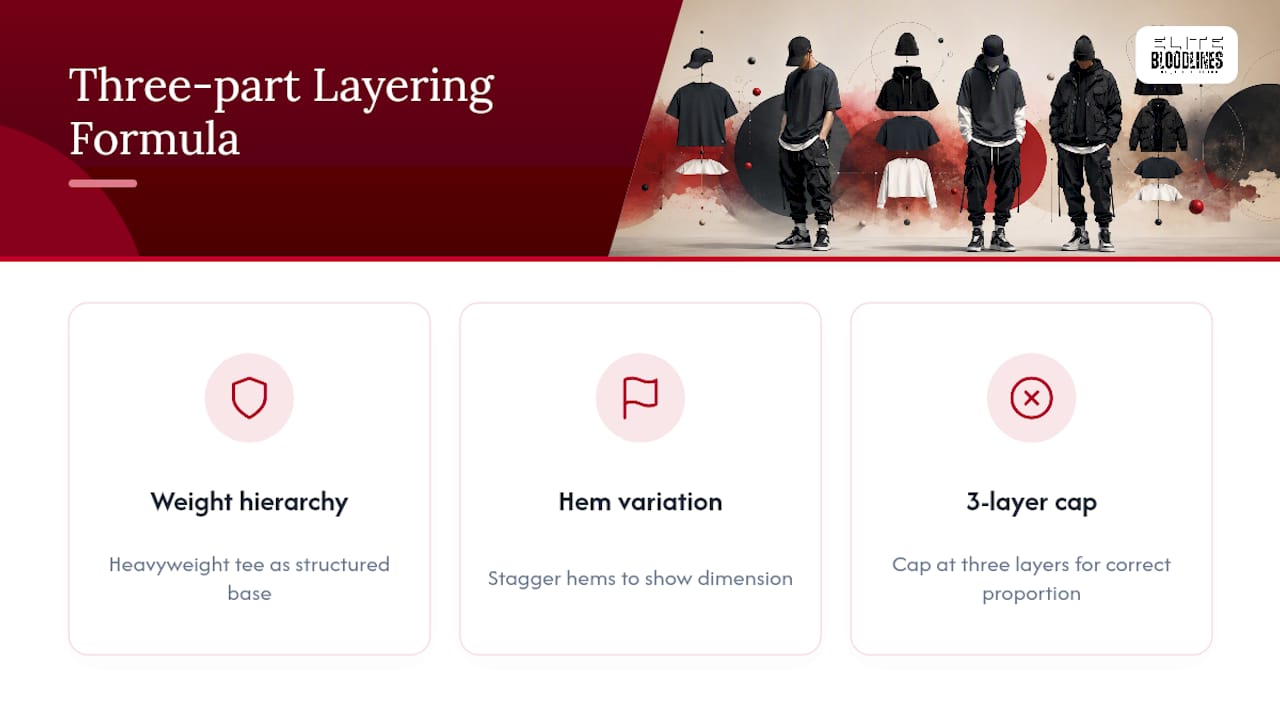
Most layering advice obsesses over which specific jacket or hoodie to buy. That’s backwards. The formula matters more than any single piece: weight hierarchy, hem variation, and a hard cap at three layers will make a $30 tee look sharp and a $300 jacket look sloppy if the proportions are wrong.
The conventional wisdom oversells cold-weather layering and undersells summer layering. Guides love to talk about puffers and thermals, but the harder skill is building visible dimension with one or two light layers in July, when there’s no bulk to hide behind and every seam shows.
If you’re starting from scratch, prioritize the mid-layer first, not the outer piece. A great blazer over a bad t-shirt still looks bad. A heavyweight tee with real structure gives every formula above something solid to build on, whether that mid-layer ends up under a bomber, a coat, or nothing at all on a warm afternoon.
— Michael
Shop the Formulas: Elite Bloodlines Pieces Built for Layering
Elite Bloodlines is the direct route to the base and mid-layer pieces every formula above depends on, without hunting through generic racks for a tee heavy enough to hold its shape under a jacket. The EB Core Line Oversized Tee gives you the loose foundation the proportion rules call for, and the EB Graphic Tees collection works as the one statement piece your outfit builds around.
Check the EB Heritage collection for classic-fit mid-layers that pair cleanly under a coat, or browse Current Drops for limited-run pieces that work as a standout outer frame. Since these are limited-run releases, the fit you build this month won’t be sitting on a rack next season. Pick your base, pick your anchor, and go build the formula.
Sources
- Streetwear Layered Outfit Ideas: Best 2026 Dimensional Style Guide
- 7 Essential Rules to Layer Streetwear Like a Pro 2026