

Puff Print Care: Make Heavyweight Tees Last 50+ Washes
The fastest way to keep puff prints from cracking is simple: wash inside out in cold water on a gentle cycle, use a mild detergent, and air dry. Never iron directly on the print. Follow that routine and the raised texture on your heavyweight tee holds its shape wash after wash, instead of flattening into a cracked shadow of what it used to be.
TL;DR:
- Properly cured puff print can last through 50 or more wash cycles if treated gently, but under-curing and exposure to high heat significantly reduce its lifespan.
- Hot water, high dryer temperatures, and direct ironing damage the raised texture by softening the plastisol and causing cracking or delamination.
- Washing inside out in cold water with mild detergent and air drying in the shade are critical to preserving puff print integrity over time.
- Heavyweight cotton tees require longer drying times and careful storage to prevent foam compression and long-term damage to the textured surface.
- Early signs of cracking or lifting, usually within the first few washes, often indicate production issues rather than normal wear, and prompt repair may be possible.
Table of Contents
- What Damages Puff Print? How Curing and Fabric Stress Cause Cracking
- How Should You Wash a Puff Print Shirt Step by Step?
- What’s the Safest Way to Dry and Iron Puff Prints?
- How Do You Spot Clean Puff Print Without Ruining It?
- How Should You Store Puff Print Shirts Long Term?
- Elite Bloodlines’ Checklist for Heavyweight Graphic Tees
- How Long Should a Puff Print Actually Last?
- Sources
- FAQ
What Damages Puff Print? How Curing and Fabric Stress Cause Cracking
Puff print starts as plastisol ink mixed with a puff additive that expands when heat hits it. During curing, a heat press or dryer brings the surface to roughly 300 to 320 degrees Fahrenheit, which triggers that expansion and locks the raised texture into place, according to Printable Press. Get that curing window right, and the puff holds for the life of the shirt. Get it wrong, and the foam layer never fully sets, so it looks fine on day one and starts lifting by wash three.
Heat is the enemy after curing too. Hot water, high dryer heat, and a hot iron all re-soften the plastisol, which can collapse or flatten the raised design permanently.
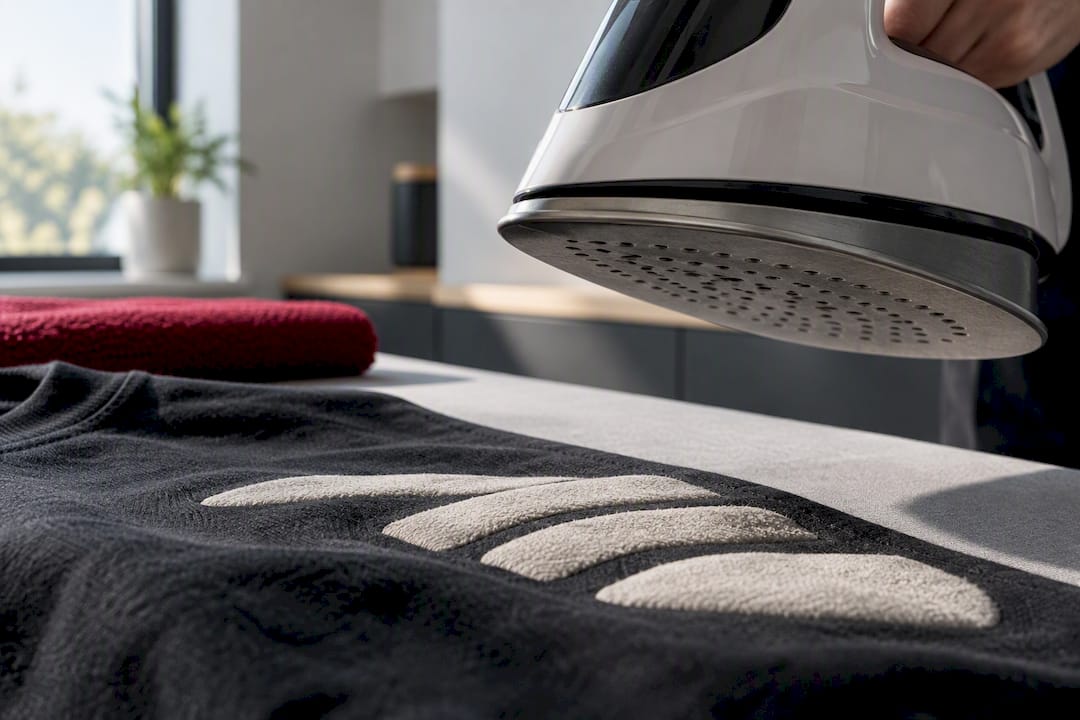
Friction and stretch add a second layer of stress. Tumbling against zippers, denim, or a rough drum edge creates micro-cracks in the cured surface, and pulling a tight-fitting tee over your head repeatedly stretches the fabric under the print until it splits.
How do you tell production defects from normal wear? Edge lifting or cracking that shows up within the first few washes usually points to under-curing at the print shop, not anything you did in the laundry room, per All For U Custom Apparel.
How Should You Wash a Puff Print Shirt Step by Step?
A short, low-stress laundry routine handles most of the risk. Here’s the order that actually protects the print:
- Inspect and pretreat. Check the garment for stains before washing and treat them gently, working from the fabric side rather than scrubbing the print directly.
- Turn it inside out. This single step shields the raised design from friction against other clothes and the machine drum, and it’s one of the primary prevention steps recommended by RT Chem.
- Set the machine to cold water. Stay at or below 86°F (30°C) on a gentle or short cycle with low spin. Hot water is what softens plastisol before its time.
- Wash with similar fabrics. Pair puff-print tees with other lightweight items, never with towels, jeans, or anything with zippers and hooks that can snag the print.
- Choose a mild liquid detergent. Skip powders with enzymes, anything with optical brighteners, bleach, and heavy fabric softener, since these chemicals degrade plastisol chemistry over time, according to Printable Press.
- Keep loads small and infrequent. Less agitation per wash and fewer total wash cycles both add up to longer print life.
Pro Tip: Skip washing a puff print tee after one light wear. A quick airing between wears cuts your total wash count over the year, and fewer cycles is the single biggest lever you control for print longevity.
This routine takes maybe thirty extra seconds compared to tossing everything in on hot with a scoop of powder detergent. That’s a small trade for a design that’s supposed to outlast the trend it was printed for.
What’s the Safest Way to Dry and Iron Puff Prints?
Air drying flat or hanging in the shade is the gold standard. Direct sunlight and any sustained heat source both stress the cured plastisol the same way a hot dryer does.
If you must use a dryer, keep it on the lowest heat setting and the shortest cycle available, then pull the shirt out while it’s still slightly damp and let it finish air drying. This matters more for heavyweight tees, since the extra fabric mass holds heat and moisture longer than a standard tee, and overexposing that thicker cotton to dryer heat puts more stress on the print than the label suggests.
- Never iron directly on the raised design.
- If ironing is unavoidable, flip the garment inside out and press a thin cloth over the area on the lowest heat setting.
- Keep steam away from the print entirely, since direct steam plus pressure is a fast way to split the foam.
- Reshape the design by hand while the shirt is still slightly damp, smoothing it flat rather than folding it.
- Avoid tight folds on a damp print, since compression marks can set into the raised surface as it dries.
Careful drying habits pair naturally with a solid washing routine for graphic tees, and if you want the deeper mechanics of why heat timing matters so much on thicker cotton, our guide on drying heavyweight shirts safely breaks it down further.
How Do You Spot Clean Puff Print Without Ruining It?
Test any stain remover on a hidden seam first, never on the print itself. Once you know it’s safe, dab the stain rather than rubbing it, since rubbing motion is exactly the friction that cracks raised ink.
- Use a mild liquid detergent applied with a cloth, or a gentle stain pen made for delicate fabrics.
- Avoid solvent-based removers and bleach entirely, since both attack plastisol the same way harsh detergents do.
- Spot-treat small, fresh stains; hand-wash the whole garment when the stain is large, old, or covers an area near the print.
- For oil-based or set-in stains, work in small amounts of detergent and rinse cold rather than scrubbing harder, since aggressive treatment risks lifting the print’s edges.
When in doubt, less pressure and more patience wins every time.
How Should You Store Puff Print Shirts Long Term?
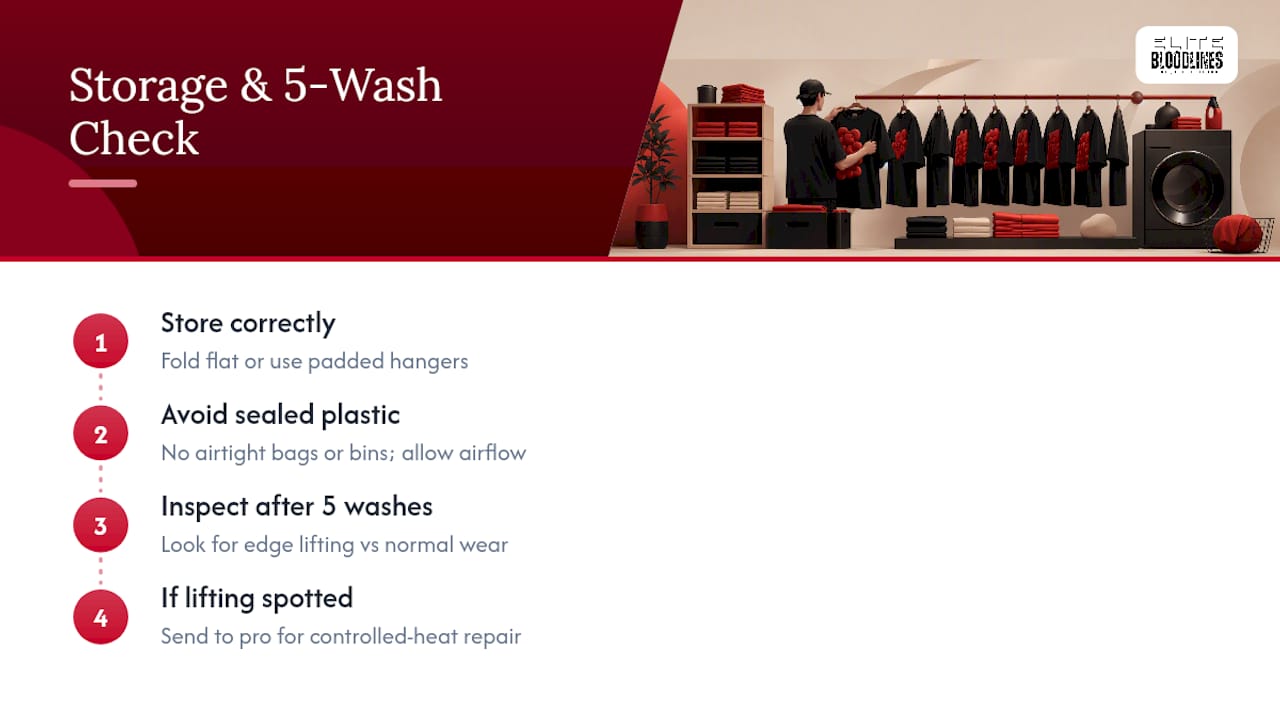
Fold puff print garments flat or hang them on padded hangers. Stacking heavy piles on top of a raised print compresses the foam layer over time, and that compression doesn’t always bounce back.
Skip sealed plastic bags and bins for long-term storage. Trapped moisture with no airflow can delaminate the plastisol layer over the course of months, even when the shirt looked fine going into storage.
Check your prints after the first five washes. That’s typically when under-cured or poorly adhered ink starts to show edge lifting, and catching it early gives you a shot at a repair instead of a total loss. If you spot early lifting, a professional can sometimes gently reactivate the ink with controlled heat, but that’s a job for someone with the right equipment, not a home iron.
Elite Bloodlines’ Checklist for Heavyweight Graphic Tees
Heavyweight tees earn their name because they hold more fabric mass, and that changes how you treat them.
The 4-point checklist:
- Wash less. Air between wears before you throw it in the machine.
- Cold wash, inside out, every time. No exceptions for a “quick load.”
- Air dry or lowest dryer heat, and pull it while still damp.
- Store flat. Padded hanger or a flat fold, never a crushed stack.
Heavyweight cotton holds water longer than a thin tee, so give it extra drying time rather than cranking the heat to speed things up. If you ever suspect under-curing on a piece, whether from us or anywhere else, document it. Take photos of the cracking or lifting, note how many washes it survived, and pass that along to the printer. Specifics get you a real answer instead of a shrug.
How Long Should a Puff Print Actually Last?
Properly cured plastisol puff print can survive 50 or more wash cycles when the curing was done right and the laundry routine stays gentle. Cracking usually shows up as fine surface lines from heat or friction; delamination looks like the ink lifting away from the fabric in sheets, often from moisture or under-curing.
Minor cracking sometimes responds to careful, low-heat reactivation, but that’s a narrow fix, not a guarantee. Once a print delaminates in patches, document it with photos and wash count, then talk to the printer about a reprint rather than fighting a losing battle at home.
— Michael
Sources
Puff print curing temperatures and durability figures come from Printable Press. Storage and moisture guidance comes from Absortech and London Screen Printers.
Ready to put this care routine to work? Elite Bloodlines builds every heavyweight tee in the EB Graphic Tees collection with bold, raised designs meant to hold up if you treat them right. Browse the EB Core Line for staple pieces built the same way, cold wash, air dry, and no shortcuts.
- How to Prevent Puff Prints from Cracking After Washing
- How to Do Puff Printing on T-Shirts
- Will a sealed plastic bag protect my goods from moisture damage?
FAQ
Does Puff Print Wash Off?
Puff print doesn’t wash off when it’s cured correctly and cared for properly, but harsh washing conditions can crack or flatten it over time. Hot water, high dryer heat, and rough agitation are the usual culprits behind ink that appears to peel away.
What Are the Disadvantages of Puff Print?
Puff print is more sensitive to heat and friction than flat screen print, so it requires gentler washing and drying. It’s also less forgiving of production shortcuts, since under-cured puff ink can crack or lift within the first few washes even with careful home care.
What Are the Care Instructions for Puff Vinyl?
Puff vinyl follows the same core rules as puff plastisol: wash inside out in cold water on a gentle cycle, skip the bleach and fabric softener, and avoid direct heat from irons or high dryer settings. Air drying flat protects the raised texture better than any dryer cycle.
Does Puffy Paint Come Off in the Wash?
Craft-style puffy paint behaves differently from commercial puff print ink and tends to be far less wash-durable, often cracking or peeling after just a few cycles. Commercially cured puff print, when properly heat-set, holds up for 50 or more wash cycles with the right care.