

Stop Shrinking Cotton Tees: Dry Everyday and Heavyweight Shirts Safely
Air dry your cotton tee flat or hang it, and heat never touches it. If a dryer is the only option, run it on low with a short cycle and pull the shirt out while it’s still a little damp. Heat is the enemy here, not water. Every shrink disaster traces back to one thing: too much thermal stress on the cotton fibers.
TL;DR:
- Avoid high heat and long tumble drying cycles, as they significantly increase the risk of cotton shrinkage by relaxing fiber crimps.
- Flat air drying on a mesh rack or hanging by the hem minimizes distortion and maintains the shirt’s shape better than hanging by the shoulders.
- Turning printed or pigment-dyed shirts inside out and air drying prevents print damage and fading, especially under direct sunlight.
- Damp shirts should be gently reshaped by hand and laid flat or hung with padded hangers to avoid stretching or shoulder bumps.
- Heavier weight tees require longer drying times and benefit from air drying over hanging or high-heat methods to preserve fit and print quality.
Table of Contents
- The Best Ways to Dry Cotton T-Shirts Without Shrinking
- How Do You Handle a Damp T-Shirt Without Stretching It?
- How Do You Dry Printed or Pigment-Dyed T-Shirts Safely?
- How Long Does It Take to Air Dry a Cotton T-Shirt?
- Can You Unshrink a Cotton T-Shirt That’s Already Too Small?
- Care Tips for Heavyweight and Limited-Run Tees
- Why the Slowest Drying Method Is Usually the Right One
- Keep Your Tees Looking Right Longer
- Sources
- FAQ
The Best Ways to Dry Cotton T-Shirts Without Shrinking
Cotton fibers are built with a natural crimp, and heat relaxes that crimp fast, pulling the whole weave tighter. That’s the mechanism behind almost every shrunk tee. Combine that heat with the tumbling agitation of a dryer drum, and the fibers get compressed from every direction at once. Hot water and dryer heat are the two biggest shrink triggers most laundry guides point to, and avoiding both is the entire game.
Air drying stays the lowest-risk method, full stop. Here’s how to do it right:
- Flat dry on a mesh rack for premium or heavyweight tees. Gravity won’t drag the shoulders or collar out of shape.
- Hang by the hem, not the shoulders, when rack space is tight. A hanger through the neck stretches the collar over time.
- Keep colored tees in shade. Direct sun fades pigment fast.
- White tees can get a short sun exposure if you want a natural whitening boost, but keep it brief.
- If you tumble dry, use air-fluff or low heat only. Run a short cycle, pull the shirt at 90 to 95 percent dry, and hang it the rest of the way.
Dryer heat combined with tumbling action is a major shrink risk, which is why “low and short” beats “high and done” every time you’re deciding how to dry cotton shirts fast without gambling on fit.
Pro Tip: Set a timer for two minutes less than your dryer’s default cycle. Cotton finishes drying on the rack anyway, and those two minutes saved are exactly the heat exposure that causes most of the shrinkage.
How Do You Handle a Damp T-Shirt Without Stretching It?
Never wring a wet cotton tee. Wringing twists the fibers and can permanently distort the weave. Instead, roll the shirt in a dry towel and press down to squeeze out excess water, the same way you’d handle a wool sweater.
While the shirt is still damp, reshape it by hand:
- Smooth the shoulder seams flat and square them up.
- Gently stretch the neckline back to its original shape if it looks tight or puckered.
- Tug the hem and sleeves back to their pre-wash dimensions.
- Lay heavy prints or heavyweight fabric flat instead of hanging, since wet weight will pull a hung shirt out of shape at the shoulders.
- Use padded hangers over wire ones. Wire hangers create pressure points that leave shoulder bumps.
Flat drying on a mesh rack minimizes distortion better than hanging, especially for anything with a heavy print block or an oversized cut where the wet fabric carries real weight.
How Do You Dry Printed or Pigment-Dyed T-Shirts Safely?
Prints and pigment dyes are the most fragile part of any graphic tee, and drying is where most damage happens, not washing.
Turn the shirt inside out before it goes anywhere near heat or sun. That single step protects the printed surface from friction, fading, and direct thermal exposure.
- Wash and dry inside-out every single time, no exceptions for “just this once.”
- Skip high heat entirely. Prolonged heat breaks down the adhesive layer under screen prints and cracks pigment finishes.
- Air dry whenever possible, or give it a very brief low-heat machine finish only.
- Keep prints out of direct midday sun, which accelerates fading on both pigment dyes and plastisol ink.
Air drying stays the gentlest option for color and print integrity, and that holds true whether the print is a small chest logo or a full-back graphic. If you want a deeper breakdown of protecting a screen-printed design specifically, this guide to washing screen-printed shirts covers the print side in more detail.
How Long Does It Take to Air Dry a Cotton T-Shirt?
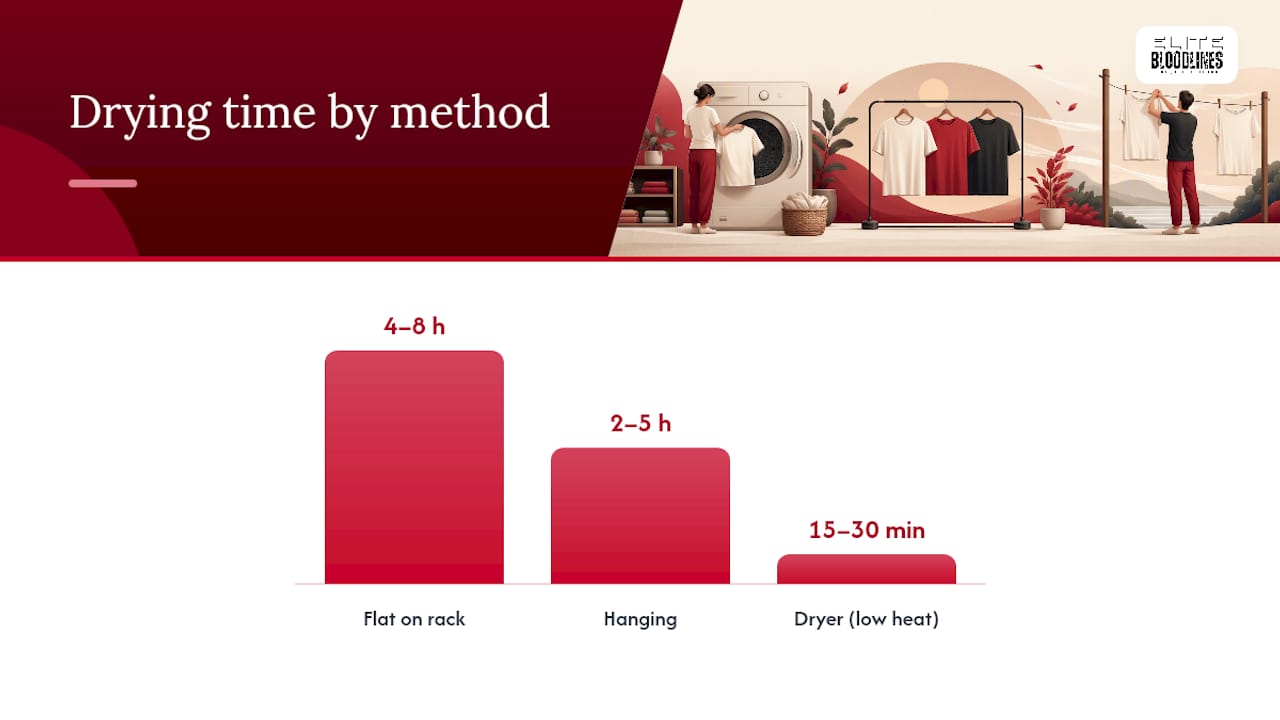
Flat drying on a rack typically runs 4 to 8 hours depending on humidity and airflow. Hanging cuts that down to roughly 2 to 5 hours since air moves around the whole garment. A dryer on low heat, by contrast, usually finishes a load in 15 to 30 minutes depending on load size and machine.
You can speed up air drying without adding a single degree of heat risk:
- Run an extra spin cycle in the washer first to push out more water before the shirt ever hits air.
- Point a fan at the drying rack. Moving air pulls moisture off fabric almost as fast as low heat does, with zero shrink risk.
- Run a dehumidifier in the room if you’re drying indoors in a humid climate.
- Space heavy items apart so they’re not trapping moisture against each other.
- If you do use the dryer, toss in a dry towel for short bursts. It absorbs moisture and cuts the cycle time.
Fan-assisted drying can cut indoor drying time by close to 40 percent compared to still air, based on practitioner comparisons of air-dry versus tumble-dry methods. That’s a meaningful difference if you’re drying a full week’s rotation of tees and don’t want to touch the dryer at all.
Can You Unshrink a Cotton T-Shirt That’s Already Too Small?
You can often recover some of the fit, but not always all of it, and repeated attempts do more harm than good.
- Measure first. Lay the shirt flat and measure chest width and length, then compare against the size chart or an unshrunk version. A shirt that’s shrunk 3 to 5 percent has real recovery potential; anything beyond that is a harder fix.
- Soak it warm, not hot. Fill a basin with lukewarm water and a capful of hair conditioner or baby shampoo. Both relax cotton fibers without damaging dye or print.
- Let it sit 20 to 30 minutes, then gently stretch the fabric by hand while it’s still wet. Focus on the chest, length, and sleeves.
- Lay it flat to dry in the reshaped dimensions, patting it periodically to hold the stretch as it dries.
- Repeat once more if needed, but stop there. Each soak-and-stretch cycle works the fibers, and doing it repeatedly can leave the fabric looking worn out even if the size comes back.
Some shrinkage from high heat is permanent because the fiber structure itself has tightened, not just the surface. If a shirt has sentimental or resale value and the shrink is significant, a tailor can often take in seams elsewhere to balance the fit rather than fighting the fabric itself.
Care Tips for Heavyweight and Limited-Run Tees
Heavier fabric changes the math on drying. A shirt in the 9 to 12 ounce range holds far more water than a standard 5 ounce tee, and that extra moisture means longer dry times no matter which method you pick. Flat drying is the better call here, not hanging, because wet heavyweight cotton has enough mass to pull its own shoulders out of shape on a hanger. If you’re unsure how a fabric’s weight affects handling, our breakdown of t-shirt GSM explains why heavier fabric behaves differently start to finish.
Garment-dyed and pigment-dyed tees are their own category. These fabrics can relax or shift slightly on the first wash before settling into their true dimensions, which is why we tell people to wash cold and air-dry for at least the first few cycles until you know how a specific piece behaves. Small-batch dye processes vary from drop to drop. If you want the full technical rundown, we cover it in our garment dye versus pigment dye guide.
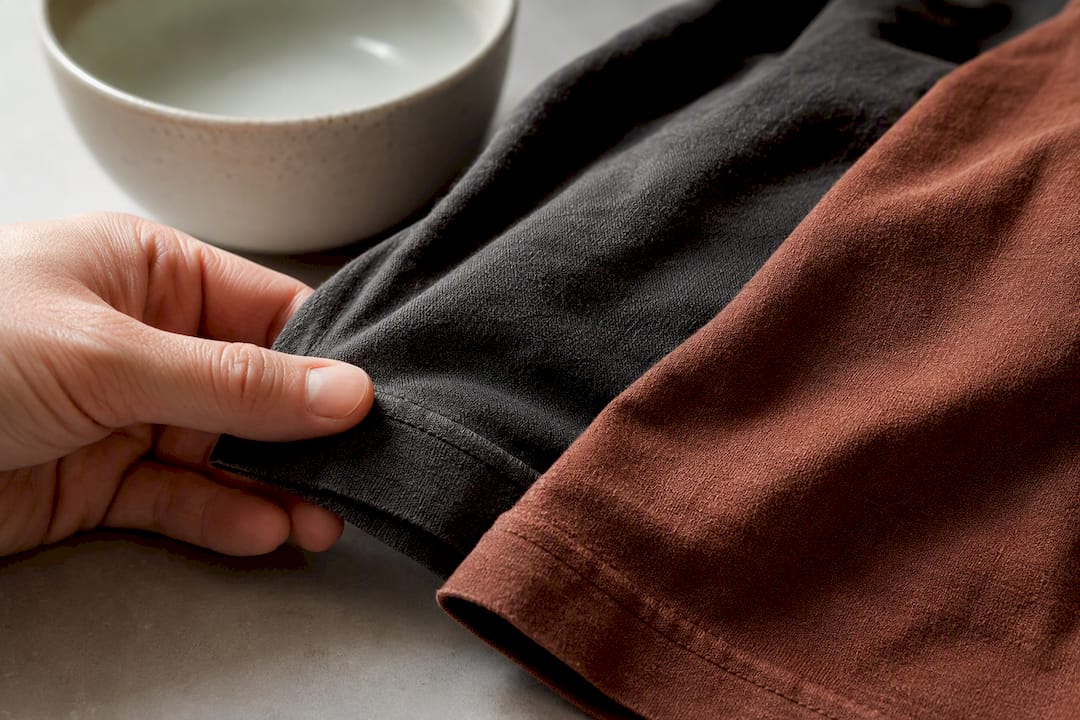
Pro Tip: If a heavyweight tee feels stiff after air drying, resist the urge to blast it on high heat to soften it up. A brief no-heat tumble does the job without any shrink risk, and our guide on softening stiff t-shirts walks through safer methods that protect the print and handfeel.
Why the Slowest Drying Method Is Usually the Right One
Greatness runs deep, and so does the damage from a hot dryer cycle you didn’t need to run. Every heavyweight tee we build carries real fabric weight and real print detail, and both take a hit the moment heat gets involved in drying. Air drying isn’t the slower option out of caution. It’s the method that actually respects what heavyweight cotton and pigment dye are built to do over years, not just one wash.
Fit and print are the two things people notice first on a graphic tee, and they’re also the two things heat destroys fastest. We’d rather you wait the extra few hours than watch a shirt you paid real money for come out two sizes tighter. Test it on one piece from your rotation before you commit your whole collection to a new drying habit. Trust the process. Own your fit.
— Michael
Keep Your Tees Looking Right Longer
Heavyweight tees hold their shape for years, but that only happens if drying doesn’t undo the work the fabric is already doing for you. Skip the high-heat cycle, follow the steps above, and the fit you bought stays the fit you wear.

If you’re ready to add a piece built for this kind of care, browse the EB Graphic Tees collection for bold, heavyweight designs made to last past the first dozen washes. Want something with real weight behind it? The EB Beauty in the Blood 9 oz. heavyweight tee is a limited drop built for flat drying and long-term wear, not a wash-and-toss shirt. Grab your size now, follow the air-dry steps above from day one, and the fit stays exactly what you signed up for.
Sources
- How Not To Shrink Your Favorite T-Shirt - Speed Queen
- How to wash cotton - Launderwise
- How To Wash Cotton T-Shirts (And Prevent Shrinking And Fading) - TextileTuts
- Best Ways to Dry Cotton Fabric: All you Need to Know - ICE Fabrics
FAQ
Can You Put 100% Cotton T-Shirts in the Dryer?
Yes, but use low heat or air-fluff and remove the shirt while still slightly damp. High heat combined with tumbling action is what causes most shrinkage, not the dryer itself.
How Long Does It Take for a 100% Cotton Shirt to Dry?
Flat drying takes roughly 4 to 8 hours, hanging takes 2 to 5 hours, and a low-heat dryer cycle usually finishes in 15 to 30 minutes depending on load size.
Will 100% Cotton Shrink If You Dry It?
It can, especially with high heat and long cycles, since heat relaxes the fiber’s natural crimp and tightens the weave. Air drying or a short low-heat cycle keeps that risk to a minimum.
Will 98% Cotton Shrink in the Dryer?
The small percentage of synthetic fiber doesn’t add meaningful heat resistance.