

Hoodie Fit: 4 Fast Checks That Beat Size Charts
A hoodie fits when the shoulder seam sits right at the bony point of your shoulder, the sleeves end at your wrist bone, the hem falls a few inches below your waistband, and you can pinch one to two inches of fabric at the chest. Size true if you’re wearing it alone. Size up if you’re layering or chasing an oversized look. The pinch test and raise-arms test below confirm it in seconds.
TL;DR:
- Prioritize shoulder seam placement at the shoulder bone, as it influences fit and the proper draping of the hood.
- Use the four-point checklist—shoulder, chest pinch, sleeve, and hem length—to assess hoodie fit before consulting size charts.
- Heavier fabrics over 400 GSM will fit looser and should be sized up if layering or a more relaxed look is desired.
- When between sizes, emphasize shoulder fit first, then adjust for chest ease based on your intended style or layering needs.
- Always measure your own body and compare to garment specifications rather than relying solely on size labels for accurate fit.
Table of Contents
- The Four-Point Hoodie Fit Checklist
- How Do You Measure Yourself for a Hoodie Size Chart?
- What Are the Different Hoodie Fit Types?
- Why Fabric Weight Changes How a Hoodie Fits
- What Should You Do If You’re Between Two Hoodie Sizes?
- Quick In-Store Tests to Confirm Fit Before You Buy
- Elite Bloodlines’ Take on Fit: What Michael Looks for on Every Cut
- Why Fit Is the Whole Point, Not an Afterthought
- Elite Bloodlines’ Classic and Oversized Fits, Built From This Exact Checklist
- Where to Check Your Fit Against Other Size Charts
- Sources
The Four-Point Hoodie Fit Checklist
Forget guessing. Check the shoulder seam first because everything else in the fit follows from that one checkpoint. When it sits on the bone instead of sliding down your arm or choking your neck, the hood behaves and the whole garment hangs the way it was designed to.
From there, run these four checks in order:
- Shoulder seam: it should land exactly at the edge of your shoulder bone, not an inch past it and not short of it.
- Chest pinch test: grab the fabric at your side. One to two inches of fabric is the target. Less than an inch means it’s fighting you. More than two and a half means you’re swimming in it.
- Sleeve length: cuffs should stop right at your wrist bone, no shorter. If you plan to stack them up, add a half inch of slack.
- Hem length: the bottom should sit two to three inches below your waistband. Raise your arms overhead. If your midsection shows, the hoodie runs short for your torso.
Run all four before you touch a size chart. They’ll tell you more than a label ever will.
How Do You Measure Yourself for a Hoodie Size Chart?
Size charts only work if you know how to read your own body against them. Here’s the workflow:
- Measure your chest. Wrap a tape measure around the fullest part of your chest, under your arms, keeping it level. Breathe normally, don’t puff up.
- Measure shoulder breadth. Run the tape from the edge of one shoulder bone to the other, across your back.
- Measure sleeve length. Start at the center of your back neck, run over the shoulder, down to your wrist bone. Some brands measure shoulder seam to cuff instead, so check which convention the product page uses before you compare numbers.
- Measure body length. From the base of your neck straight down to where you want the hem to hit.
Now compare those numbers to the garment spec, not the size label. Pit-to-pit width doubled roughly equals chest circumference, and hoodies typically build in four to six inches of ease over your actual body measurement. A quick trick: lay a hoodie you already love flat, measure pit-to-pit yourself, and use that as your personal benchmark against any new listing.
What Are the Different Hoodie Fit Types?
Not every hoodie is built to fit the same way, and picking the wrong category is the most common mistake in this whole process. Here’s what each one actually delivers on the body:
- Regular or athletic fit: close through the shoulders and chest with minimal boxiness. Best for lean to average builds who want structure without bulk.
- Slim fit: tighter across the torso and arms, shorter body length. Works well on leaner frames but runs unforgiving on broader shoulders or a fuller midsection.
- Relaxed fit: extra room through the body while keeping the shoulder seam close to true. A safe middle ground for most builds.
- Oversized fit: dropped shoulder seams, extra chest volume, longer hem. Great for broad-shouldered or taller guys who want a deliberate silhouette, but it can swallow a smaller frame if you’re not careful with sizing.
Taller readers should watch body length more than chest width. Broader shoulders should size for the shoulder seam and accept slightly more chest ease rather than sizing down and cutting off circulation at the arms.
Why Fabric Weight Changes How a Hoodie Fits
GSM, or grams per square meter, tells you how heavy the fabric is, and it changes fit more than most shoppers expect. Lightweight hoodies sit around 240 to 300 GSM and drape close to the body with more give. Midweight lands around 300 to 400 GSM, balancing structure and comfort. Heavyweight construction runs 400 GSM and up, and it drapes and stretches far less, which means the garment’s actual measurements matter more than any assumption about body ease.
That’s exactly why heavier fabric changes perceived fit: a heavyweight hoodie in your normal size will read boxier than a lightweight one in the same label. If you’re planning to wear it under a jacket regularly, size up one from your true measurement.
Pro Tip: Read the GSM on the product page before you read the size chart. A 450 GSM hoodie in “Medium” behaves nothing like a 260 GSM tee-weight hoodie in the same label.
What Should You Do If You’re Between Two Hoodie Sizes?
Borderline measurements are common, and the fix isn’t complicated once you know what to prioritize.
- Lead with the shoulder seam. If one size nails the shoulder and the other doesn’t, take the one that nails it.
- Then check chest ease. Size down for a tighter, cleaner line or size up for a looser, more relaxed drape, depending on the look you’re after.
- Match the size to the use case. Athletic or clean styling favors the smaller option. Layering or oversized styling favors the larger one.
- Have a backup plan. A hem that runs slightly long is an easy tailoring fix. A chest that’s too tight rarely is, so when in doubt on shrinkage or fit correction, buy the size that gives you room to adjust.
Quick In-Store Tests to Confirm Fit Before You Buy
Standing in front of a mirror tells you half the story. Movement tells you the rest.
- Raise your arms overhead. Watch the hem. If your stomach shows or the shoulders pull tight, the size runs small for your torso.
- Sit down and cross your legs. This reveals a short hem or a tight chest that standing still won’t show.
- Repeat the pinch test seated, then pull the hood up and check that it doesn’t block your peripheral vision or bunch awkwardly at the neck.
Any hoodie that passes all three while seated will hold up through a full day of actual wear.
Elite Bloodlines’ Take on Fit: What Michael Looks for on Every Cut
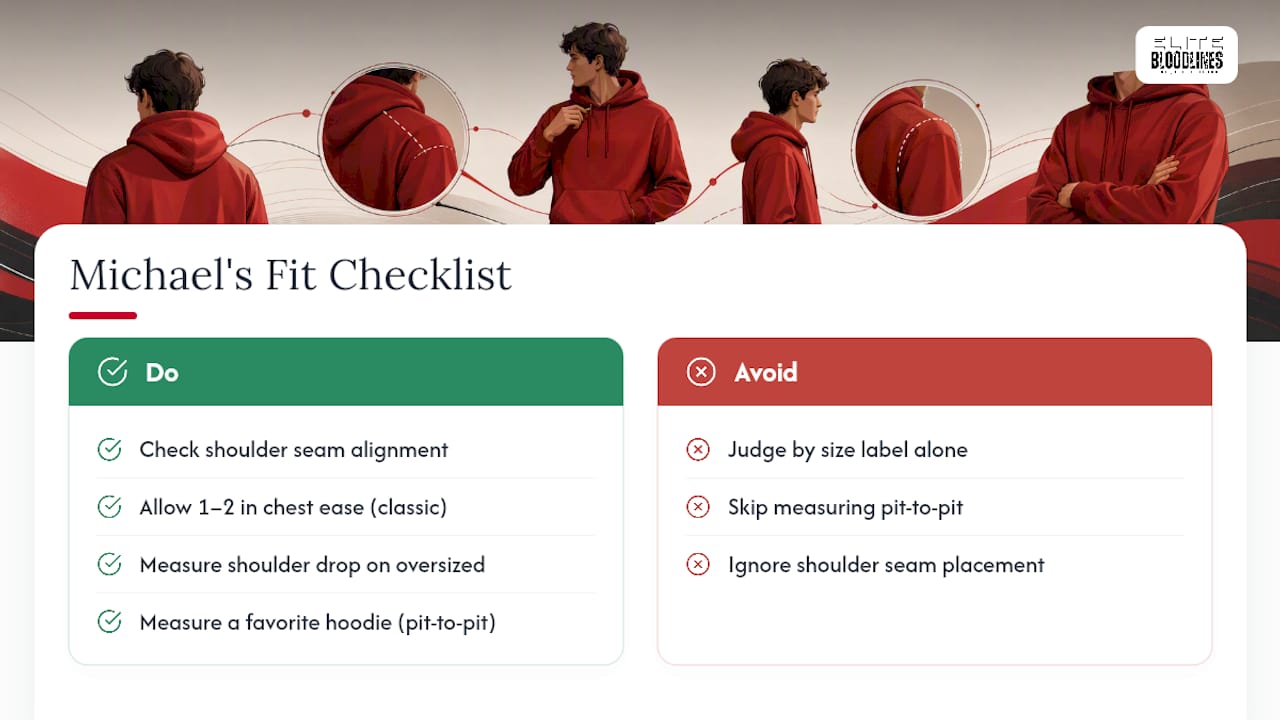
Every hoodie gets built around the same non-negotiable: the shoulder seam holds structure while the chest gets enough ease to move. In the classic cuts, that means a true shoulder line with roughly one to two inches of pinch room. In the oversized pieces, the shoulder seam drops intentionally, but it still gets measured against a true reference point rather than just added volume for the sake of it.
The most common mistake Michael sees shoppers make: judging fit off the size label instead of the garment’s actual pit-to-pit spec. Pro Tip: Before you buy, measure a hoodie you already own and love, then hold that number against the product page. That comparison beats any size chart on its own.
Why Fit Is the Whole Point, Not an Afterthought
Bold graphics only hit right when the garment underneath doesn’t fight them. A dropped shoulder seam that’s actually intentional reads different from one that’s just wrong. Elite Bloodlines builds every limited run around that distinction, because the design only survives if the fit carries it.
— Michael
Elite Bloodlines’ Classic and Oversized Fits, Built From This Exact Checklist
Every fit rule in this guide is considered in how hoodies are cut. The EB Heritage collection runs classic through the shoulder and chest, true to size for anyone who wants structure without swimming in fabric. If you’d rather run the numbers yourself first, the EB Heritage Collection V1 classic fit product page lists exact garment specs you can hold against your own pit-to-pit measurement before you commit.
Chasing the dropped shoulder and heavyweight drape instead? Read up on why oversized heavyweight hoodies hit different, then size up one from your true measurement if you plan to layer. Not sure whether a hoodie or a heavier sweatshirt cut suits your layering plans better? This hoodie versus sweatshirt breakdown walks through the difference. When you’re ready to see what’s currently running, check Current Drops before the limited-run sizes disappear.
Where to Check Your Fit Against Other Size Charts
- ASOS men’s hoodie size charts for mainstream chest-range references.
- MFG Merch’s hoodie size chart for pit-to-pit and ease breakdowns.
- A community-built sizing spreadsheet for cross-brand comparisons.
Sources
- Hoodie Size Chart - MFG Merch
- How a Hoodie Should Fit a Man: A Complete Fit Guide 2026 — HoodieOEM
- I made a Hoodie spreadsheet to help you with sizing — Reddit