

Six Criteria to Pick Lined or Unlined Shorts for Runners, Gym Goers
Choose lined shorts when you need built-in anti-chafe support and light compression for long runs, trail miles, or heavy-impact training. Choose unlined shorts when you want breathability, layering freedom, or the freedom to pick your own underwear. Fit and climate can flip that call, so the rest comes down to how you train and what your body tolerates.
TL;DR:
- Lined shorts are preferable for runs longer than 10 kilometers and on technical trails because they reduce chafing, support muscles, and manage sweat better.
- Unlined shorts offer greater flexibility and ventilation, but require moisture-wicking underwear to prevent chafing and often demand more careful fit and laundry routines.
- The choice depends on activity type, climate, and personal sensitivity, with long-distance runners and trail athletes generally benefiting from liners.
- Wearing underwear underneath lined shorts creates a moisture trap called the “sweat sandwich,” which can increase friction and irritation during long efforts.
- Testing both options on different training days can help determine which setup suits your body and activity best, especially for distances over six miles or in humid weather.
Table of Contents
- What Is a Liner, and What Are the Common Types?
- The Real Benefits of Lined Shorts
- Unlined Shorts and What to Wear Underneath Them
- How to Decide: Six Criteria That Settle the Liner Debate
- Fixing Chafing, Liner Ride-Up, and the Sweat Sandwich
- What We Build for at Elite Bloodlines
- Try Elite Bloodlines Shorts Built for Both Camps
- A Straight Answer From Someone Who’s Tested Both
- Sources
- FAQ
What Is a Liner, and What Are the Common Types?
A liner is the built-in inner layer sewn or clipped into a pair of shorts, designed to sit against your skin instead of underwear. It’s not padding. It’s a functional layer that manages sweat, cuts friction, and holds soft tissue in place while you move.
Liners come in a few common builds, and the differences matter more than most guys assume:
- Brief-style liners sit higher on the hip, offer a snug feel, and work well for guys who want minimal fabric and a locked-in fit.
- Boxer-style liners extend coverage down the thigh, which cuts down on inner-thigh rub but can ride up more if the cut doesn’t match your body.
- Compression liners add stabilizing pressure to muscle and connective tissue, common in trail shorts built for technical terrain.
- Removable liners unclip from the shell, giving you a two-in-one short you can strip down for a swim or a hot gym session.
- Sewn-in liners are permanent, lighter, and simpler, but you’re locked into one fit forever.
The mechanics matter here. A good liner wicks moisture away from skin, reduces the friction that causes hot spots, and adds a small amount of compression that keeps things from bouncing around mile after mile. Liner length changes the game too. Shorter brief liners breathe better but expose more skin to rub. Longer boxer liners cover more ground but need a true fit to avoid creeping upward on a run.
The Real Benefits of Lined Shorts
Lined shorts earn their reputation on long efforts, not quick trips to the gym. The built-in layer is designed to replace underwear entirely, and that single-layer setup is where the advantages start stacking up.
Chafing is the biggest one. Friction from skin rubbing against fabric, combined with sweat, is the direct cause of chafing according to the Cleveland Clinic, and a well-fitted liner reduces both the rub and the moisture buildup that makes it worse. A hands-on comparison from Men’s Fitness found lined two-in-one shorts outperformed underwear-plus-shorts combos on runs past 10 kilometers, with noticeably better airflow and less heat buildup as the miles piled on.
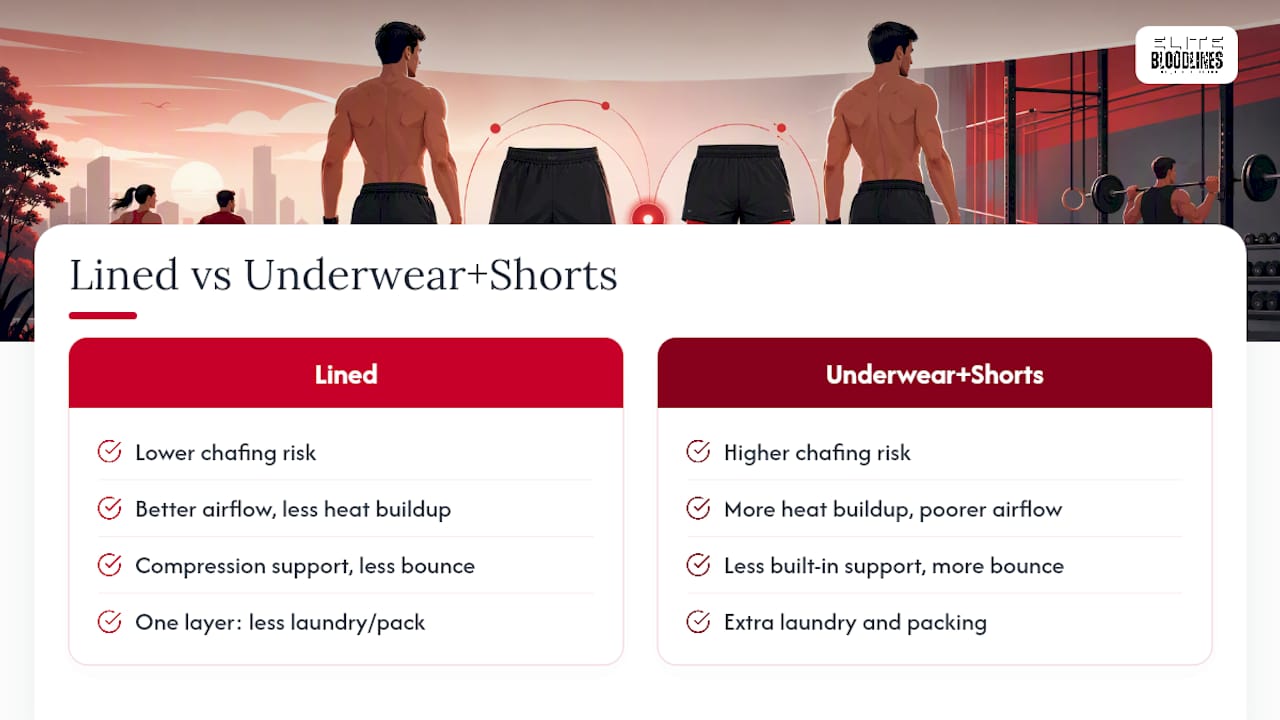
Support is the second win. Compression liners hold soft tissue steady when your legs are fatigued, which cuts down on bounce during long trail runs or technical descents where every step lands differently. Gear reviewers at GearJunkie consistently rank liners higher for very long runs and race-day settings, where minimizing layers and eliminating chafe risk outweighs any ventilation trade-off.
There’s a practical side too. One layer means less laundry, one less thing to pack, and no risk of underwear seams bunching under your shorts.
Pro Tip: If you’re training for a race longer than 10 miles, test your liner shorts on a long run at least twice before race day. A liner that feels fine at mile 3 can turn into a hot spot by mile 10, and you want to know that before it costs you a finish time.
Lined shorts are the clear pick for marathon training, trail races, and any session where you’re chasing distance over comfort of choice.
Unlined Shorts and What to Wear Underneath Them
Unlined shells win on flexibility. Without a fixed liner, you control what touches your skin, how much airflow you get, and how the shorts layer with other gear. That’s a real advantage for guys who train across different conditions, from HIIT circuits to hot outdoor miles.
The tradeoff is that you now need underwear that pulls its weight. Here’s what actually works:
- Seamless technical briefs in polyester or nylon blends move moisture away from skin without adding bulk.
- Boxer-briefs with a compression weave give thigh coverage similar to a boxer-style liner, minus the fixed fit.
- Jockstraps work for lifters who want support without any leg fabric at all.
- Cotton underwear is the one thing to avoid entirely. It holds sweat instead of moving it, which is exactly the setup that leads to chafing.
The guidance from OutdoorFitLab is consistent on this point: seamless, moisture-wicking synthetics reduce friction, while cotton makes every mile worse the longer you run. If you’re not sure what “moisture-wicking” actually does to fabric at a technical level, it’s worth understanding the fabric science before you buy your next pair.
There’s a real trade-off here worth naming. Unlined setups demand more attention. You have to wash two garments instead of one, you have to get the underwear fit right independently of the shorts, and you’re more exposed to chafing if you skip the synthetic-fabric rule even once.
Pro Tip: Pair a lightweight unlined shell with a compression boxer-brief for gym sessions where you’re moving between machines and want the shorts to breathe between sets. Save the all-in-one liner setup for anything over an hour.
For guys who train across multiple activities, an unlined shell paired with the right technical underwear is often the more practical long-term setup.
How to Decide: Six Criteria That Settle the Liner Debate
Most guys overthink this decision. It comes down to six factors, and once you run through them honestly, the answer is usually obvious.
- Distance and duration. Short tempo runs and quick lifting sessions show almost no measurable difference between lined and unlined setups. The gap opens up past 10 kilometers, where liners start winning on chafe prevention and reduced bulk.
- Activity type and terrain. Trail running rewards compression liners because they stabilize muscle on uneven footing. Road running and gym work are more forgiving, so either setup holds up fine.
- Climate and ventilation needs. Hot, humid conditions favor lighter unlined shells with breathable underwear underneath. Cooler climates make lined shorts more comfortable since you’re not fighting excess heat retention.
- Personal anatomy and sensitivity. Some guys chafe easily on the inner thigh regardless of setup. If that’s you, test both a brief-style liner and a boxer-style liner before committing, since fit varies more between these two cuts than most buyers expect. Fit-test with the exact underwear (or liner) you plan to train in, since a liner that feels snug in a fitting room can shift entirely once your legs swell on a long run, a point GearJunkie’s testers flag repeatedly.
- Laundry and multi-use habits. If you’re washing gear every single day, a lined short cuts your laundry load in half since there’s no separate underwear layer to clean. If you rotate through multiple shorts and underwear combos across a week, unlined setups give you more mixing flexibility.
- Convenience and features. Pockets and phone storage often live in the liner itself on lined shorts, which can mean less room in the outer shell’s pockets. Unlined shorts tend to give you more usable pocket space on the shell since there’s no liner competing for room.
Run through these six and the decision usually makes itself. Guys who lift, do HIIT, or run under six miles at a time rarely need a liner at all. Guys chasing distance, racing on trails, or training in cooler weather almost always benefit from one.
Fixing Chafing, Liner Ride-Up, and the Sweat Sandwich
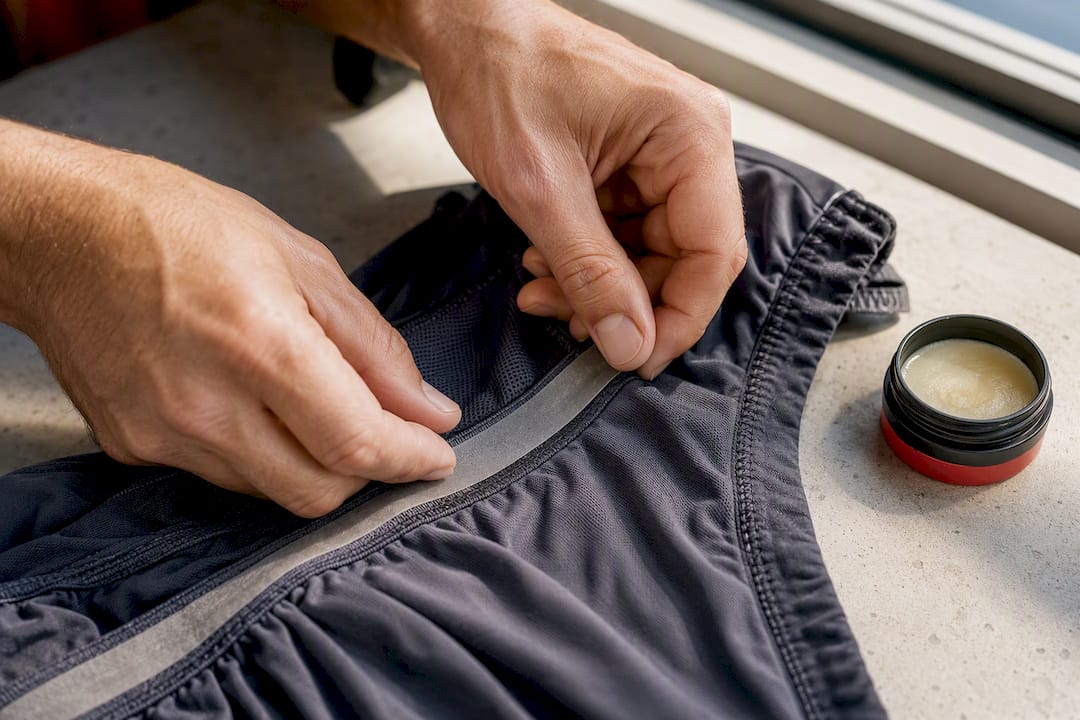
Chafing comes from friction plus moisture, and the fix is always some combination of reducing both, according to the Cleveland Clinic. A thin anti-chafe tape applied to problem seams, or a minimalist lubricant like Body Glide, solves most short-term irritation before it becomes a real problem mid-run.
Liner ride-up is a fit issue, not a design flaw. If a boxer-style liner keeps creeping up your thigh, check the leg opening for excess room, or switch to a brief-style liner that sits closer to the hip. Persistent ride-up after a fit adjustment usually means the liner cut doesn’t match your anatomy, and it’s worth trying a different brand’s inseam length before assuming liners aren’t for you.
The “sweat sandwich” deserves its own callout, because it’s the single most common mistake guys make with lined shorts:
- Wearing underwear underneath a built-in liner traps sweat between two fabric layers instead of one.
- That trapped moisture increases friction exactly where the liner was designed to prevent it, according to ProWearTrends.
- The liner is the underwear. Skip the extra layer entirely.
Wash liners in cold water and skip fabric softener, which coats wicking fibers and kills their moisture transfer over time. Replace a liner once the elastic loses its grip or the fabric feels permanently damp even after washing. That’s your signal the wicking treatment has broken down for good.
What We Build for at Elite Bloodlines
We focus on gym apparel designed for committed trainers seeking quality options beyond typical retail offerings. Each short is evaluated using key criteria such as fit, ventilation, fabric weight, and performance under strain.
We offer both mesh-lined shorts for those seeking built-in coverage with airflow and unlined shorts with wider leg openings for those who prefer using their own underwear. High-quality fabric and limited-run production are priorities.
Try Elite Bloodlines Shorts Built for Both Camps
If you’ve been running through the six criteria above and landed on “I need an unlined shell with room to layer my own underwear,” the EB Star loose fit performance shorts are built exactly for that setup. Prefer built-in coverage with a breathable mesh construction? The EB Core Line mesh drawstring shorts split the difference between ventilation and structure.

For a durable, everyday option that holds up across gym sessions, long runs, and everything in between, the EB Heritage Collection V1 is built for guys who want one pair of shorts that does it all instead of rotating through five. Every release is limited-run, so sizing charts and returns are listed on each product page. Check the current lineup on the current drops page before your size sells out.
A Straight Answer From Someone Who’s Tested Both
Most of the liner debate online is louder than it needs to be. The real answer is boring: match the short to the mile count and the climate, and stop treating this like a permanent identity choice… Test a lined pair on your next long run and an unlined pair on your next gym day, and let your own skin settle the argument…
— Michael
Sources
- Chafing - Cleveland Clinic
- Lined vs. Unlined Running Shorts — GearJunkie
- Do You Wear Underwear with Running Shorts? Expert Guide - ProWearTrends
- Moisture-wicking underwear vs 2-in-1 shorts | Men’s Fitness
- Should You Wear Underwear With Running Shorts? - OutdoorFitLab
FAQ
Are lined or linerless shorts better?
Neither wins outright. Lined shorts perform better on runs past 10 kilometers and on technical trail terrain, while linerless shells win on short efforts, gym sessions, and hot climates where ventilation matters more than built-in compression.
What is the point of shorts with a liner?
A liner replaces underwear entirely, cutting friction and managing moisture in a single layer while adding light compression that reduces muscle bounce on longer runs.
Is it better to run in lined or unlined shorts?
For runs under six miles, the difference is negligible. Past 10 kilometers, testers consistently find lined shorts more comfortable due to reduced chafing and better heat management.
Do you wear underwear with lined shorts?
No. The liner is designed to be worn against bare skin, and adding underwear on top creates a “sweat sandwich” that traps moisture and increases the exact friction the liner is meant to prevent.