

10 Monochrome Streetwear Looks That Rely on Texture, Not Exact Matches
A monochrome streetwear outfit works when you layer three to four shades within one color family instead of matching everything exactly. The formula: heavyweight tee, midweight midlayer, structured outer piece, tonal pants, matching shoes. Get the tone-on-tone balance right and texture-based depth in lighter monochrome palettes do the rest. Below, the rules, ten copyable outfit formulas, and a capsule wardrobe plan to build your own.
TL;DR:
- Monochrome streetwear outfits rely on layering different shades within one color family rather than exact matching, using fabric weight and texture for depth.
- Using a heavy-weight outer layer against lighter inner pieces enhances visual interest through contrast, with proportions and silhouette volume playing a crucial role.
- Variations in fabric finish, such as matte versus sheen, and maintaining consistent metallic hardware and footwear tones, prevent outfits from looking flat or mismatched.
- Avoid matching shades exactly or including conflicting graphics, as these reduce tonal depth and can make a look appear accidental or flat.
- Investing in outerwear and footwear, along with a core set of tonal basics, allows for versatile monochrome outfits without a large wardrobe, emphasizing texture over perfect color matching.
Table of Contents
- Why Monochrome Streetwear Outfits Actually Work
- The Core Rules for Building a Monochrome Fit
- 10 Monochrome Streetwear Outfits to Copy
- Building a Monochrome Capsule Wardrobe
- Mistakes That Flatten a Monochrome Outfit
- How Elite Bloodlines Applies These Rules
- Texture Over Perfection: The Real Monochrome Rule
- Ready-to-Wear Pieces That Fit This System
- Sources
- FAQ
Why Monochrome Streetwear Outfits Actually Work
Identical-shade matching is the trap. Head-to-toe black in the exact same fabric reads flat, almost costume-like. Tone-on-tone dressing avoids that by stacking three or four shades within a single family, which gives the eye enough variation to register depth without breaking the palette. That’s the core insight behind most credible monochrome styling guidance: texture and proportion carry the visual interest that color usually would.
Fabric weight does heavy lifting here. A 550 GSM hoodie against a 220 GSM tee creates contrast through material, not hue. Proportion matters even more in streetwear, where volume relationships (boxy top, tapered bottom, or the reverse) define the silhouette. Strip out color contrast and those proportions become the whole story.
Different palettes behave differently:
- Black hides seams and reads sharpest with matte-versus-sheen texture play.
- Grey needs the widest tonal spread to avoid looking washed out.
- Earth tones (clay, olive, tan) lean warm and pair naturally with suede or canvas textures.
- White demands the most maintenance but photographs the cleanest.
Pro Tip: Hold two garments next to a window in daylight. If they look identical under natural light, they’re too close in tone. You want visible separation, just within the same family.
The Core Rules for Building a Monochrome Fit
Before you touch a hanger, run through this checklist. It’s the difference between an outfit that looks styled and one that looks accidental.
- Build by fabric weight, not just color. Start with your lightest layer against skin, add a midweight piece, finish with the heaviest outer layer. Weight variation reads as depth even when the color barely shifts.
- Pick one textural anchor. That’s your ribbed knit, your waxed cotton, your fleece-lined hood. One dominant texture prevents the outfit from competing with itself.
- Choose a single metallic tone for hardware. Gunmetal zippers with silver eyelets look like an oversight. Pick one and stay with it across the whole outfit.
- Match footwear temperature to your palette. Cool greys and blacks pair with cool-toned soles and leathers; warm clays and olives want warm-toned suede or gum soles.
- Allow exactly one deliberate accent. A cream shoelace, a tan zipper pull, a slightly lighter cap. One accent adds interest; two starts to look unplanned.
- Audit your shoes and bag last. These are the pieces most likely to clash because they’re often chosen for function first. Check them against the rest of the outfit before you leave the house.
Pro Tip: If you’re unsure whether two pieces belong in the same family, photograph the outfit in black and white on your phone. If the shapes blend into indistinguishable gray blobs, the tonal spread is too narrow.
10 Monochrome Streetwear Outfits to Copy
These formulas cover the major directions: dark, light, grey, and warm earth tones. Each one lists the core pieces, the standout texture, footwear, and a quick tweak to make it your own.
- Ink-led hoodie stack. Charcoal hoodie, black heavyweight tee underneath, black cargo pants, matte black sneakers. Texture anchor: brushed fleece hood against a smooth cotton tee. Tweak: swap in a slightly lighter grey beanie for one visible break.
- All-black overshirt fit. Black overshirt over a black tank, black relaxed joggers, black leather sneakers. Anchor: waxed canvas overshirt against soft jersey. This is the closest cousin to a full all-black streetwear breakdown if you want more variations on the theme.
- Stone-on-stone tee fit. Stone graphic tee, taupe midweight joggers, cream low-tops. Anchor: a subtle tonal print on the tee itself. Tweak: roll the joggers to expose the sock for a lighter break in the leg line.
- Ecru outercoat layer. Ivory wool coat over an off-white hoodie, cream straight-leg pants, white leather sneakers. Anchor: wool coat texture against knit fleece. This pairing echoes the ivory-and-black tonal direction seen in Stockholm street style, where texture does most of the work.
- Fog-grey hoodie base. Heather grey hoodie, darker grey cargo shorts, grey mid-top sneakers. Anchor: heather knit against a smooth-woven short. Tweak: add a charcoal crossbody for a third grey shade.
- Clay-toned tee stack. Terracotta heavyweight tee, tan relaxed trousers, brown suede sneakers. Anchor: suede against cotton twill. Works well transitioning into fall.
- Olive overshirt combo. Olive drab overshirt, sage green tee, olive cargo pants, tan boots. Anchor: ripstop fabric against a jersey tee.
- Navy layered set. Navy quarter-zip, navy tee underneath, indigo-washed denim, white-soled navy sneakers. Anchor: denim texture against smooth fleece.
- All-white tee-led fit. White heavyweight tee, off-white joggers, white sneakers with a cream midsole. Anchor: ribbed cuffs against flat jersey. Needs the most upkeep of any look on this list.
- Slate midlayer stack. Slate quarter-zip, darker slate pants, black-soled grey sneakers. Anchor: fleece-backed quarter-zip against a woven pant.
Every formula above works regardless of gender. If you want outfit ideas built specifically around fit adjustments for different body types, the women’s streetwear formula guide applies the same tone-on-tone logic with different proportion notes.
Building a Monochrome Capsule Wardrobe
You don’t need forty pieces to run these formulas on repeat. You need a tight rotation of items chosen for how well they play together.
- One heavyweight graphic tee in a neutral base tone
- One midweight hoodie a shade darker or lighter than the tee
- One structured overshirt or outercoat for the outer layer
- Two pairs of relaxed trousers (one dark, one light, same undertone)
- One pair of joggers for the softer, hoodie-led fits
- Two sneaker options, one cool-toned and one warm-toned
- One tonal cap or beanie as your accent piece
- One crossbody or tote in a matching neutral
Invest in outerwear and footwear first. Those pieces anchor the silhouette and take the most visible wear. Save on basic tees since you’ll cycle through them faster. When picking shades, stick to warm or cool undertones consistently. Mixing a warm grey hoodie with a cool grey pant is the fastest way to make an otherwise solid outfit look mismatched. For a deeper breakdown of weight-based layering, the three-layer streetwear system guide and the complete capsule wardrobe starter both build on this exact list.
Mistakes That Flatten a Monochrome Outfit
- Matching shades exactly. Identical tones erase contrast. Fix it by spacing your pieces at least one shade apart.
- Ignoring proportion. An oversized hoodie over slim pants in the same color reads unbalanced. Rebalance with a wider or tapered bottom depending on your top.
- Random graphics breaking the palette. A bright logo mid-outfit pulls the eye away from the tonal build. Use graphics only when they match the palette’s undertone.
- Skipping garment care on light palettes. White and cream pieces show wear fast. Wash cold, air dry, and treat stains immediately to keep the look sharp.
Pro Tip: If an outfit looks flat in the mirror, add texture before you add color. A ribbed beanie or waxed jacket usually fixes it faster than swapping a shade.
How Elite Bloodlines Applies These Rules
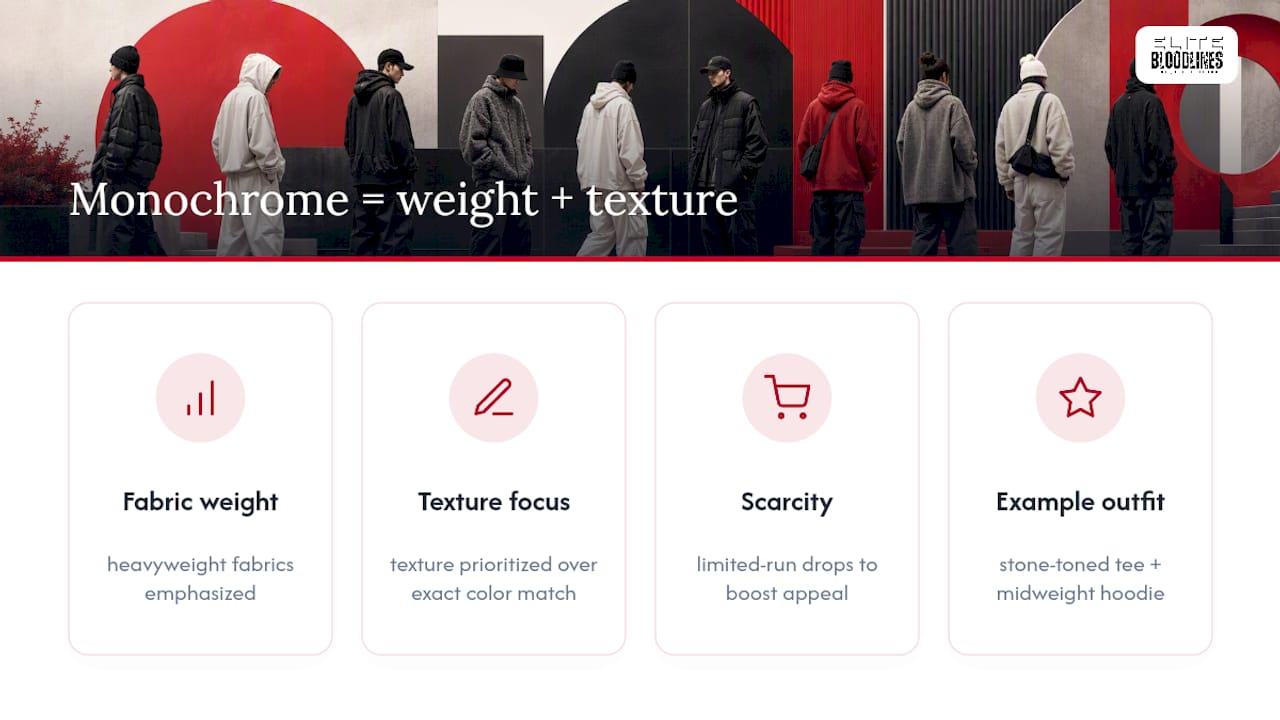
Some streetwear brands build around heavyweight fabrics and limited-run drops specifically because monochrome outfits live or die on fabric weight and texture, not just color matching. A stone-toned graphic tee from a recent drop, paired with a matching midweight hoodie, follows the exact tone-on-tone formula outlined above…
Texture Over Perfection: The Real Monochrome Rule
The biggest misconception about monochrome streetwear is that it demands exact color matching. It doesn’t. What separates a sharp tonal outfit from a flat one is fabric weight, texture, and proportion. Most beginners chase the wrong variable. They hunt for the “perfect” matching black instead of building contrast through a heavyweight hoodie against a lighter tee.
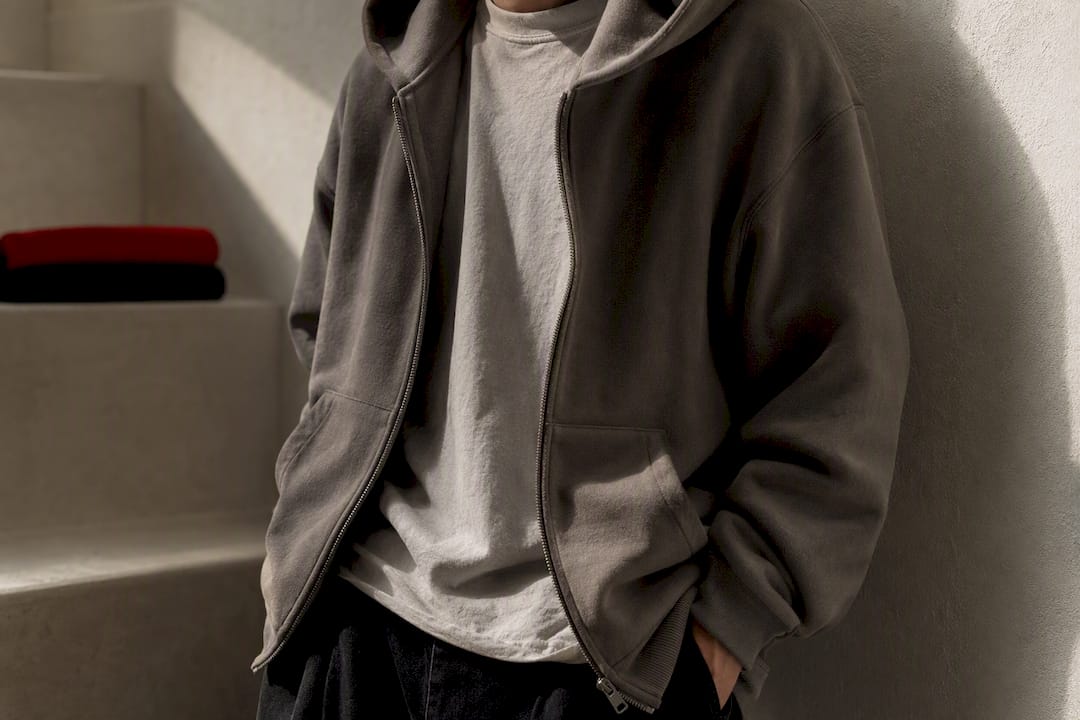
Conventional styling advice often treats monochrome as a color exercise. Treat it as a construction exercise instead. Pick your tonal family, then focus entirely on weight and texture within that family. Heavyweight pieces, in particular, hold structure better across layers, which is why brands built around heavier fabric weights naturally produce stronger monochrome results than lightweight fast-fashion basics.
If you’re prioritizing anything first, prioritize your base layer and outer layer. Those two pieces set the fabric-weight contrast that makes the whole outfit read as intentional rather than accidental.
— Michael
Ready-to-Wear Pieces That Fit This System
Every formula in this guide depends on fabric weight doing the work color can’t. That’s exactly where the EB Core Line fits in. Heavyweight tees and hoodies built for tonal stacking, not just another basics rack.
The EB Graphic Tees collection works as that one deliberate accent piece the rules call for, a tonal print that stays inside your palette instead of breaking it. Want something built as a textural anchor instead? The EB Heritage line leans into limited-run construction designed to hold up as the heaviest layer in your stack. Start with one heavyweight tee, build outward from there, and check the current drops before a design sells out.
Sources
Styling guidance in this article draws on WEAR2AM’s monochrome outfit breakdown, 1ABEL’s tone-on-tone formulas, and Vogue’s Stockholm street style coverage. Image inspiration credited to Pexels and additional Pexels street photography.
- Monochrome Streetwear Outfit Ideas That Actually Look Good — WEAR2AM
- Shop 7 Black-and-White Outfits Inspired by Stockholm Street Style — Vogue
FAQ
What is the 3-3-3 rule for outfits?
The 3-3-3 rule generally refers to building a small wardrobe rotation with a balanced number of tops, bottoms, and shoes that all mix and match well. Applied to monochrome streetwear, it works especially effectively since every piece shares a tonal family.
What is considered a monochrome outfit?
A monochrome outfit uses one dominant color family, but the strongest versions layer three to four different shades within that family rather than matching every piece exactly. This tone-on-tone approach relies on texture and fabric weight for visual interest.
Are monochrome outfits expected to be trendy in 2026?
Black-and-white and tonal palettes have stayed consistently popular across street style coverage because they’re seasonless and easy to build around. Minimalist streetwear brands continue to lean into neutral, quality-focused basics as the foundation.
Where can I buy monochrome outfits?
Heavyweight tonal basics built for layering are available through collections like EB Core Line, which offers pieces designed specifically for the fabric-weight contrast that makes monochrome outfits work.