

6 Moves to Prevent Hoodie Shrinkage: Cold Wash, Air Dry for Best Fit
The single most important routine to prevent hoodie shrinkage is this: wash cold on a gentle cycle, turn the hoodie inside out, and air-dry it flat, or tumble-dry on the lowest setting and pull it out while it’s still slightly damp. The first wash is the riskiest one your hoodie will ever face. Check the care label before you touch the dial, and when in doubt, air-dry wins every time.
TL;DR:
- Washing hoodies in cold water on a gentle cycle and air-drying flat helps prevent significant shrinkage, especially for heavyweight or printed fabrics.
- Using high-heat tumble drying or leaving a hoodie in the dryer until fully dry increases the risk of permanent shrinkage and fabric damage.
- Hard water and repeated aggressive wash cycles contribute to fiber stiffening and increased mechanical stress, which can accelerate shrinkage.
- Partial hoodie recovery after shrinking is possible through soaking, gentle stretching, and reshaping while damp, but full reversal isn’t guaranteed.
- Proper storage, spot cleaning, and avoiding prolonged hanging in the heat or sunlight preserve hoodie size and shape over time.
Table of Contents
- 6 Quick Moves That Stop Shrinkage Now
- What’s the Right Washing Routine for a Heavyweight Hoodie?
- Air-Dry, Hang-Dry, or Tumble-Dry: Which One Actually Works?
- Why Do Hoodies Shrink in the First Place?
- Can You Actually Unshrink a Hoodie?
- How You Store and Wear a Hoodie Matters Too
- Does Water Hardness Affect Hoodie Shrinkage?
- Where Should You Actually Dry a Hoodie?
- When Is a Little Shrinkage Worth Living With?
- Built Heavyweight, Made to Last: Elite Bloodlines Hoodies
- Sources
- FAQ
6 Quick Moves That Stop Shrinkage Now
Before the deep dive, here’s the checklist that covers 90% of what goes wrong in a laundry room:
- Cold water, gentle cycle. Heat is the enemy. Cold water keeps cotton fibers relaxed instead of shocking them into contraction.
- Turn it inside out. Zip any zippers, tie the drawstrings, and drop delicate prints into a mesh bag.
- Mild detergent only. Skip fabric softener. It coats fibers and breaks down the print adhesive over time.
- Don’t overload the washer. A packed drum forces more friction against every seam.
- Air-dry flat, first choice. If you must use a dryer, pick the lowest heat setting and stop it early.
- Space out your washes. Air the hoodie between wears instead of tossing it in the hamper after one use.
What’s the Right Washing Routine for a Heavyweight Hoodie?
Start with the care label. Manufacturers print the highest temperature and dryer setting the fabric can safely tolerate, and that number should cap whatever you choose, not the other way around. Heavyweight streetwear hoodies, the kind with thick fleece backing and bold graphic prints, tend to carry more conservative labels than thin gym pullovers, so don’t assume every hoodie in your closet gets the same treatment.
Sort by weight before you load the machine. Washing a heavy hoodie next to jeans or towels multiplies the friction against its fibers, which speeds up pilling and stretches out the ribbing at the cuffs and hem. Turn the hoodie inside out to protect the printed side, zip any zippers so they don’t snag the fabric, tie off drawstrings, and if the design has delicate foil or puff print, slide it into a mesh laundry bag.
From there, the machine settings matter as much as the prep work:
- Cold water, always, unless the label explicitly permits warm.
- Gentle or delicate cycle with a reduced spin speed.
- A mild or color-preserving detergent, measured rather than eyeballed. Half the usual amount works fine for lightly soiled garments.
- No fabric softener, ever, on a graphic hoodie.
Whirlpool’s own care guidance backs this up directly: smaller loads and lower spin speeds reduce the mechanical action that causes shrinkage, and avoiding heavy-duty cycles protects the knit structure. Skipping the extra-heavy setting on a top-load machine isn’t laziness. It’s the correct move for anything with a print on it.
Pro Tip: If a hoodie feels stiff or slightly soapy after washing, don’t reach for fabric softener next time. Run an extra rinse cycle instead. Detergent residue is usually the culprit, and softener just adds another coating problem on top of it.
Air-Dry, Hang-Dry, or Tumble-Dry: Which One Actually Works?
Drying does more damage than washing ever will. Heat combined with tumbling is what actually shrinks a hoodie. Cold water and air drying preserve softness and reduce shrinkage far better than high-heat cycles, and that single swap solves most of the problem before it starts.
Here’s how the three main drying methods stack up:
- Air-dry flat on a mesh rack or a towel spread over a flat surface. This keeps the shoulder seams from bunching and preserves the hoodie’s shape better than any other method. Tumble drying causes the most shrinkage and pilling of any drying stage, while flat drying preserves the shoulder line and fabric loft.
- Hang-dry, but only with support. A thin wire hanger digs into the shoulders and stretches them out over time. Use a wide hanger or fold the hoodie over a padded rod so the weight distributes evenly instead of pulling on two small points.
- Tumble-dry on low, if you’re short on time or space. Toss in a couple of dryer balls to cut down drying time, and pull the hoodie out while it’s still a little damp, then let it finish flat. Check it every 10 minutes rather than walking away for a full cycle.
The riskiest habit is leaving a hoodie in the dryer until it’s bone dry on high heat. That’s the exact combination, heat plus prolonged agitation, that locks in permanent shrinkage.
Why Do Hoodies Shrink in the First Place?
Shrinkage happens because heat, moisture, and mechanical agitation release the tension that gets built into fabric during manufacturing. Fibers, especially cotton, contract and tighten under that combination, and it mostly happens once, on that very first hot wash-and-dry cycle, rather than gradually over dozens of washes.
By the numbers: A 100% cotton hoodie can lose roughly 3 to 8 percent of its length on an aggressive hot wash paired with high-heat tumble drying, which is enough to drop you half a size or more. Cotton-poly blends shrink at about half that rate, and fully synthetic fabrics like polyester fleece shrink the least of all.
Preshrunk, or sanforized, cotton has already been through a mechanical shrinking process at the factory, which lowers the risk but doesn’t erase it. Knit structure plays a role too. A tighter knit resists distortion better than a loose, airy one. If the tag doesn’t say what the fabric is, treat it like 100% cotton and default to cold water and air drying. That single assumption protects you against the worst-case outcome even when you’re guessing.
Can You Actually Unshrink a Hoodie?
Partial recovery is realistic. A full reversal usually isn’t, especially after repeated high-heat cycles. Here’s the practical sequence worth trying:
- Soak the hoodie in lukewarm water mixed with a gentle hair conditioner or baby shampoo for 20 to 30 minutes. This relaxes the fibers.
- Stretch it gently by hand while it’s still wet, focusing on the areas that shrank the most.
- Lay it flat on a towel and reshape it to the dimensions you want, then let it air-dry completely undisturbed.
- Spot-treat stubborn areas by dampening just that section and applying steam from an iron held a few inches away while gently pulling the fabric into shape.
Expect modest gains, not a miracle. Prints and any elastane content are especially vulnerable to repeated stretching, and hitting a shrunken hoodie with more heat to “fix” it usually makes things worse, not better. For a full walkthrough with photos and Elite Bloodlines specific guidance, our step-by-step unshrinking guide covers the process in more detail.
How You Store and Wear a Hoodie Matters Too
Laundry isn’t the only place fit gets lost. Fold heavyweight hoodies for long-term storage instead of hanging them. A hanger left on a heavy hoodie for weeks stretches the shoulders out of shape just as effectively as a bad dryer cycle. Our guide on folding hoodies without stretching walks through the folds that hold shape best.
Rotate what you wear and let a hoodie air out between uses rather than washing after every single wear. Fewer washes mean fewer chances for relaxation shrinkage to creep in.
- Air out garments on a hook for a few hours before rewearing.
- Spot-clean small stains instead of running a full wash cycle.
- Use a fabric-safe refresh spray between washes to cut down on odor without water.
- Iron only on low heat, and never press directly on a graphic print. Put a cloth barrier between the iron and the design if you must.
Does Water Hardness Affect Hoodie Shrinkage?
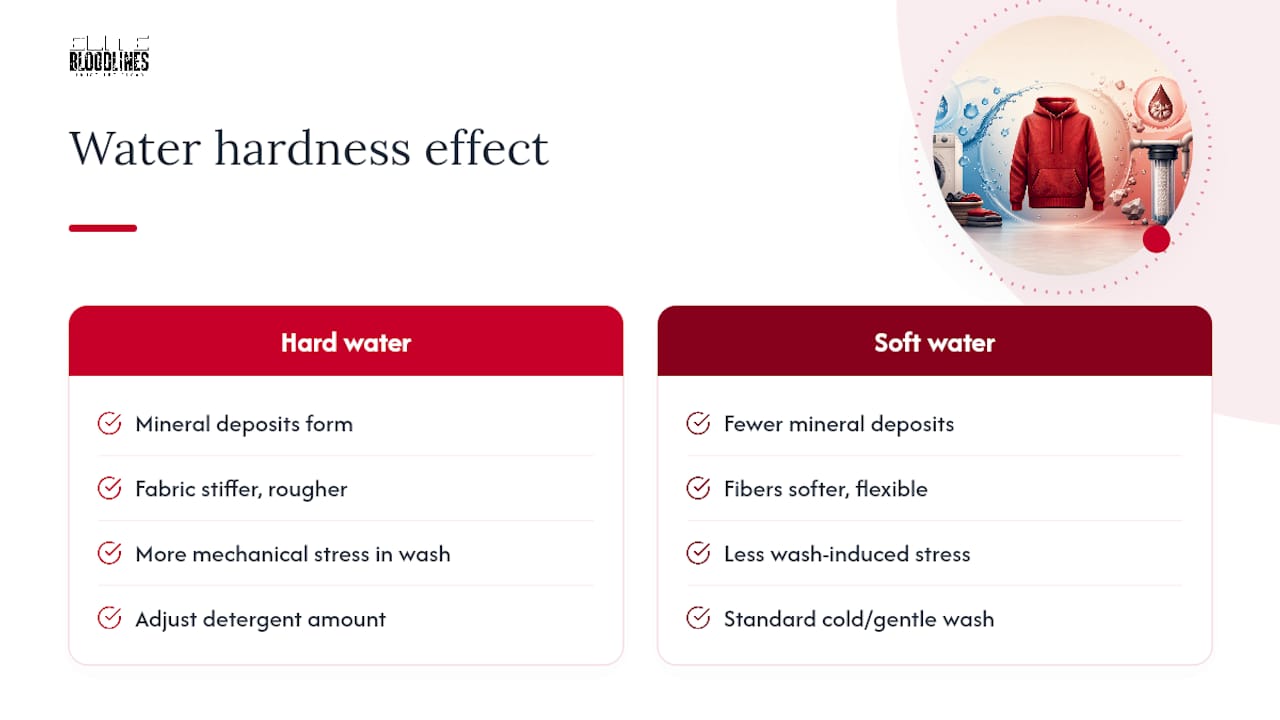
Hard water doesn’t cause shrinkage directly, but it makes every other laundry problem worse. Water loaded with calcium and magnesium reacts with detergent to form mineral deposits that build up inside fibers, leaving fabric stiffer and rougher over repeated washes. Stiffer fabric handles agitation less gracefully, which means the same wash cycle puts more mechanical stress on a hoodie washed in hard water than one washed in soft water.
If your home runs on hard water, a few adjustments cut down the wear and tear. Use slightly more detergent than the hard-water minimum on the label, since hardness minerals bind with detergent before it ever reaches your clothes. A water softener, whether a whole-house system or a simple in-line filter on the washer’s supply line, reduces mineral buildup and keeps fibers softer and more flexible between washes. Adding a splash of white vinegar to the rinse cycle helps dissolve some of that mineral residue too, though it’s a smaller fix compared to an actual softening system.
None of this replaces the cold-water, gentle-cycle basics. It’s a secondary layer of protection, useful mainly for people who notice their cotton hoodies feeling scratchy or fading faster than expected. If your water utility publishes hardness numbers for your area, that’s worth checking before you invest in equipment you might not need.
Where Should You Actually Dry a Hoodie?
Location matters as much as method. Direct sunlight feels like the obvious choice for fast drying, but UV exposure breaks down dye molecules and fades graphic prints faster than almost anything else you’ll do to a hoodie. A vivid design that looked sharp on day one turns chalky and washed out after a summer of drying on a sun-drenched line.
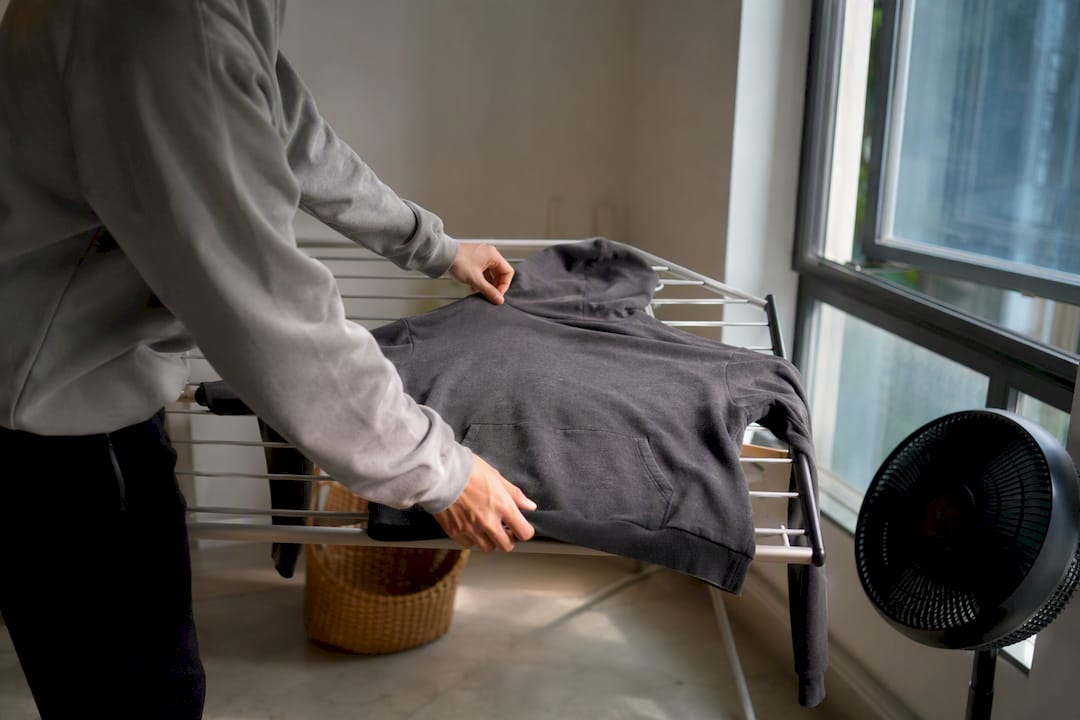
Shade is the better call every time. A covered porch, a laundry room, or an indoor drying rack near an open window all work, and none of them expose the fabric to the ultraviolet light that fades color. Good airflow matters more than direct heat for speeding up dry time anyway. A fan pointed at a flat-drying hoodie cuts hours off the process without adding any thermal stress to the fibers.
Humidity plays a role too. A hoodie left in a damp basement takes far longer to dry and risks a musty smell or even mildew if it sits wet for too long. Pick a spot with decent air circulation, out of direct sun, and check on the garment periodically rather than leaving it for a full day unattended. Reshape it once or twice while it dries to keep the shoulders and hem sitting the way they should. For everyday cotton pieces, our guide to drying heavyweight cotton shirts covers the same shade-first principle in more depth.
When Is a Little Shrinkage Worth Living With?
The purist answer is always air-dry, always wash sparingly. In practice, that’s not how most people live. If you need a hoodie back in rotation fast, cold wash plus tumble-dry on low, pulled out while damp, is the honest compromise. It costs you almost nothing in fit and saves real time. Elite Bloodlines builds every heavyweight piece with that reality in mind, backing durable construction with care guidance that assumes you’ll actually use your dryer sometimes. Check our hoodie fit guide if you’re ever unsure whether a change is shrinkage or just the original fit.
— Michael
Built Heavyweight, Made to Last: Elite Bloodlines Hoodies
Every heavyweight hoodie is built from fabric designed to hold its shape wash after wash, with care guidance included to help with setting choices.

Cotton-poly blends and heavier GSM fabrics resist shrinkage better than thin, single-ply cotton, and that’s the standard behind every piece in the EB Core Line. If bold prints are more your speed, the EB Graphic Tees collection carries the same construction standards in a lighter weight. Browse the current lineup, pick your fit, and follow the cold wash, air dry routine above to keep it looking exactly the way it did the day it arrived.
Sources
- How to prevent shrinking clothes — Whirlpool
- How to shrink a cotton hoodie — NatuClothes
- How to wash a hoodie without ruining it — Snøluv
- How will a hoodie shrink if you wash it? — Modaknits Apparel
FAQ
Can You Unshrink a Hoodie?
Partial recovery is possible with a lukewarm soak, gentle conditioner, and careful stretching while the fabric is damp. Full reversal isn’t guaranteed, and elastane or printed areas often respond less than plain cotton panels. Our unshrinking guide covers the full method.
Will a 90% Cotton Hoodie Shrink After One Dry Cycle Already?
Yes, it can shrink further, though the first hot wash and dry cycle typically causes the biggest change.
What Causes a Hoodie to Shrink?
Heat, moisture, and mechanical agitation combine to release the tension built into fabric during manufacturing, causing fibers to contract. A 100% cotton hoodie can lose roughly 3 to 8 percent of its length under an aggressive hot wash and high-heat tumble-dry combination.
Is Shrinkage Permanent in 100% Cotton?
Most of it is, though partial recovery through soaking and gentle stretching can regain some size. Preshrunk cotton reduces the risk but doesn’t eliminate it entirely, since even sanforized fabric retains some relaxation shrinkage on its first hot cycle.