

30 Minute Cold Wash Helps Stop T Shirt Fading and Protects Prints
The routine that stops t shirt fading fastest: turn the shirt inside-out, wash it in cold or 30°C water on a short, gentle cycle, use a measured dose of color-safe liquid detergent, then air-dry it in the shade or tumble on low and pull it out damp. Skip fabric softener on printed graphics. That’s the whole system. Everything else in this guide just tells you why it works.
TL;DR:
- Washing shirts in cold or 30°C water on a short, gentle cycle significantly reduces dye and print fading compared to hot, lengthy washes.
- Turning shirts inside-out and avoiding overloading the machine minimizes friction and microfiber fraying that accelerate fading.
- Properly cured plastisol prints withstand regular washing, while heat-transfer vinyl and direct-to-garment prints require extra care to prevent peeling and abrasion.
- Air-drying shirts inside-out in the shade best preserves colors, as UV exposure and high heat cause photodegradation and dye loss over time.
- Using liquid, color-safe detergent without softeners or bleach, measured precisely, offers the most protection against fading, especially with proper wash routines.
Table of Contents
- What Washing Habits Cause Shirts to Fade?
- How Do You Protect Printed Graphics From Cracking?
- What’s the Best Way to Dry and Store Shirts?
- Do Vinegar and Salt Actually Prevent Fading?
- How Can You Tell What’s Actually Wrong With a Faded Shirt?
- Why Fabric Weight Changes the Whole Fading Conversation
- Get More Wear Out of Every Wash With Heavyweight Tees
- Sources
- FAQ
What Washing Habits Cause Shirts to Fade?
Fading isn’t random. It comes from three forces working on your shirt every time it hits the machine: heat, friction, and time in the drum. Cut those three down and you cut fading down with them, according to laundry guidance from Launderwise.
The clearest proof comes from a University of Leeds study funded by P&G, which compared a 30-minute cold wash against an 85-minute hot wash at 104°F (40°C). The cold, short cycle caused noticeably less color loss. Researchers on the project explained that the goal is reducing microfiber fraying, which is the actual mechanism behind dye loss, not just a side effect of it, according to a follow-up piece from Leeds. Shorter cycles also shed fewer microfibers overall, a bonus for the shirt and for wastewater.
Here’s the sequence that keeps your graphic tees closer to day-one color:
- Sort every load by color and fabric weight. Darks with darks, brights with brights, new saturated colors alone for their first wash.
- Turn shirts inside-out before they go in. This single habit is one of the most effective, lowest-effort ways to protect both dye and print, per Whirlpool’s care guidance.
- Set the machine to cold or 30°C (about 86°F) on a short, gentle cycle. TextileTuts recommends pairing that setting with a cold rinse to guard color and limit shrinkage.
- Use a mesh bag for delicate or heavily printed tees if you’re washing them with rougher fabrics like denim.
- Don’t overload the drum. Crowded loads mean more fabric-on-fabric friction and worse rinsing, both of which speed up color loss.
If you want the full breakdown of this washing sequence built specifically for graphic tees, Elite Bloodlines has a step-by-step routine for printed shirts worth bookmarking.
How Do You Protect Printed Graphics From Cracking?
Prints don’t fade the same way dye does. They fail from a combination of heat, abrasion, and softener residue sitting on top of the ink. Washing inside-out puts the print against the drum’s inner wall of fabric instead of directly against the machine or other clothes, which cuts down the abrasion side of that equation.
Different print methods have different weak points, and knowing which one is on your shirt changes how you should treat it:
- Plastisol screen prints are tough once properly cured. They can survive dozens of washes if you keep the water cold and skip high dryer heat, according to PrintablePress.
- Heat-transfer vinyl (HTV) and DTF prints are the most heat-sensitive. High dryer temperatures soften the adhesive and invite peeling.
- DTG (direct-to-garment) prints sit closer to the fiber and are more vulnerable to abrasion and harsh detergents than to heat alone.
- Sublimation prints handle washing heat well since the dye is embedded in the fabric, but they’re more exposed to UV fading than the others.
Fragile or vintage prints deserve a gentler process altogether. Hand wash or spot-clean instead of running them through a full cycle, and never iron directly on a print. Skip fabric softener entirely on anything with a graphic. Custom Ink’s own care guidance backs this: softeners leave a coating that breaks down adhesive layers and print surfaces over time, per Custom Ink’s apparel care guide.
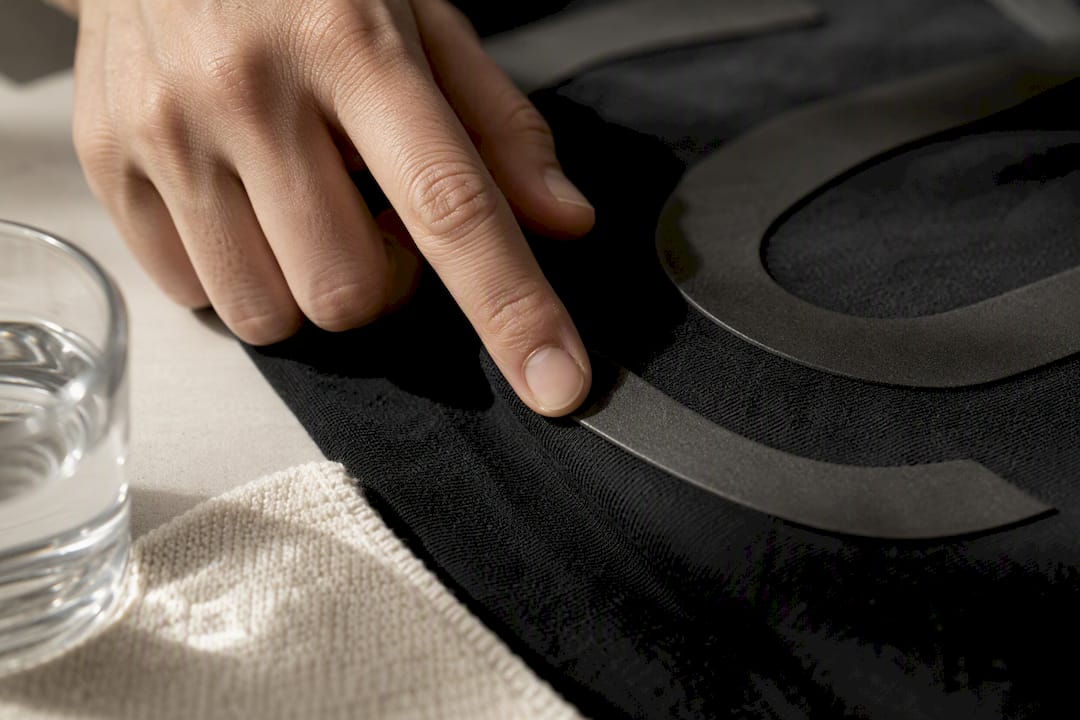
Pro Tip: If you’re not sure what print method your shirt uses, run a finger lightly over the design. A raised, slightly rubbery texture usually means plastisol or HTV, while a flat feel that blends into the fabric usually means DTG or sublimation.
What’s the Best Way to Dry and Store Shirts?
Heat and sunlight do more damage in the dryer and on the drying rack than most people realize. UV exposure breaks down dye molecules directly, a process called photodegradation, so a shirt left flat in direct sun for hours can lose more color in one afternoon than it would in a dozen proper washes.
- Air-dry inside-out, in the shade. This is the single best move for color preservation after the wash cycle itself.
- If you need the dryer, run it on low and pull the shirt out while it’s still slightly damp, then finish it flat on a rack. This limits total heat exposure without leaving you with a stiff, wrinkled tee.
- Hang by the hem, not the collar, or lay flat, to avoid stretching the neckline out of shape.
- Store shirts somewhere cool and dim. Closet rails pushed against a bright window or sitting near a radiator will fade the top-facing shoulder over months, even without a single wash.
For more on drying without shrinking heavyweight cotton, Elite Bloodlines breaks down the process in its guide to drying cotton tees safely.
Do Vinegar and Salt Actually Prevent Fading?
Detergent choice matters as much as the wash cycle itself. Reach for a liquid, color-safe formula without optical brighteners or bleach, and measure the dose instead of eyeballing it. Overdosing detergent leaves residue that dulls fabric over time, which looks a lot like fading even though it’s really buildup.
A few points worth knowing before you reach for internet laundry hacks:
- Fabric softener is off-limits for printed tees. It coats fibers and adhesives, which is exactly what breaks down prints faster.
- Vinegar can work as an occasional rinse additive, but the evidence for it as a routine color-fixing hack is mixed at best, according to a roundup of expert laundry tips. Don’t count on it to replace correct wash settings.
- Salt has even less evidence behind it. Treat it as folklore, not a fix.
- Hard water is a hidden culprit. Mineral buildup leaves a chalky film that looks like fading. If your shirts seem duller despite gentle washing, check your water hardness before blaming the detergent.
The Leeds research applies here too: the 30-minute cold cycle outperformed the 85-minute hot cycle on color retention, and that gap holds regardless of which detergent brand you use. Temperature and time do more work than any additive.
How Can You Tell What’s Actually Wrong With a Faded Shirt?
Not all dullness is the same problem, and the fix depends on the cause.
- Check for abrasion damage first. Thin, whitish patches on high-friction areas like the chest or seams point to mechanical wear, not dye breakdown.
- Look for uneven fading concentrated on one side or the shoulders. That pattern usually means UV exposure from drying or storage near a window.
- Rule out residue. Rub a damp cloth over the fabric. If it lifts a grayish film, you’re looking at detergent or deodorant buildup, not true fading, and a residue-stripping rinse cycle can bring color back.
- Decide: fix, repurpose, or retire. A color restorer or dye refresh can help lightly faded darks, but expect a shift in tone rather than a perfect match. Heavily abraded shirts are better cut down for workout wear or retired outright.
Elite Bloodlines also covers dye behavior in its piece on garment dye versus pigment dye, useful if you’re trying to understand why one shirt held color and another didn’t.
Why Fabric Weight Changes the Whole Fading Conversation
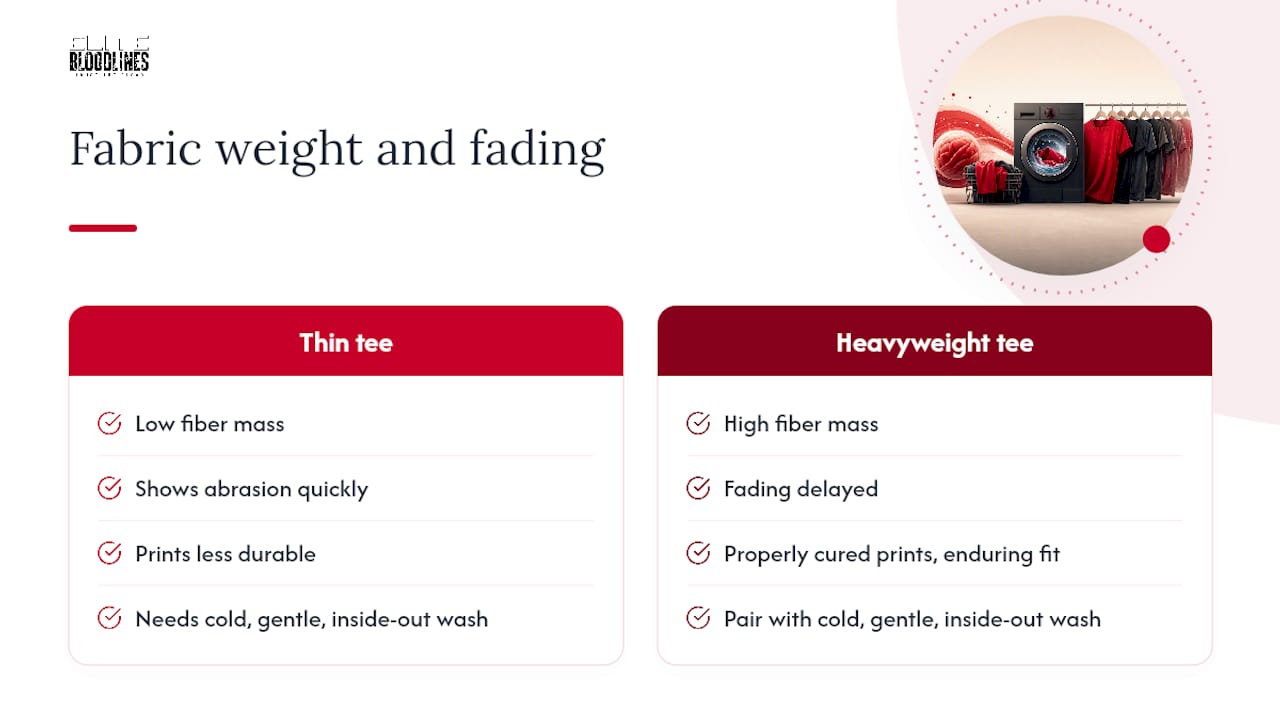
Most fading advice online treats every tee the same, and that’s where it falls short. A thin, low-weight blank shows abrasion and dye loss fast because there’s less fiber mass to absorb the wear of a wash cycle. A heavyweight cotton tee has more fiber to lose before you ever see it. That’s not a reason to skip good laundry habits. It’s a reason to pair them with a shirt built to survive them.
Some brands are built around that logic, offering heavyweight blanks, properly cured prints, and fits that endure multiple washes. Run the cold, gentle, inside-out routine on a shirt like that and you’re stacking two defenses instead of one.
— Michael
Get More Wear Out of Every Wash With Heavyweight Tees
Laundry technique only gets you so far if the shirt underneath is thin and built to fade fast. Some manufacturers offer heavyweight cotton blanks and properly cured graphics designed to hold up to real wash cycles instead of falling apart after a season of wear.

Every piece in the EB Graphic Tees collection is built on heavier fabric than the average streetwear blank, which means the fiber itself has more to give before color loss shows. If you want a foundation piece that pairs well with the cold-wash routine above, the EB Core Line is designed for exactly that kind of daily rotation. Browse the current lineup, pick a design that fits your identity, and give it the care it deserves from wash one.
Sources
- Quicker and cooler is best for clothes — University of Leeds
- How to Wash Printed T-Shirts to Make the Design Last Longer — PrintablePress
- How To Wash Cotton T-Shirts (And Prevent Shrinking And Fading) - TextileTuts
- How to Maintain Custom T-Shirts and Apparel: A Complete Care Guide - Custom Ink
- How to wash cotton — Launderwise
FAQ
What Is the 3-3-3 Rule for Clothes?
The 3-3-3 rule is a laundry shortcut some people use to limit wear: wash dark or delicate items after roughly 3 wears, dry on low heat for about 3 fewer minutes than usual, and store them for at least 3 hours before rewearing to let fibers relax. It’s not a scientific standard, just a memory trick for reducing overall wash-and-dry stress on colored clothes.
Does Vinegar Stop Clothes From Fading?
Vinegar can work as an occasional rinse additive, but the evidence for it as a reliable fading fix is mixed. Cold, short wash cycles and correct detergent dosing do far more to protect color than any vinegar rinse.
What Is the Best Detergent to Prevent Color Fading in Clothes?
A liquid, color-safe detergent without bleach or optical brighteners protects dye best, especially when measured carefully rather than overpoured. Pairing that detergent with a cold or 30°C short cycle, as recommended by TextileTuts, gives you the strongest color retention.
Can You Fix a Faded T-Shirt?
Lightly faded shirts can sometimes be improved with a color restorer or dye refresh, though the result is usually a close shade rather than an exact match to the original. Fading caused by abrasion or cracked prints generally can’t be reversed, which makes prevention through cold washing and shade drying the better investment.