

Measure 4 Points Not Letters for Better Unisex Streetwear Sizing
For reliable unisex streetwear fit, match a flat garment measurement, chest and shoulder first, to the brand’s own chart before you look at the letter size. When two sizes seem close, size down for a closer fit or size up for a boxier, layered look. Grab a tape measure, lay a garment you already trust flat on a table, and use the chart below to translate inches into a decision, following the Comprehensive Hockey Apparel Size Guide for accurate measurement methods.
TL;DR:
- Matching garment measurements, especially chest and shoulder width, is crucial for predicting fit across brands due to unisex sizing variations.
- Flat-garment measurements are more reliable than body measurements, as they account for fabric drape and layering ease.
- Size down for a slimmer, more fitted look and size up for a boxier, layered silhouette, with priority on chest and shoulder fit before length or sleeve adjustments.
- Different brands have inconsistent unisex blocks, so comparing your preferred garment’s measurements to each brand’s chart ensures accurate sizing.
- Proper care and minor alterations, such as hemming or taking in side seams, can improve fit without risking damage to the original silhouette.
Table of Contents
- What Is Unisex Streetwear Sizing and How Does It Work?
- How to Measure Accurately: The Flat-Garment Method
- How Unisex Sizing Differs From Men’s and Women’s Cuts
- How to Match a Favorite Garment to a Brand’s Size Chart
- Item-by-Item Sizing Tips for Streetwear Essentials
- Understanding How Different Brands Define Unisex Sizing
- Handling Loose vs. Slim Fit Preferences in Unisex Streetwear
- Common Sizing Mistakes Shoppers Make With Unisex Streetwear
- Caring for and Altering Unisex Streetwear for a Better Fit
- Author Perspective: Why We Publish Garment Measurements
- Shop Elite Bloodlines Collections Built on Real Measurements
- Sources
- FAQ
What Is Unisex Streetwear Sizing and How Does It Work?
Unisex streetwear sizing runs on garment measurements, not the vague S/M/L labels borrowed from single-gender charts. Because one “medium” can span several inches depending on the brand, the numbers below give you a stable reference point regardless of what the tag says.
The table shows typical flat measurements for a heavyweight unisex tee or hoodie, all in inches, measured with the garment laid flat.
A few conversion notes worth keeping in your back pocket:
- Women’s small typically lands close to a unisex extra small through small, depending on the brand’s block, since women’s charts usually run narrower through the shoulder.
- Men’s medium usually converts to a unisex medium to large, because unisex drafting tends to split the difference between men’s and women’s proportions.
- Runs long or short: if you’re under 5’4" or over 6’2", check body length against your own torso length rather than assuming the standard grade applies to you.
Read the chart by finding your own garment’s pit-to-pit number first, then confirming length matches the silhouette you want. A brand’s “large” only means something once you’ve lined it up against a piece you already own.
How to Measure Accurately: The Flat-Garment Method
Skip the tape measure around your body. Flat garment measurements are more reliable for predicting online fit because they remove guesswork about how loosely or tightly you wear a favorite piece.
Here’s the step-by-step:
- Lay the garment flat on a table or bed, smoothing out wrinkles and folds.
- Measure pit-to-pit: armpit seam to armpit seam, straight across the chest.
- Measure high-shoulder-to-hem: from the top of the shoulder seam straight down to the bottom hem.
- Measure shoulder seam-to-seam: across the back, from one shoulder seam to the other.
- Measure the sleeve opening: the width of the cuff, laid flat.
- For bottoms, measure the waist flat (double it for the full circumference), the rise, and the inseam from crotch seam to hem.
Use a soft tape measure and a hard, flat surface. Don’t stretch the fabric while measuring. Round to the nearest quarter inch.
Pro Tip: Measure the hoodie already hanging in your closet that fits exactly how you want, then use those numbers as your personal benchmark for every future purchase. Garment measurements beat body measurements because they account for how the fabric actually drapes, not just your frame.
How Unisex Sizing Differs From Men’s and Women’s Cuts
Unisex blocks aren’t just “in between” men’s and women’s sizing. They’re drafted with their own proportions: dropped shoulders that extend past the natural shoulder point, a boxier chest that skips the tapered waist, and wider sleeve openings built for layering. Shoulder width and body length often matter more visually than chest circumference in streetwear, which is why the drop shoulder is the signature move of the category rather than a side effect.
When you’re stuck between two sizes, work through this priority order:
- Chest and shoulder first. These define the silhouette you see in the mirror and in photos.
- Length second. A boxy chest with the wrong length reads sloppy instead of intentional.
- Sleeve opening third. Matters most for layering pieces like hoodies and jackets.
- Hem and waist for bottoms. Only after rise and inseam are confirmed.
Watch for red flags that a “unisex” label is really a relabeled men’s block: shoulder seams that sit at the natural shoulder instead of dropping past it, a chest that tapers sharply at the waist, or a size chart that’s identical to the brand’s men’s chart with the label swapped. Genuine unisex drafting, as covered in our guide to fit differences across body types, balances shoulder, chest, and length together instead of shortcutting one dimension.
How to Match a Favorite Garment to a Brand’s Size Chart
This five-step workflow turns a size chart from a guessing game into a formula.
- Pick a garment you already own and love the fit of.
- Lay it flat on a table, buttoned or zipped if applicable.
- Measure chest, length, shoulder width, and sleeve opening using the flat-garment method.
- Compare those four numbers against the brand’s published chart, not the letter size.
- Choose the size whose chest and shoulder numbers come closest to your benchmark, adjusting for the silhouette you want.
Example one: You love an oversized hoodie with a 26-inch pit-to-pit and a 20-inch shoulder. A chart showing an XL at 25.5 inches pit-to-pit and 21 inches shoulder is your match, even if you normally wear a large everywhere else.
Example two: For a fitted tee, you want a snugger 20-inch pit-to-pit. If the chart’s medium sits at 21 to 22 inches, you might drop to a small instead, since brand-specific variance in alpha sizes means a medium at one label can run large at another.
Pro Tip: If a chart only lists body measurements instead of garment measurements, add 2 to 4 inches to the chest figure to approximate the actual garment width, since most streetwear brands build in that much ease for a relaxed drape.
Item-by-Item Sizing Tips for Streetwear Essentials
Different garments live or die on different measurements.
- T-shirts: Pit-to-pit and length carry the whole silhouette. Sizing up too far on a tee can bury your shoulders under fabric and kill the boxy look you were going for.
- Hoodies: Chest, sleeve length, and hem tension all matter. A hoodie meant for layering needs extra sleeve room to fit over another shirt without pulling tight.
- Bottoms: Waist alone tells you almost nothing. Rise, inseam, and thigh width determine whether joggers sit right and taper the way you expect; waist-only thinking is the fastest way to end up with pants that fit at the hip but balloon at the ankle.
- Jackets: Chest and shoulder come first, sleeve length second. Plan ahead for what you’ll wear underneath, since a jacket sized for a bare tee will feel tight over a hoodie.
Heavier fabric weight helps oversized cuts hold their shape instead of collapsing into a shapeless drape, which is worth remembering before you size up two full steps on a lightweight blank.
Understanding How Different Brands Define Unisex Sizing
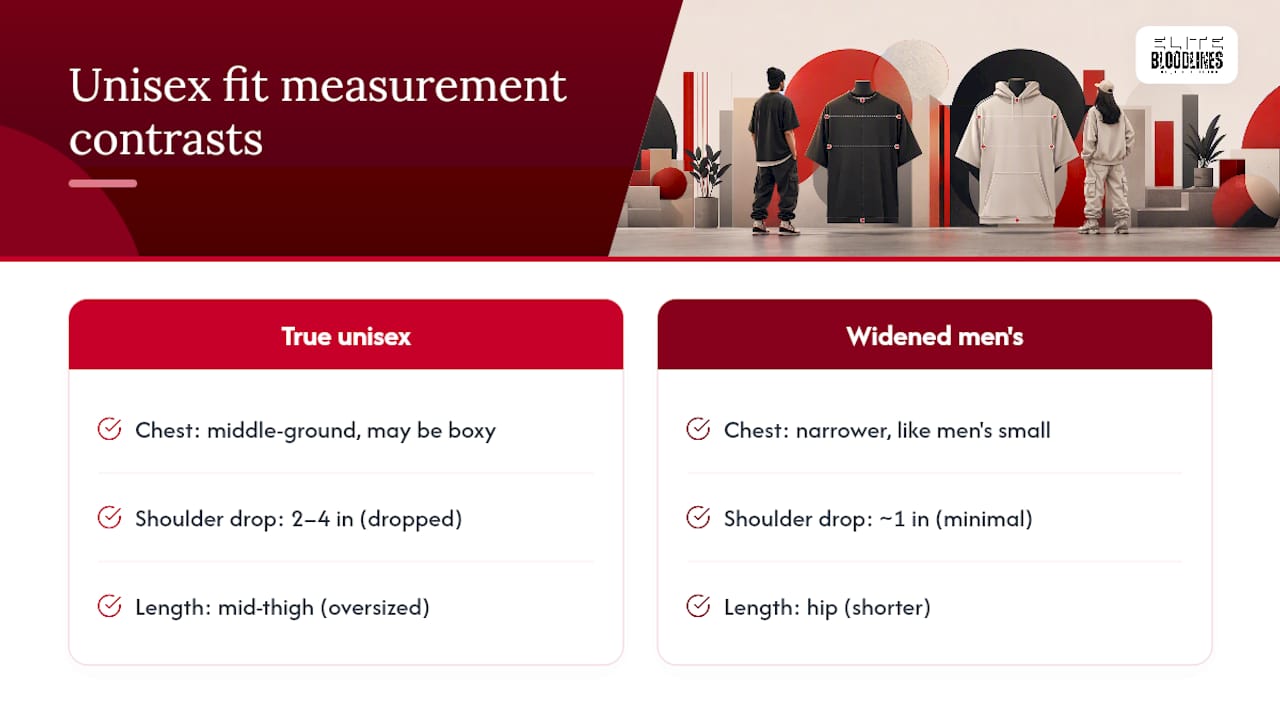
“Unisex” means something different at every label, and that inconsistency is the single biggest reason online returns happen. Some brands build a true unisex block from scratch, balancing shoulder, chest, and length for a middle-ground fit. Others simply widen a men’s pattern and call it unisex, which explains why a “unisex medium” at one brand can measure closer to a men’s small at another.
Custom apparel sizing guidance recommends treating every brand’s unisex chart as its own system rather than assuming consistency across labels, especially for group or bulk orders where a sizing mismatch multiplies across every piece. That advice holds just as well for individual shoppers.
The practical impact shows up in three places: chest width (some brands run boxy, others run closer to athletic), shoulder drop (a 2 to 4 inch drop reads dramatically different from a 1 inch drop), and length (some unisex tees hit at the hip, others hit mid-thigh). None of these differences show up in the size label itself. They only show up in the flat measurements, which is exactly why comparing your own garment to a chart beats trusting the letter every time. A size medium from a brand built around dropped-shoulder, oversized silhouettes will wear completely differently than a medium from a brand chasing a slimmer streetwear cut.
Handling Loose vs. Slim Fit Preferences in Unisex Streetwear
Fit preference is personal, and unisex sizing gives you more room to dial it in than a traditional gendered chart does. If you prefer a slim, closer silhouette, size down from your measured benchmark by one size and prioritize a chest measurement that sits close to your actual body width. If you want the classic oversized streetwear look, size up and lean into a bigger shoulder drop rather than just a wider chest.
The mistake most shoppers make is applying the same rule to every garment. A slim preference on a tee means something different than a slim preference on a hoodie, where too tight a fit through the shoulder restricts movement and looks awkward layered. For bottoms, “slim” should mean a tapered leg with correct rise, not just a smaller waist number.
If you regularly buy both fits, keep two benchmark garments: one fitted piece and one oversized piece, each measured flat. Compare every new purchase against whichever benchmark matches your intent for that specific item. This is far more reliable than trying to remember “I usually wear a large” across a closet full of brands with different blocks. Length still comes second to shoulder and chest no matter which fit style you’re chasing. Someone building a tall-proportioned wardrobe should weight length even higher, since standard grading rarely accounts for extra torso length.
Common Sizing Mistakes Shoppers Make With Unisex Streetwear
The single most common mistake is trusting the letter size instead of the measurements. A medium at one brand and a medium at another can differ by two or more inches at the chest, and shoppers who buy by memory instead of by number end up disappointed more often than not.
The second mistake is measuring your body instead of a garment. Body measurements tell you your own dimensions, but they don’t tell you how a specific brand’s block translates those dimensions into fabric. Two brands can take the identical body measurement and produce wildly different-fitting garments.
Other frequent errors include:
- Sizing up on every single item out of habit, which can bury smaller frames in fabric and distort the silhouette entirely.
- Ignoring sleeve opening on hoodies and jackets, then discovering the sleeves won’t fit over a long-sleeve layer.
- Assuming a chart lists garment measurements when it’s actually listing body measurements, which throws off every comparison downstream.
- Skipping the length check entirely, ending up with a tee that fits the chest but hits at the wrong point on the torso.
Comparing a favorite garment against a new chart before buying solves nearly all of these at once, because it grounds the decision in real numbers instead of memory or assumption.
Caring for and Altering Unisex Streetwear for a Better Fit
Even a well-chosen size sometimes needs a small assist, and how you wash a garment affects fit as much as how you buy it. Heavyweight cotton pieces can shrink slightly in the first few washes, so washing in cold water and laying flat to dry preserves the original garment measurements longer than machine drying on high heat.
For small fit issues, targeted alterations go further than buying an entirely different size. A tailor can take in side seams on a tee or hoodie that’s too boxy through the torso without touching the shoulder width you liked in the first place. Hemming length works well for anyone who liked the chest and shoulder fit but found the body length too long. For bottoms, a simple inseam hem is one of the most common and least expensive alterations, letting you buy for waist and thigh fit without worrying about length.
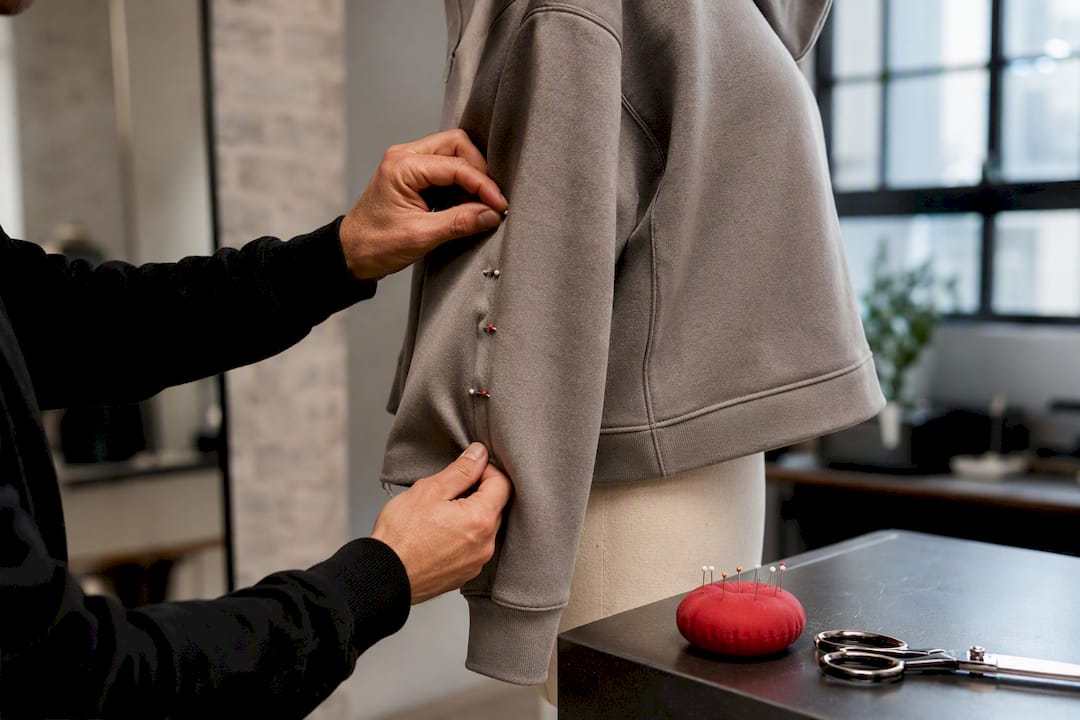
Avoid altering shoulder seams or sleeve openings unless you’re working with an experienced tailor, since these changes affect the drape of the entire garment and are far harder to correct than a simple hem or seam take-in. When in doubt, buy the size that gets your chest and shoulder measurements right, then handle length with a hem rather than compromising the fit that matters most.
Author Perspective: Why We Publish Garment Measurements
We got tired of watching customers guess. Publishing item-specific flat measurements for every drop, instead of a vague “runs big” note, is the only way to keep trust with people buying limited runs where there’s no second chance to reorder. Garment measurements build predictable fit expectations, and that predictability is worth more to a shopper than any marketing copy about “the perfect fit.”
— Michael
Shop Elite Bloodlines Collections Built on Real Measurements
Some brands publish flat garment measurements on key pieces to help customers understand what a “large” actually means before buying. Every drop lists pit-to-pit, shoulder width, and body length for oversized and classic fits alike, giving you the exact numbers this guide just walked you through.
Start with the EB Graphic Tees collection if you want heavyweight oversized fits with the shoulder drop that defines real streetwear. Prefer a classic silhouette closer to a traditional tee block? The EB Heritage line publishes the same measurement transparency for a straighter cut. Every limited release lands in Current Drops, where measurements go live the moment the piece does, so nothing sells out before you can check the fit.
Measure your favorite tee tonight using the flat-garment method above, then hold those numbers against any Elite Bloodlines listing before you check out.
Sources
- Unisex Sizing, Done Honestly: Why Arventur Publishes Measurements Instead of Size Labels | Arventur
- Gender-Neutral Streetwear Is Not a Trend Anymore — It Is the Standard — WEAR2AM Blog | WEAR2AM
- Streetwear Sizing Guide by Brand
- Definitive Guide to Custom Apparel Sizing for Women, Men & Unisex | iPromo
FAQ
What size should I get in a unisex hoodie?
Measure a hoodie you already like using the flat-garment method (pit-to-pit, shoulder, sleeve opening), then match those numbers to the brand’s chart rather than relying on your usual letter size.
Is unisex sizing the same as men’s?
Not always. Genuine unisex blocks balance shoulder, chest, and length together, while some brands simply relabel a men’s pattern, so always check the flat measurements before assuming the two charts match.
Does a unisex small fit like a women’s medium?
It depends on the brand, since unisex charts typically run wider through the shoulder than women’s charts, but the two can land close together. Compare the pit-to-pit and shoulder measurements directly instead of assuming a fixed conversion.
What is the size guide for unisex sweatshirts?
A reliable unisex sweatshirt guide lists pit-to-pit, body length, shoulder width, and sleeve opening in inches for each size, since those four measurements determine fit far more accurately than a letter label alone.
How do I know if I should size up or down?
Size down for a closer, slimmer silhouette and size up for an oversized look or extra room to layer, but always prioritize matching chest and shoulder measurements before adjusting for length or sleeve fit.