

Proportion First Streetwear for Tall Guys: Picks from Elite Bloodlines
Streetwear for tall guys comes down to one rule: chase proportion, not size labels. Regular, boxy, or oversized silhouettes hold their shape better than slim cuts once you’re past 6’2", and the real work happens in sleeve, hem, and inseam length. Break up the vertical line with texture, color-blocking, or smart layers, and tailor the two or three pieces that matter most. Some streetwear brands offer heavyweight, longer-body tees that address this issue.
TL;DR:
- Proper fit for tall men depends on sleeve length, hem placement, and shoulder seam alignment rather than size labels, with a focus on accurate measurements.
- Slim fit garments often create a high-water look; regular or oversized fits with correct proportions look better and avoid awkward cropping.
- Tall-specific clothing options with longer inseams and body lengths can reduce the need for tailoring, especially for tees, hoodies, and outerwear.
- Key measurements to check include inseam, sleeve length, shoulder width, and torso/rise, with fitting guidelines for online shopping and tailoring adjustments.
- Styling tips emphasize layering heavier fabrics, horizontal textures, and proportionate outerwear to visually balance height and create versatile streetwear looks.
Table of Contents
- Fit Rules and Proportions Every Tall Guy Should Follow
- Streetwear Staples That Actually Work on Tall Frames
- Shopping and Measurement Checklist: Buying Online vs In Store
- Outfit Formulas and Streetwear Looks for Tall Guys
- Tailoring and Alterations Tall Guys Should Actually Use
- Why This Fit-First Approach Works (And Where Elite Bloodlines Fits In)
- Shop the Fit: Elite Bloodlines Picks for Tall Frames
- An Editorial Note on Getting This Right
- Sources
Fit Rules and Proportions Every Tall Guy Should Follow
Forget the tag on the collar. A shirt labeled “large” from one brand runs completely different in the body than a “large” from another, and for a tall frame that gap shows up fast. What matters is where the fabric actually ends.
Sleeves should hit the wrist bone, not stop two inches short and expose the forearm like you outgrew the shirt in eighth grade. Hems need to fall low enough to stay tucked or sit clean untucked without riding up when you raise your arms. Shoulders are the piece nobody checks and everybody regrets, because a seam that sits too high or too wide throws off the entire torso line no matter how good the length is.
Slim fit is the trap. Most slim-fit garments are cut shorter as well as narrower, which on a tall frame creates a “high-water” look at the wrists and waist rather than a sharp one. Regular, boxy, and oversized fits with correct length almost always read better on height than a slim cut that’s fighting your proportions.
Run this quick check before you buy anything:
- Sleeve: cuff lands at the wrist bone, not mid-forearm.
- Hem: falls past the belt line with room to move.
- Shoulder: seam sits at the natural shoulder edge, not creeping toward your neck or hanging off the edge.
This “3-3-3” habit (three checks, three seconds each, three times before checkout) catches most bad fits before they become a return.
Pro Tip: Hems and sleeves are cheap, fast tailor fixes. Shoulder seams are not. If the shoulder is wrong, put the item back no matter how good the fabric feels.
Streetwear Staples That Actually Work on Tall Frames
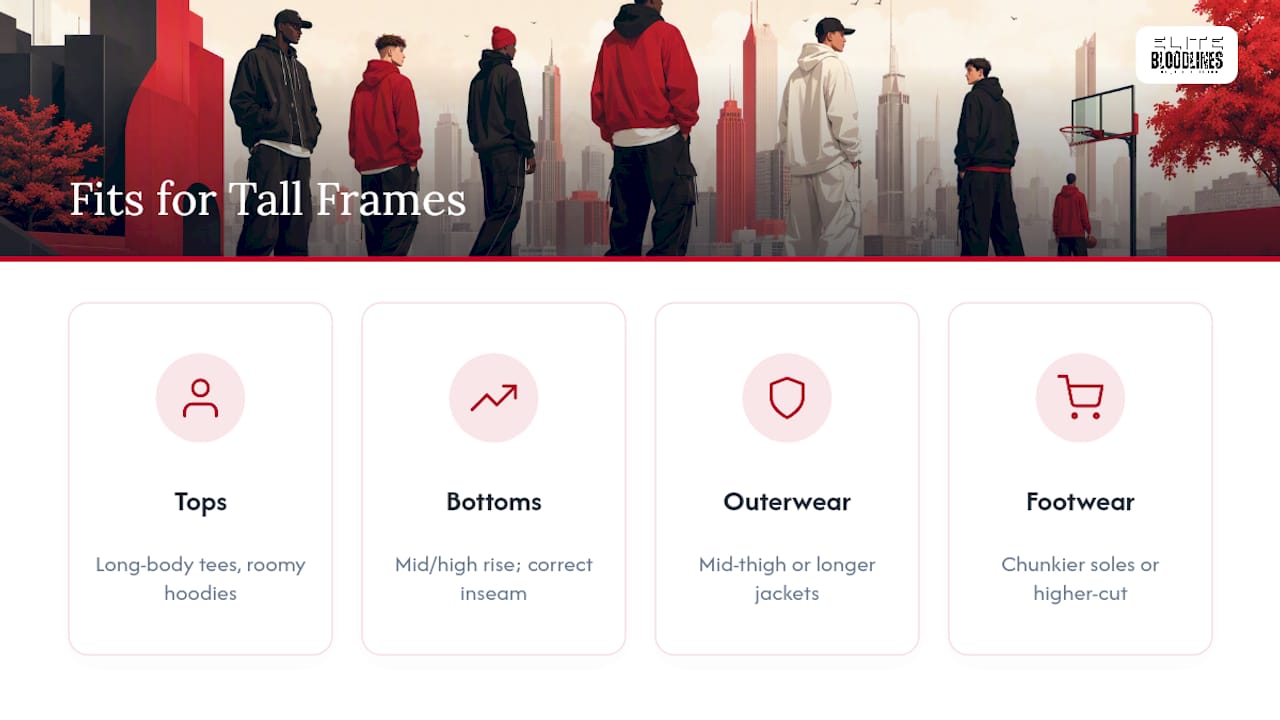
Every category has a version built for height, and a version that quietly works against it.
Tops: long-body tees and roomier hoodies solve most of the problem before you even think about layers. An overshirt with a slightly longer sleeve than your base layer adds visual width across the shoulders and chest, which is exactly the horizontal balance style experts point to for tall men instead of trying to disguise height altogether.
Bottoms: mid or high rise with the correct inseam beats a high-waisted skinny cut every time. Tapered legs or a wide-leg shape both work; skinny-through-the-ankle on a tall guy just draws the eye up and makes you look like you’re standing on stilts. Some heritage denim lines now stock longer inseams up to 38 or 40 inches in select styles, which is worth checking before you assume you need a specialty retailer.
Outerwear: skip anything cropped. A jacket that hits mid-thigh or lower adds structure and shape to the torso instead of stopping short and making your legs look endless by comparison.
Footwear: avoid tiny, low-profile silhouettes that disappear at the ankle. A slightly chunkier sole or higher-cut sneaker grounds a tall frame instead of leaving it top-heavy.
Shopping and Measurement Checklist: Buying Online vs In Store
Take four measurements before you shop, not after the return box shows up:
- Inseam. Measure an existing pair that fits well, from crotch seam to hem.
- Sleeve length. Start at the center back of the neck, run over the shoulder point, down to the wrist bone.
- Shoulder width. Seam to seam across the back, on a garment that already fits.
- Torso/rise. Waistband to hem for tops, and natural waist to crotch seam for bottoms.
Once you have those, read product specs like a shopping list, not marketing copy. Look for stated body length, listed inseam or rise, and the height/size of the model shown in photos. Many mainstream labels quietly stop offering true long lengths once you’re above roughly 6’2", which is why tall-focused shopping guides exist in the first place. If a size chart lists a range instead of exact measurements, size up for length even if it means sizing down the waist and tailoring in.
Retailers built specifically for height offer inseams between 34 and 40 inches and longer-body tops designed for men 6’4" and up, which cuts down how much you need a tailor at all. Save made-to-measure for suiting and structured jackets. Everyday streetwear is better solved by a tall-specific label first, alterations second.
Outfit Formulas and Streetwear Looks for Tall Guys
These four combos translate every fit rule above into something you can copy today.
- Layered casual: long tee (hits below the belt) + overshirt (sleeve half an inch longer than the tee) + tapered cargo pants that break once at the shoe. The layering adds shoulder width without adding bulk.
- Textured monochrome: one base color head to toe, broken up with a ribbed knit, waffle texture, or contrast stitching so the eye stops moving vertically and starts reading width.
- Elevated streetwear: long-body hoodie under a structured coat that falls below the knee, paired with wide-leg trousers. The coat length anchors the frame; the wide leg balances the long torso above it.
- Gym-to-street: long-line sweatshirt, tapered joggers that taper without pegging tight at the ankle, and a supportive sneaker with some sole height to ground the whole look.
Pro Tip: When in doubt, layer heavier fabric over lighter fabric, not the reverse. It reads intentional instead of accidental, and it hides the “I grew four inches and my closet didn’t” problem better than anything else.
For deeper layering breakdowns, this three-layer streetwear system walks through building each combo piece by piece, and seasonal layering formulas cover how to add warmth without losing the silhouette. If you’re chasing the gym-to-street formula specifically, this gym-to-street outfit breakdown is worth a read for the functional side of the styling.
Tailoring and Alterations Tall Guys Should Actually Use
Spend tailoring money where length and shoulder fit matter most: shirts, jackets, and trousers. Casual tees rarely need a tailor at all if you buy long-body or oversized in the first place.
- Hems: buy unhemmed trousers when the option exists, so you control the final break yourself.
- Sleeves: a jacket or shirt sleeve is one of the fastest, cheapest fixes a tailor makes.
- Tapering: trouser legs can be taken in through the calf without touching the inseam length.
- Sides: shirts that fit the shoulders but balloon at the waist can be taken in without shortening the body.
Bring your own measurements (sleeve, inseam, torso length) instead of guessing at the shop. A tailor working from your numbers, not a visual guess, gets the final length right the first time.
Why This Fit-First Approach Works (And Where Elite Bloodlines Fits In)
None of this is guesswork. It’s proportion math: correct sleeve, hem, and shoulder length beats a size label every time on a tall frame, and texture or layering does the visual work of breaking up height without hiding it.
Some brands build around that math from the start, offering heavyweight tees with longer body cuts, oversized fits that keep shoulder proportions intact, and limited-run graphic designs.
- Long-body heavyweight tees map straight onto the layered casual and monochrome formulas above.
- Oversized fits solve the shoulder and hem problem before a tailor ever gets involved.
- Limited-run drops mean the fit you find this season won’t be the one you’re stuck rebuying forever.
For more copyable combinations, this streetwear layering guide and these ready-to-wear outfit examples build on the same fit-first logic.
Shop the Fit: Elite Bloodlines Picks for Tall Frames
The fastest way to test everything above is to start with one piece: a long-hem hoodie or an oversized heavyweight tee. Both categories are built to solve sleeve and body length before you ever touch a tailor.
The EB Graphic Tees collection runs heavyweight and long-body by design, so check the listed body length against your own torso measurement rather than guessing off the size label. If the sleeve or hem still runs a touch short once it arrives, that’s a fifteen-minute tailor fix, not a return. For a classic-fit alternative that still respects proportion, the EB Heritage Collection is worth a look, and new Current Drops land in limited runs if you want first pick on the next release. Bring your sleeve and torso measurements, match them against the product specs, and add to cart.
An Editorial Note on Getting This Right
Most fit advice online treats “tall” as an afterthought bolted onto standard sizing guides, when it actually needs its own set of rules from the first sentence. The gap between a slim-fit shirt and a properly cut long-body tee isn’t cosmetic. It’s the difference between clothes that fit the calendar age of the trend and clothes that fit the body wearing them. Get the sleeve, hem, and shoulder right first. Everything else, the layering, the color-blocking, the outfit formulas, is just decoration on a foundation that either holds up or doesn’t.
— Michael
Sources
- Tall mens clothing tips | FashionBeans
- Style tips for tall men | Gentleman’s Gazette
- Tall Mens Clothing | Extra Long Lengths for Guys 6’4" - 7’4" | 2tall.com